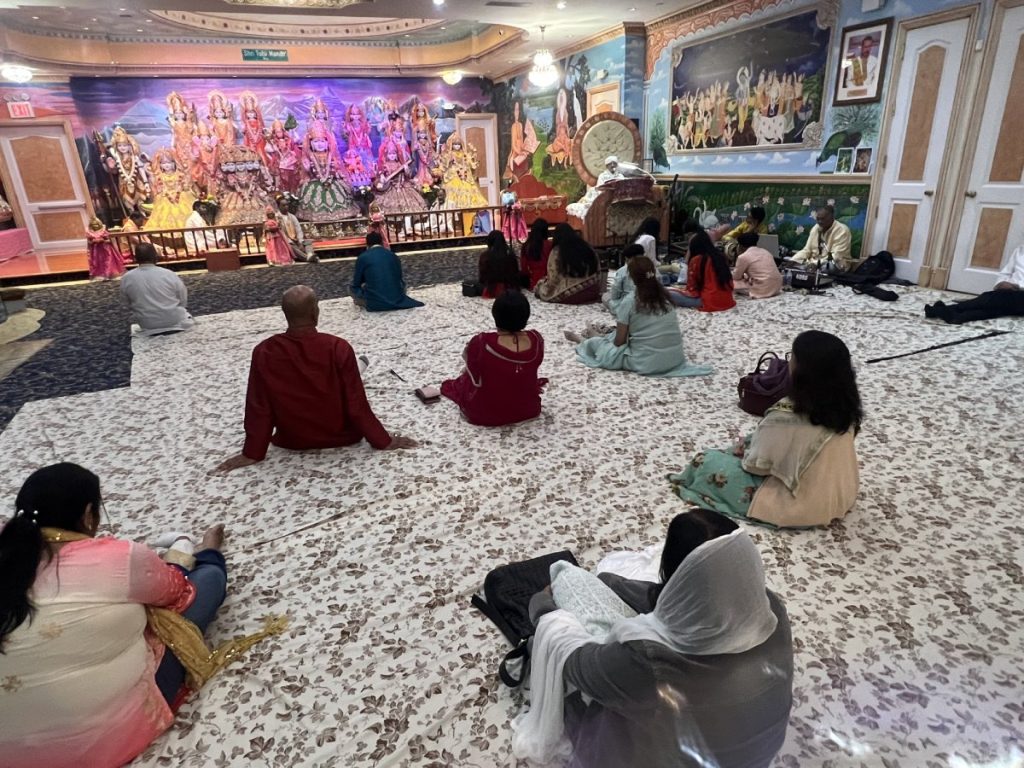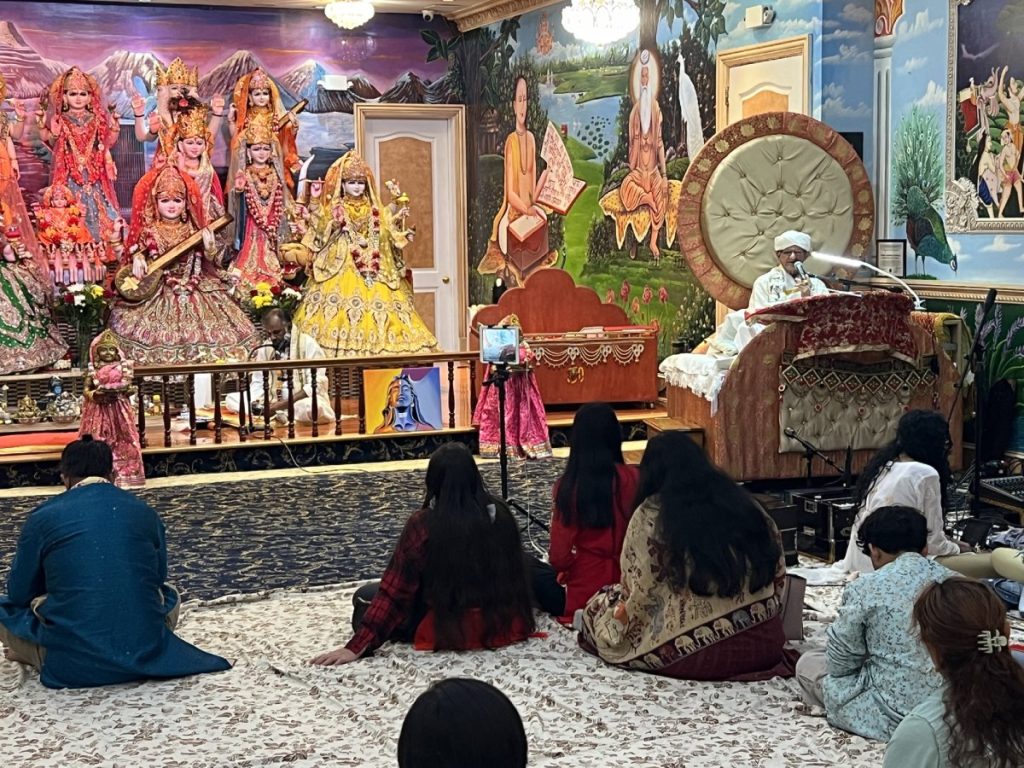
Despite the distance from India, Hindus have transplanted their culture where they migrated – from India to Caribbean, Fiji, Mauritius, etc., and from there to fast pace of urban America, UK, France, Holland, Canada, Australia, New Zealand, etc. The cultural footprint and tradition of Pitri Paksh in the US have been preserved largely by Indo-Caribbean American Hindus (from Guyana, Trinidad, and Suriname) who introduced the ritual in the 1960s after immigrating to and settling in America. Pitri Paksh was first brought to the Caribbean by Indian indentured laborers after 1838 when the first arrived in Guyana and later in Trinidad, Suriname, Jamaica, Grenada, and elsewhere in the Caribbean. Across India and the Hindu diaspora (Guyana, Trinidad, Suriname, North America, Fiji, Mauritius, etc.), Hindus are observing Pitri Paksha, a two week period of paying homage to the deceased ancestors through Puja and lectures. Observance began on the evening of September 27 and will conclude on October 10. Puja is performed at home or in the mandir or the backyard of a house or on the bank of a waterway.
The word pitri means ancestors, and during this period, Hindus are expressing gratitude to the departed generations that help shaped who we are today with special prayers. The pitri puja is performed on the bank of a waterway or in a garden or a backyard. Initially, in metropolitan urban area like NY, it was difficult to observe pitri paksha as a waterway and backyard or garden was inaccessible. Hindus had not purchased homes as yet or established temples for pujas. So the ritual or puja was done in the apartment.
Nightly observance is going on at the Indo-Caribbean Shri Tulsi Mandir located on 111 Street, off Liberty Ave in “Little Guyana” and “Little Trinidad”, in Queens, New York. Other mandirs also host discourse on pitri paksh. All the mandirs are known to perform special pitri puja on selected days (Sunday morning or an evening). It is a solemn religious service to celebrate the immense contributions, remember the hardship and legacies of ancestral fore-parents who built the foundations for the current generation.
Pitri puja is not praying to the dead, as some mistakenly believe. But it is praying for the departed souls and to honor their memories, petitioning the lord to have mercy on the their souls. During this period, Hindus focus exclusively on their departed ancestors and worship Jamraj, the Lord of death who oversees the souls. Hindus thank the lineage that paved their path to their being. Special pitri pujas are conducted during this period that are different from traditional prayers during the rest of the year. It is a deeply personalized puja. The paraphernalia used for the pitri puja is almost the same as those of the regular puja plus additional items.
During pitri paksha, people make special offerings in the morning at sunrise for the soul of relatives and ancestors (parents, siblings, grandparents and earlier generations, extended families, etc.) appealing to Jamraj to have mercy on them. The offerings in the morning include water mixed with black til (sesame seeds), flowers, and rice grains. The water is offered from the palm of both hands and poured out on the right side between the index finger and the right thumb. During the 1980s, as Hindus settled in private homes, they take to their backyards or gardens at sunrise to make water and black sesame (til) offerings, on a special grass on the dirt (land), a practice known as Shraddha or Tarpan, that last a few minutes. Not every Hindu observe Pitri paksh or perform pitri puja. And among those that do pitri puja, like this writer, rituals and oblations are not done daily during the fortnight. Some make offerings one or three or five or any other number of mornings. Some invite a pandit and perform a lengthy pitri puja that lasts hours. A central tenet of the puja is Pinda Daan — offering sacred powdered rice balls made from ghee, honey, til, among other sweet spices. Some Hindus prepared meals of food items that the deceased like and make offerings at home.
The living is expressing gratitude to the ancestors and performing duty in paying homage to them as prescribed in the sacred text. They are repaying the ancestors. The various offerings help with the liberation of the soul to attain peace, salvation (moksha), and progress to higher realms. This practice is rooted in the belief that the souls of ancestors reside in a transitional realm before reincarnating or attaining liberation, and they rely on their living descendants for sustenance and spiritual progression with the offerings. It is believed that once a person passes away, the soul requires spiritual energy to cross into higher realms. The rituals of Tarpan and Pinda Daan provide symbolic nourishment. These offerings appease the hunger and thirst of the departed souls, helping them find peace and move closer to final liberation (Moksha). Satisfied ancestors are believed to act as protective guardians for the family, bestowing blessings of good health, wealth, harmony, and longevity.
During the pitri period, observant Hindus are known to maintain a simple, sattvic vegetarian diet and avoid new undertakings and major celebratory events. There are no weddings or parties.
In Guyana, Trinidad, and Suriname and many other countries, there are countless waterways to perform pitri puja. In New York and other urban areas, there are limitations. Hindus perform the ritual indoor in bowls or buckets. Or they clean a private space in the backyard of their home and make their offerings. Observant Hindus make do with the limitations of space and waterways and available of paraphernalia. Some mandirs are known to organize a community puja on the coast of the ocean in New York, allowing people to perform tarpan, and make offerings of food, fruits, clothing, etc. In collective Pitri Paksha puja, people, families, individuals gather on a Sunday morning and perform mass Tarpan ceremonies in the temple or on the bank (coast) of a waterway. Following puja, vegetarian meal is served as is normal for any puja.