


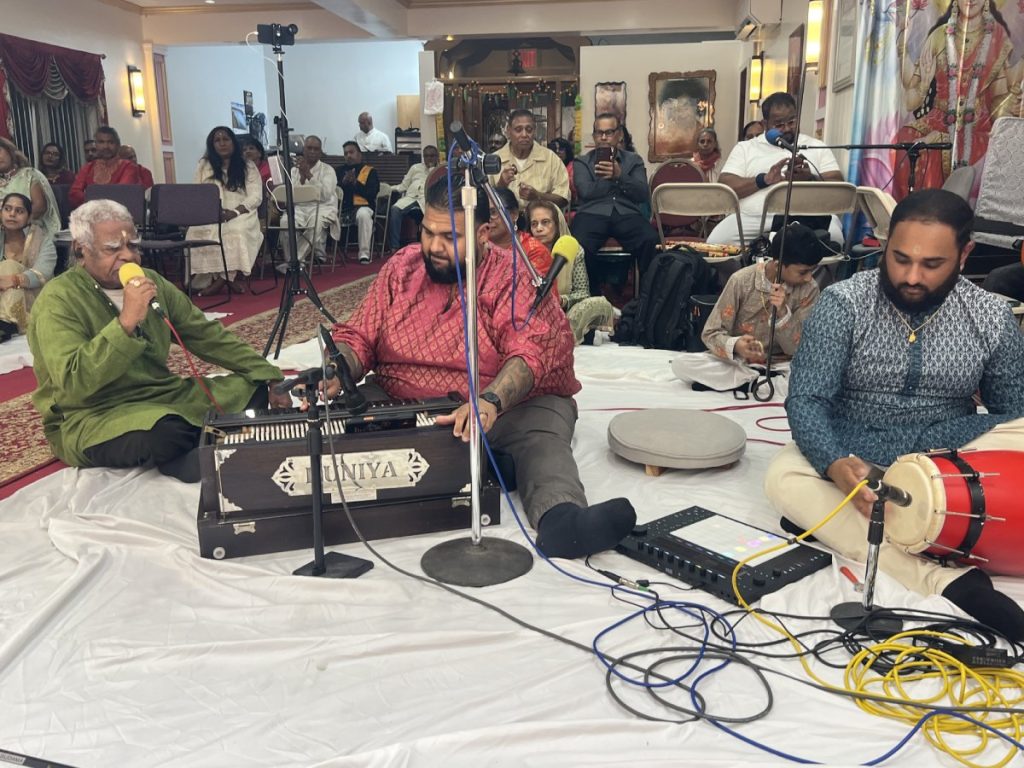
As Hindus across India and around the Indian diaspora observe Pitri Paksha, a sixteen-day period dedicated to remembering and paying homage to deceased ancestors, homes, temples and pilgrimage centres globally have witnessed special prayers, rituals, oblations, and various offerings. In Queens, New York City, and elsewhere at temples, discourses are being held on Pitri Paksha, its significance and how it is observed. Readings are held from the Garuda Purana, the book that addresses death and the soul. The Garud Puran, one of the important texts of Hindu tradition, contains teachings on dharma, karma, death, the soul and the consequences of human actions. Pandits also read from the Bhagavad Gita and Mahapurans which are required during Pitri Paksh.
At all of the mandirs during Sunday morning services and at special services on selected dates, pandits held discourses on Pitri Paksh. Shri Tulsi Mandir in Little Guyana has been holding nightly service since September 28 while in Little Trinidad Sudama Mandir held discourse from October 2 thru 4. Dayaram Mandir like other Mandirs held Sunday morning pitri puja. Pitri paksha ends on October 10 during which period Hindus do not engage in new undertakings or have marriages or parties. It is a solemn occasion to remember the deceased relatives.
The annual observance, also known as Shraddha Paksha, is regarded as an important period for expressing gratitude towards departed family members and reflecting on the relationship between life, death and duty. It falls during the waning phase of the lunar month of Bhadrapada or Ashwin (September/October), depending on regional calendars just before the auspicious fasting period of Navratri that commences on the 11th. Families traditionally perform Shraddha and Tarpana, offering water, black sesame seeds called til, rice and other food items in memory of their ancestors. Many people also make charitable donations and offer food to priests, the poor and animals as part of the observance. Some families follow elaborate rituals. In USA, people perform simple ceremonies at home or in backyards or in mandirs. In India, in places such as Gaya, Varanasi and Prayagraj (Allahabad), Ayodhya and at banks of rivers, large numbers of devotees traditionally gather to perform ancestral rites. In NY, people gather at mandirs or a family members host a special puja at home where shradda and tarpan are performed. Rockaway Beach is known to host some mandirs for special pitri puja.
Discourses are taken from the Garuda Purana. These special religious discourses brought devotees together for a spiritual program focused on the remembrance of ancestors, the significance of righteous living and the journey of the soul after death. The atmosphere at the mandirs remained focused on prayer and spiritual reflection as devotees listened to the discourse and participated in the religious observances associated with Pitri Paksha.
At Sudama, Trinidadian Pandit Bhisham Persad of Baltimore discussed the significance of pitri paksha, performing special shradda puja including tarpan. Pt Bhisham discussed life and death, karma, dharma, funeral rites, journey of the soul, moksha, shradda and ancestral rites, dhaan, moral responsibility, among other topics.
Pandit Bhisham Persad spoke on the teachings and spiritual significance of the Garud Puran. He explained the importance of Pitri Paksha as a sacred period for remembering departed family members and offering prayers for their peace and well-being. During his discourse, Pandit Persad highlighted how the scripture encourages people to understand the temporary nature of physical life and to lead their lives with truth, compassion, devotion and responsibility.
A major focus of the discourse was the relationship between karma and the journey of the soul. Pandit Persad explained that Hindu philosophy places great importance on one’s actions and conduct during life. Good deeds, charity, service to others and adherence to dharma are regarded as important aspects of a meaningful spiritual life.
Speaking about Pitri Paksha, Pandit Persad emphasized the traditional importance of Shraddha and Tarpan, through which families express gratitude and respect for their ancestors. He explained that remembering one’s forefathers is not merely a ritual obligation but also an opportunity to acknowledge the sacrifices and contributions of previous generations.
The discourse also touched upon the importance of performing traditional rites for departed family members. According to the teachings discussed, such practices are intended to express devotion, remembrance and familial responsibility. Devotees were encouraged to observe Pitri Paksha with sincerity and to use the period for prayer, charity and self-reflection.
The programs at Sudama, Tulsi, other mandirs combined religious observance with reflection on the teachings of the Garud Puran, encouraging devotees to honour their ancestors while striving to live a life guided by dharma, good deeds and spiritual awareness. The programs also provided an opportunity for members of the community to come together in a spirit of devotion. The service included prayers and blessings not only for departed ancestors but also for the well-being of families and the wider community. The discourse served as a reminder of the enduring place of ancestral remembrance in Hindu tradition and of the spiritual values associated with Pitri Paksha.
The significance of these rituals is closely associated with Hindu beliefs concerning the journey of the soul after death as explained in the Garuda Purana, a Sanskrit scripture traditionally presented as a dialogue between Lord Vishnu and Garuda. The text deals with a wide range of subjects, including dharma, karma, death, the soul, funeral rites and the consequences of human actions. According to the teachings traditionally associated with the Garuda Purana, physical death is not considered the end of existence. The soul continues its journey, with its circumstances influenced by karma (deeds and actions, good and bad) accumulated during life. The text places considerable emphasis on righteous conduct, compassion, truthfulness, charity and fulfilment of one’s duties. Garuda Purana explains funeral customs and ancestral rites. It explains the importance of performing appropriate ceremonies for the deceased and presents these practices as expressions of responsibility of siblings and relatives towards departed family members. During Pitri Paksha, such ideas encourage devotees to remember their ancestors while also considering the moral consequences of their own actions.
Religious scholars point out that the Garuda Purana should not be understood solely as a text about death or punishment. Its broader message includes ethical and spiritual guidance for living. The descriptions of the consequences of wrongdoing serve, in part, as reminders to lead a disciplined and compassionate life. Similarly, the emphasis on charity and service reflects the wider Hindu principle that good actions have spiritual value.
Pitri Paksha also has an important emotional and social dimension. For many families, the period provides an opportunity to preserve memories of parents, grandparents and earlier generations, siblings, friends, neighbors, etc. In an increasingly fast-changing society, ancestral rituals can serve as a link between generations and cultural traditions.
As Pitri Paksha continues to be observed, the teachings associated with the Garuda Purana offer a broader reflection on mortality, responsibility and remembrance. Beyond ritual observance, the period encourages people to honour those who came before them and to consider how their own actions will shape the lives and memories of future generations.
The observance at Sudama, Tulsi, Dayaram. Tulsi, and other mandirs included bhajan and kirtan singing and playing of traditional classical Indian music. It concluded with aarte and bhojan.
For more picture click here,
https://www.facebook.com/share/p/18e5j3MNeg/