


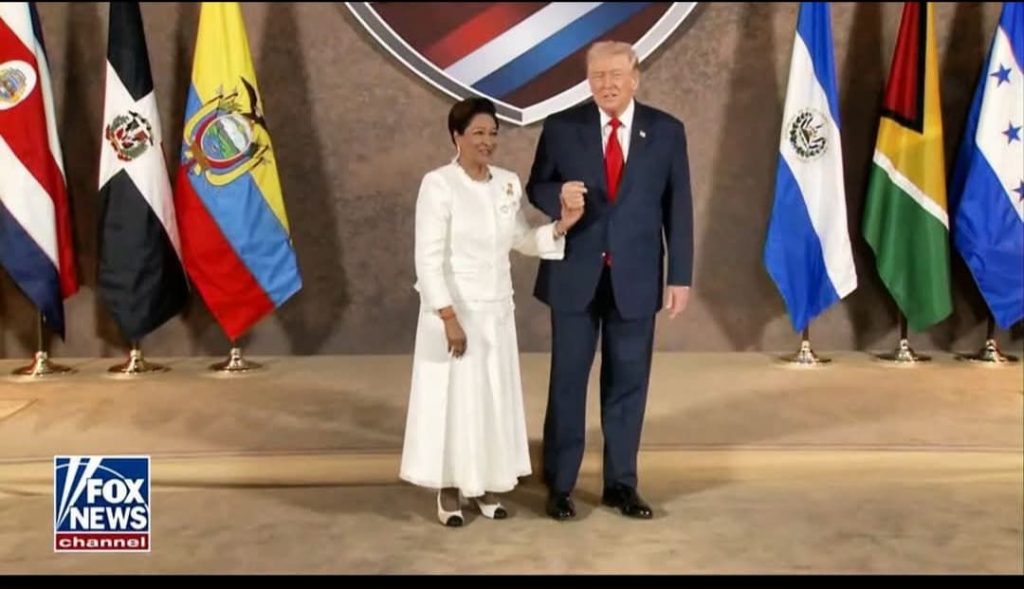
𝐏𝐫𝐢𝐦𝐞 𝐌𝐢𝐧𝐢𝐬𝐭𝐞𝐫 𝐊𝐚𝐦𝐥𝐚 𝐏𝐞𝐫𝐬𝐚𝐝-𝐁𝐢𝐬𝐬𝐞𝐬𝐬𝐚𝐫 𝐬𝐭𝐫𝐞𝐧𝐠𝐭𝐡𝐞𝐧𝐬 𝐫𝐞𝐠𝐢𝐨𝐧𝐚𝐥 𝐮𝐧𝐢𝐭𝐲 𝐚𝐭 𝐂𝐀𝐑𝐈𝐂𝐎𝐌 𝐚𝐧𝐝 𝐚𝐝𝐯𝐚𝐧𝐜𝐞𝐬 𝐡𝐞𝐦𝐢𝐬𝐩𝐡𝐞𝐫𝐢𝐜 𝐬𝐞𝐜𝐮𝐫𝐢𝐭𝐲 𝐚𝐭 𝐭𝐡𝐞 𝐒𝐡𝐢𝐞𝐥𝐝 𝐨𝐟 𝐭𝐡𝐞 𝐀𝐦𝐞𝐫𝐢𝐜𝐚𝐬 𝐒𝐮𝐦𝐦𝐢𝐭
Small nations often face the challenge of safeguarding their interests while competing for influence on the global stage. Trinidad and Tobago is demonstrating that proactive diplomacy is not only useful but essential. Prime Minister Kamla Persad-Bissessar has recently positioned the country prominently within regional and hemispheric discussions through her leadership at the Caribbean Community Heads of Government meeting and her participation in the Shield of the Americas Summit.
The Caribbean occupies a pivotal position linking North and South America and sits along some of the world’s busiest trade routes. Trinidad and Tobago, with its energy resources, industrial base, and skilled workforce, is uniquely placed to leverage these advantages. Geography alone, however, does not guarantee influence. Real gains require strong alliances, active diplomacy, and leadership willing to shape policy rather than simply respond to it.
In February 2026, the 50th Regular Meeting of the Caribbean Community Heads of Government convened under the theme “Beyond Words: Action Today for a Thriving, Sustainable CARICOM.” Leaders addressed economic integration, sustainable development, climate resilience, and regional security cooperation. For Trinidad and Tobago, the meeting provided an opportunity to help shape decisions that directly affect the region’s economic stability and security.
Prime Minister Persad Bissessar’s leadership highlighted the importance of regional unity among small states. Trinidad and Tobago advanced discussions on energy cooperation, trade facilitation, climate adaptation, and collective security. Engagement at this level strengthens regional networks, enhances trade prospects, and opens doors to development financing and investment opportunities that might otherwise remain out of reach.
On the sidelines of the CARICOM meeting, the Prime Minister also engaged with United States officials to discuss economic cooperation and regional security matters. These conversations laid important groundwork for further hemispheric engagement and reflected a deliberate effort to strengthen Trinidad and Tobago’s strategic partnership with the United States.
On March 7, 2026, Prime Minister Persad Bissessar attended the Shield of the Americas Summit in Florida, hosted by Donald Trump. Leaders from across the hemisphere gathered to address organized crime, drug trafficking, and economic cooperation. Trinidad and Tobago was one of only two CARICOM nations invited to participate, underscoring the country’s growing diplomatic relevance.
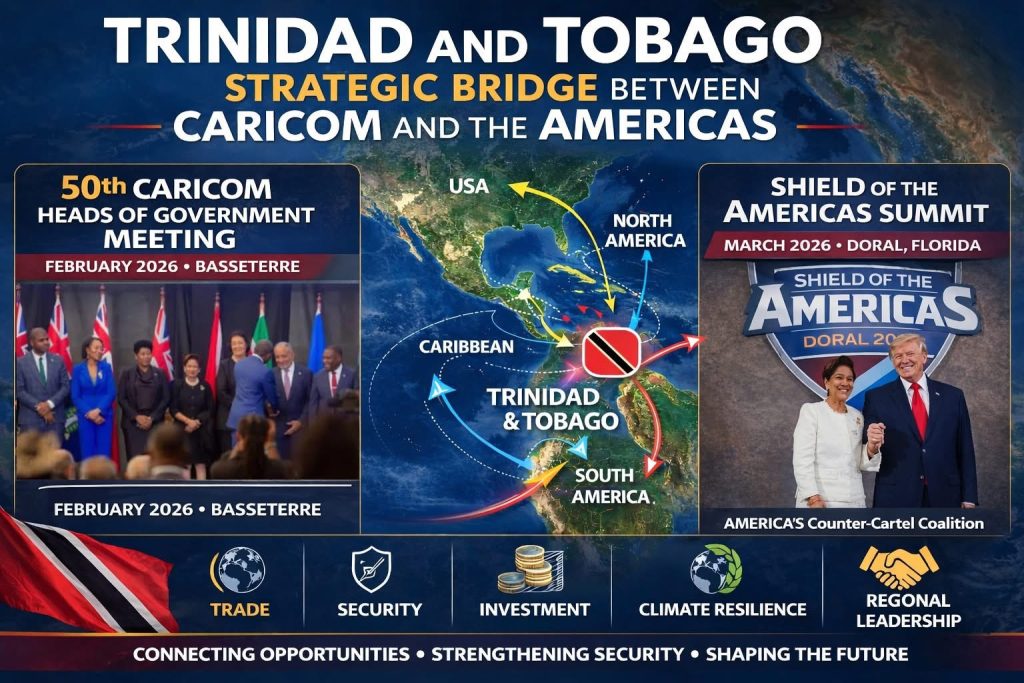

A key outcome of the summit was the signing of the Doral Charter, which established the Americas Counter Cartel Coalition. This initiative strengthens cross border intelligence sharing and coordination against organized criminal networks. Prime Minister Persad Bissessar’s support for this initiative reflects a clear and decisive stance in the fight against narco terrorism, a threat that continues to affect communities across the Caribbean and the wider Americas.
For Trinidad and Tobago, participation in this coalition represents a strategic advantage. Through collaboration with regional partners and the United States, the country gains access to intelligence, resources, and coordinated enforcement strategies that enhance national and regional security. Such cooperation strengthens the ability of small states to confront criminal networks whose reach extends far beyond their borders.
The Prime Minister’s engagement with President Trump and senior United States officials also signals a deliberate strategic alignment aimed at expanding trade, investment, and security cooperation. This partnership places Trinidad and Tobago in a stronger position within hemispheric policy discussions while opening pathways for economic collaboration and development opportunities.
These diplomatic engagements extend far beyond symbolic participation. By maintaining a visible and constructive presence within both regional and hemispheric forums, Trinidad and Tobago strengthens its negotiating capacity, builds strategic partnerships, and reinforces its credibility as a responsible actor in addressing security challenges such as narco terrorism.

At a time when the Caribbean faces growing security threats, economic uncertainty, and geopolitical competition, decisive leadership is critical. Prime Minister Persad Bissessar’s proactive diplomacy, her firm stance against narco terrorism, and her strategic alignment with key partners such as the United States have positioned Trinidad and Tobago as a respected and influential voice within the region and across the hemisphere. Her leadership reflects a clear understanding that small states must engage boldly and intelligently on the international stage.
Through these efforts, Trinidad and Tobago is not simply participating in global conversations but helping to shape them, securing opportunities, and strengthening the nation’s future in an increasingly interconnected world.
By Deochand Ramjit Singh