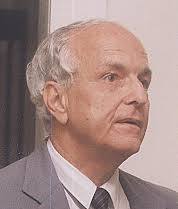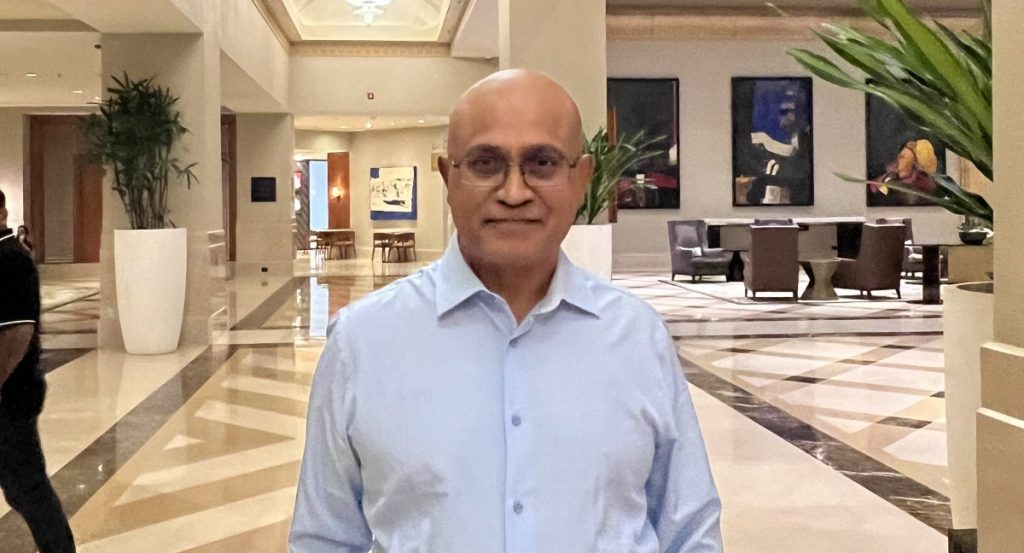
Anyone who engaged David de Caires would have unforgettable memories of his persona of straightforwardness, professionalism and erudition, a caring, compassionate person who was committed to Guyana being an ideal democracy and its development. The fight for democracy in Guyana was a tapestry of long-term activism in Guyana, Caribbean, and North America and personal sacrifices against the authoritarian regime of which David was a part as were several others not only in Guyana but overseas as well, a handful of us who were concerned about the future of our country. The activism ranged from the high-profile struggle of Cheddi Jagan and other opposition politicians (1966 to 1992) to grassroots movement in Guyana, ably encouraged and supported by affiliated party groups in the diaspora. Our group was not tied to any party; our pioneering movement fought against human rights abuses and for restoration of democratic rule. From the diaspora, we kept the fight alive lobbying Washington with encouragement and support from David and others in Guyana, bringing media attention to happenings in the diaspora and about Guyana to the international community. We had our own publications and also made use of community media to champion causes related to Guyana and the America based diaspora. Mr deCaires, a kind of social democrat, opposed to communism, was also a key figure in that liberation movement in Guyana as well as in key islands in the region utilizing the media and his connections with prominent politicians.
My early encounters with de Caires was reading his writings about Guyana in a Caribbean journal that he confounded and his comments in magazines as well as interviews in Caribbean media outlets out of Trinidad, Barbados, and Jamaica; several of these publications from the 1970s and 1980s have ceased to exist. de Caires contributions were cited in my papers written for graduate degree courses in the social sciences in the 1980s and to make our case with Washington. de Caires was a gifted, exceptional writer, an editor par excellence, who was worthy to be emulated. My face to face encounters were visiting his law and or SN media offices after the founding of the weekly paper in the1980s. He was a very learned, articulate, and gifted speaker. I remember him and his daughter speaking at different GUARD rallies organized by Nanda Gopaul and others determined to restore free and fair elections.
SN started from a generous grant (NED) from the USA government to promote democracy in Guyana. A group of us, Baytoram Ramharack, Vassan Ramracha, Rennie Ramracha, and myself and later joined by Ravi Dev lobbied the Reagan Administration and Members of Congress to support our struggle to combat communism in Guyana and replace it with democracy. Congress and the Reagan administration were very sympathetic with our pro American democracy movement but opposed the idea of replacing an opportunistic left wing party and dictatorship with a hard core communist party. But they were open to supporting pro-democracy activities and activism and new movements. The NED was birthed by Congress and signed into law by Reagan. de Caires and others applied for grants to promote democracy in Guyana. SN became a beneficiary of grants to promote a free liberal media and was launched.
de Caires focused like a hawk on abuses of power and violations of democracy. Through coverage in SN of resistance activities by the opposition and of activism in USA, he nourished the freedom movement that ultimately gave us free and fair elections and the return of the PPP to government; the PPP was kept out of office through electoral fraud and authoritarian rule. Washington was fearful that a PPP government would be an ally of Moscow and communism. A free press, started by deCaires and SN became the vital tool for Guyana ‘s second wave of freedom after the struggle of Jagan and others that ended colonial rule in 1966.
I remember meeting Sharief Khan multiple times upstairs at SN building whenever I visited Guyana; he was a reporter for foreign press and editor of SN who had known about our struggle in New York through our writings in community publications and newsletters as well as correspondences. He introduced me and Ravi to Mr de Caires with whom we had multiple face to face exchanges in his office and correspondences (letters for publications). Ramharack was introduced by me and Ravi to Khan and de Caires; a media relationship developed for publication of commentaries and polling. He admired our activism, especially in opposing communism. David saluted our activism that played a vital role in the struggle for restoration of democracy in Guyana. He commended our courage and role in the struggle for restoring democracy in our homeland, using protests in USA and Guyana, lobbying Congress and the administrations of Presidents Carter, Reagan and Bush Sr and other prominent American politicians, and for writing leaders in other countries to put pressure on the dictatorship to restore a free press and FFE in our country. Ravi would have an unpaid regular Sunday column. Ramharack and I had numerous letters in SN as did several others about activities related to our struggle and the diaspora in America. The letters, news reports, and columns contributed to the popularity of the paper, the best rated in Guyana and the region.
I remember being introduced to young Anand Persaud who was an outstanding celebrity reporter, the best in the country at the time of the 1980s. He was a brilliant interviewer, second to none; David got him to interview us on our activism. Anand transformed later into the best editor after Khan left SN in 1992 and the leading editor-in-chief after de Caires passed on the torch. de Caires himself told me in private and unabashedly that Anand was the best in the region.
David was very impressed with the polling of TRPI and NACTA , finding them credible. SN contributed some funding towards costs of interviewers. David and Anand were not swayed by criticisms of our polling by a discredited unaccomplished academic columnist. Publishings polls as introduced by Ramharack, myself and others helped to institutionalize in Guyana. I was wisely advised by both de Caires and Anand in an engagement in David’s office to avoid partisan commentaries. I would meet both of them and Anna Benjamin multiple times separately in their offices that stood next to each other downstairs. I maintained objectivity and neutrality. All three and Sharief Khan were extraordinary editors.
The country owes a debt of gratitude to SN, David, Sharief, Anand, and others for their role in restoring democracy in 1992 and protecting it thereafter. David listened to the concerns of Guyanese and gave them voice in SN. He demonstrated that the people’s views were taken seriously, which led to building of trust and rapport by a growing readership making it one of the most credible newspapers in Guyana and the region. Tje country, readers, letter writers, critics will miss it after March 15. I plead that the paper switch to digital publication.