


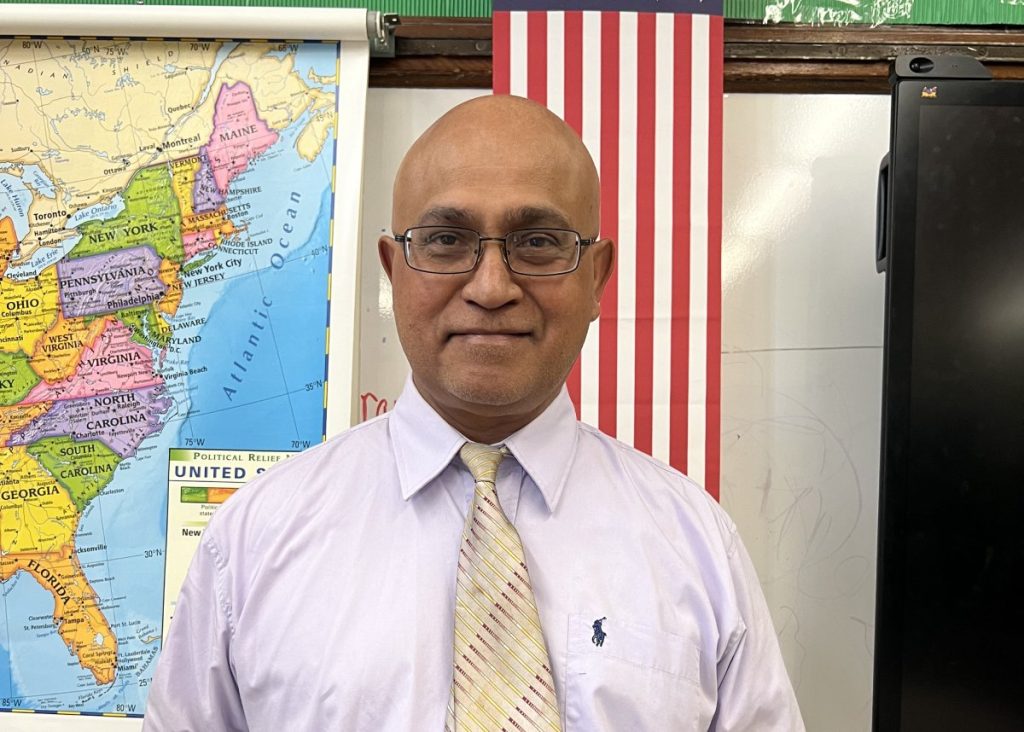
Reference is drawn to criticisms of President Irfaan’s handling of relations with Cuba and for developing extremely close relations with President Trump. The President is pursuing what in International Relations (Politics) is known as “Realism or Realpolitik”. Unless one studies or reads a lot about International Relations and International Politics and American Foreign Policy, one will not understand the concept. In short, President Ali is toeing the American line for continued American support of Guyana’s national security and economic prosperity (oil, gas, minerals extraction). Those, like Dr. Jagan, Maurice Bishop, Salvador Allende, Juan Bosch, Jacobo Arbenz, Fidel Castro, etc., who defied American hegemony or sought to antagonize Washington (as happened in Guyana in 2012 with the feral blast and 2018 with honoring a terrorist in parliament), paid a price.
Irfaan is smart. He understands geo-politics better than his predecessors. He is dancing between the political raindrops, being close to Washington while not completely abandoning Cuba. The US seems to have eased the pressure on Cuba that will allow CARICOM states to send humanitarian aid. And Guyana should send humanitarian including medicinal aid to the Cuban people through NGOs.

In contemporary international relations, as involved President Trump and the Caribbean, small states don’t have much option. They have to align themselves with Washington or suffer the consequences. President Trump can pressure multinationals to pull out of Guyana as happened under previous Presidents as when Burnham moved leftward, crippling the economy leading to the massive exodus of Guyanese. A state like Guyana navigating rapid economic transformation do not have the luxury of pure ideological posturing of publicly expressing solidarity with Cuba or showing same at the UN vote. Instead, a small Caribbean state they must anchor their foreign policy in strategic realism, matching national security imperatives and economic growth with the realities of American power in the region. For Guyana, a nation experiencing an unprecedented economic boom driven by massive offshore oil and gas discoveries, maintaining a strong, cooperative alignment with the United States under President Donald Trump is not merely an option; it is an absolute geopolitical necessity. President Trump can squeeze Guyana anytime.
President Irfaan Ali has repeatedly demonstrated a sharp pragmatic grasp of geo-political reality. By fostering robust bilateral ties with Washington, engaging directly with key U.S. officials (Hegseth, Rubio, others, and military officers), and aligning with broader hemispheric security frameworks, Irfaan has positioned Guyana as a vital partner in the Western Hemisphere. Continuing to support and closely collaborate with President Trump’s administration is essential for safeguarding Guyana’s sovereignty, securing its economic future, and ensuring long-term regional stability.
The foremost reason for President Ali maintaining a steadfast partnership with the Trump administration lies in the realm of national security and territorial defense. Guyana has long faced persistent, aggressive external threats to its sovereignty from Venezuela. In an era marked by geopolitical friction and shifting global boundaries, a small defenceless nation like Guyana require powerful, reliable security umbrellas to deter foreign aggression.
The Trump administration, through key foreign policy architects and strategic engagements, has consistently signaled a muscular commitment to hemispheric stability and the rule of law. High-level diplomatic and security exchanges—such as visits by senior U.S. officials to Georgetown and strategic dialogues at the Pentagon—underscore a clear message: Washington views Guyana’s security as vital to regional order. By maintaining a close alliance with President Trump, President Ali ensures that Guyana retains an unshakeable deterrent against illegitimate territorial claims, securing peace through strength by allying with Washington.
Guyana is currently undergoing one of the fastest economic transformations in modern history. Turning oil and gas wealth into sustainable, long-term national development requires a lot of resources such as massive capital, advanced technical expertise, and secure access to global markets. The USA , Exxon, and other MNCs provide such resources.
The United States remains the preeminent engine of financial and technological power. Under President Trump’s America First agenda, U.S. foreign policy heavily emphasizes secure energy production, supply chain resilience, and economic independence in “our backyard”. Guyana sits squarely at the center of this strategic vision. By continuing to partner with the Trump administration, President Ali can ensure that American energy conglomerates (led by Exxon) remain deeply invested in Guyana’s infrastructural evolution. This alignment opens doors for expanded trade, deepens bilateral investments, and fast-tracks the technological modernization required to turn temporary resource wealth into permanent national prosperity.
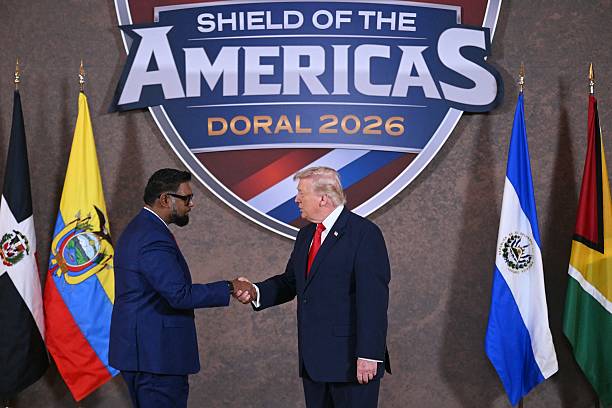
Critics sometimes question whether small developing nations should tie their diplomatic fortunes to populist or nationalist American administrations. However, effective statecraft demands looking past domestic U.S. political noise to evaluate concrete national interests. President Ali has excelled at this by adopting an open-door, direct communication style that mirrors the pragmatic, results-oriented approach favored by leaders like President Trump. American foreign policy is conducted by Trump, not Congress. President Ali was rewarded with two invitations to two Shield of Americas Alliance and a defense treaty with USA signed between himself and Secretary Hegseth. Guyana should not let USA domestic policy influence its relations with Washington. Trump remains the boss for two more years.
Whether collaborating on regional security initiatives, tackling transnational drug trafficking, or addressing shared hemispheric challenges, President Ali has shown that Guyana benefits immensely from being at the table rather than standing on the sidelines. Aligning with Washington does not mean abandoning multilateralism; it means recognizing that when a global superpower offers a direct partnership based on mutual economic and security interests, a smart leader accepts it wholeheartedly.
Under the leadership of President Irfaan Ali, Guyana has stepped onto the global stage with remarkable confidence, poise, and strategic clarity. To protect its borders, safeguard its booming economy, and guarantee a prosperous future for all Guyanese at home and in USA, maintaining a firm and cooperative relationship with President Trump’s administration is indispensable. By continuing down this path of pragmatic, bold diplomacy, President Ali can secure Guyana’s place as a respected, protected, and thriving leader of our country and the Caribbean and the wider Americas.
Yours truly,
Vishnu Bisram