


The world needs a paradigm shift towards universal peace.
The collapse of our civilisation demonstrates that we have lost the “reverence for life” and values. Ethical, moral and spiritual values have been replaced with violence, militarism, greed, anger, hate, terrorism and psychological and emotional warfare.
There is a need for a new philosophy based on committed social action and a mass spiritual transformation accompanied by an intellectual process of a paradigm shift. We have to return to our moorings. We have heard of economic, social and cultural paradigms. But not a paradigm of peace. This is the way humanity has to traverse if we want to save mankind from further annihilation and warfare.
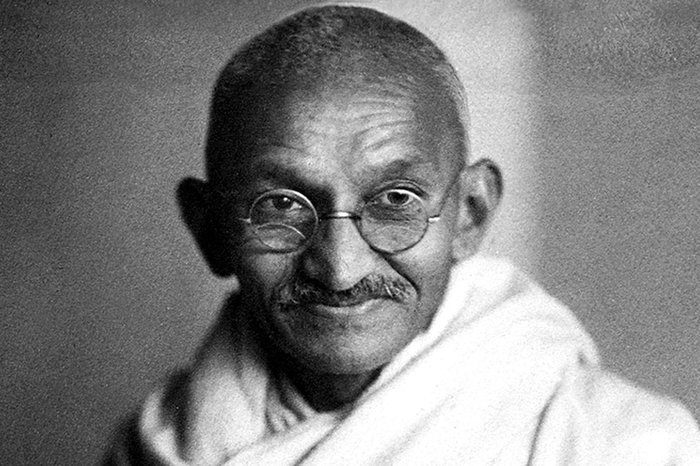
One such human being whose work and philosophy and who remains one of the most dominant historical figure in the 21st century: Mahatma Gandhi.
Friday January 30, 2026, marks Gandhi’s 78th h anniversary when he fell by an assassin’s bullet and the world should stand still in a moment of silence and reverence to his posture as an “apostle of peace”. Gandhi’s name would linger in the minds of humanity for several more centuries because of his deep commitment and firm conviction towards a world free of nuclear warfare, peaceful co-existence, law, order, human happiness and stability.
This would be so unless we are graced with another incarnation of a Christ, Buddha or Krishna. We can steer away from our civilisational crisis. We have to do that right away.
The world needs peace more than ever now. Look around in the Middle East, the United States, Russia and Ukraine Asia, Europe, India, Pakistan, Gaza and Israel and our own Trinidad and Tobago, where murders and kidnappings are the order of the day.
Our escape route is to follow the Gandhian approach as it has the capacity of integrating the organisational and ethical aspects of our social system.
Trinidad and Tobago’s first prime minister, the late Eric Williams in a speech marking Gandhi’s 90th birth anniversary on October 2,1959, noted that “it will take many years before the world gets a truly adequate and comprehensive conception of the stature as a human being as Mahatma Gandhi…understanding the range and scope of one of the most gifted human beings who has ever lived”.
Gandhi was a master of spiritual techniques. He developed political and social theories during his 21 years of active political and social activities in South Africa. This practice and experience set him to the proper stead in his 34-year struggle against the British for Indian Independence. He called this “Satyagraha”. This he defined as TRUTH FORCE and LOVE FORCE. “The soul of the Satyagraha strategy was active resistance – resistance which found an outlet, not in violence, but in the Active Force of Love, Faith and Sacrifice,” he wrote.
Arising out of his South African and later his Indian experiences, he postulated several specific mal and ethical pillars for human survival in a divided world. He defined them as: the equality of man, the dignity of the human person, the transcendent nature of the soul of man, the supremacy of the spiritual over the material, the ultimate victory of truth over falsehood, the ultimate defeat of brute force by the all-pervading strength of the inner moral force of man.
Gandhi taught the world that the human spirit is more powerful than the mightiest of armaments. He applied moral values to political action and pointed out that ends and means could never be separated, for the means ultimately governs the end. If the means are evil, then the end itself becomes distorted and at last partially evil.”
Great leaders of men fall into two categories.
Firstly, they belong to those who affect the life and thought of their contemporaries in varying degrees, but whose influence steadily fades away after their death.
Secondly, these men are a few who continue to influence humanity through their life and message long after death. The latter phenomenon bespeaks a type of greatness capable of defying time itself which dissolves everything else in its relentless flow.
Such greatness discloses something permanent and abiding in the midst of much that is temporary and fleeting in the ideas and values radiated by the leader by his life and message. We must remember that today is observed as International Day of Peace by the United Nations. The works and writings of Gandhi have covered thousands of words in the form of books, memoirs, statements, articles, commentaries and conferences, even greater than the works of William Shakespeare.
The world leaders, religious leaders, political leaders, peace keepers, statesmen and the like continue to look to Gandhi for inspiration and thoughts. Their testaments are for all mankind to search and read and discipline themselves. Albert Einstein was deeply inspired by Gandhi’s teachings and his exemplary behaviour, adding that future generation would scarcely believe that such a man in flesh and blood traversed the earth.
I humbly suggest that Gandhi be honoured with the Noble Peace Prize posthumously, as Gandhi belongs to the second category of men.
Respectfully submitted
Parasram (Paras) Ramoutar. HBM. JP. BA.APR.ABC
International Journalist/Consultant
Email: paras_ramoutar@yahoo.com