


Dear Editor,
Over the last five years, Guyana’s relationship with India has been further strengthened under the presidency of Dr Irfaan Ali who studied in India some two decades ago; Irfaan became President on August 2, 2020. He built on the relationship established by his predecessors. Today, Guyana enjoys strong commercial, cultural, economic, and political (foreign policy) ties with India.
On January 26, India celebrates 76th anniversary since becoming a republic. In August 15, 1947, India, using non-violence method spearheaded by Mahatma Gandhi, gained independence with a PM as head of government and the King (George) as head of state. And almost two and a half years later, India became a republic with a President as the ceremonial head of state. Guyana followed a similar pattern, gaining independence in 1966 with a PM as head of government and breaking off from Britain in 1970 with a President replaced the Queen as head of state. In December 1980, Burnham changed the constitution with the President becoming head of government and head of state and the PM being assigned a cabinet role. Several other nations around the globe followed that path, becoming republic. Since 1947, and even before that, then British India, India, and the Republic of India, has had very close relations (initially cultural and economic and subsequently political and later strategic ties) with Guyana (British Guiana).
Since Indians started coming to British Guiana in May 1838 as indentured laborers, British India had maintained cultural ties with Guiana and the British, Dutch, French, and Danish West Indies (Caribbean); India had queried into the welfare of the indentureds. India fought against indentureship and led the fight to end recruitment of laborers it in 1917; indentureship end in 1920. Cultural linkage was closely followed by commercial ties as fellow colonies to trade in goods used by the indentured. And as India was struggling for independence, so too were the colonies that followed India’s lead to free themselves from colonial rule. Relationship grew! After India gained independence, the colonies around the globe also became freed of imperial rule. Most of the British territories obtained independence (1962 thru 1970s) as did Surinam (from Holland 1975). French colonies became overseas departments of France. Denmark sold its copy to USA which is an overseas territory.
Independent India strengthened cultural and commercial ties with the colonies and after they became new nations, political ties were established. Meanwhile, India took the lead, with a few other larger newly independent nations, and launched the non-aligned movement. The newly independent states became members of and closely followed the NAM movement. India became a kind of leader, maintaining neutrality. Other third world or developing world or south countries followed India’s lead on neutrality — not tied to the USA led western bloc and the Soviet led eastern bloc. Guyana was very strong in the NAM movement under Burnham and Jagan leadership and even hosted a foreign ministers conference of NAM. India has maintained a pro peace stance, urging dialogue and diplomacy, on international conflicts especially on Ukraine, Gaza, and others. It has maintained a balanced relationship. India’s size, economy, and power makes it one of the most influential nations — big powers are courting India. India is one of the few countries that can engage Russia, USA, Ukraine, and Palestine at the same time. Indias has achieved great/leading power status because of its neutrality and the strategic convergence of a balance between USA and Russia and countering the hegemony of the several powerful nations or blocs. Smaller nations are wooing Indian a variety of matters. It is not forgotten that India supplied vaccines to all countries during Covid while the wealthy countries retained their vaccines for themselves first and foremost.
Guyana follows similar position calling for ending conflict in those wars. Guyana has strengthened ties with USA, aligning its position on international issues with Washington. its future is with USA and India, not adversaries of America.
Ties between India and Guyana have grown since the 1950s. India has been providing a lot of assistance to Guyana and other developing nations—scholarships, grants, loans, training, etc. Guyana is the largest aid recipient per capita. India supports Guyana at international forums. PM Modi visited Guyana. President Irfaan visited India. Vice President Jagdeo and PM Phillips as well as several Ministers also visited India.
Guyana must pursue strategic economic ties with Delhi — Economic Interests — trade with India — and defense as well as commercial ties with USA. And our future is having geo-strategic defense ties with Washington.
Yours truly,
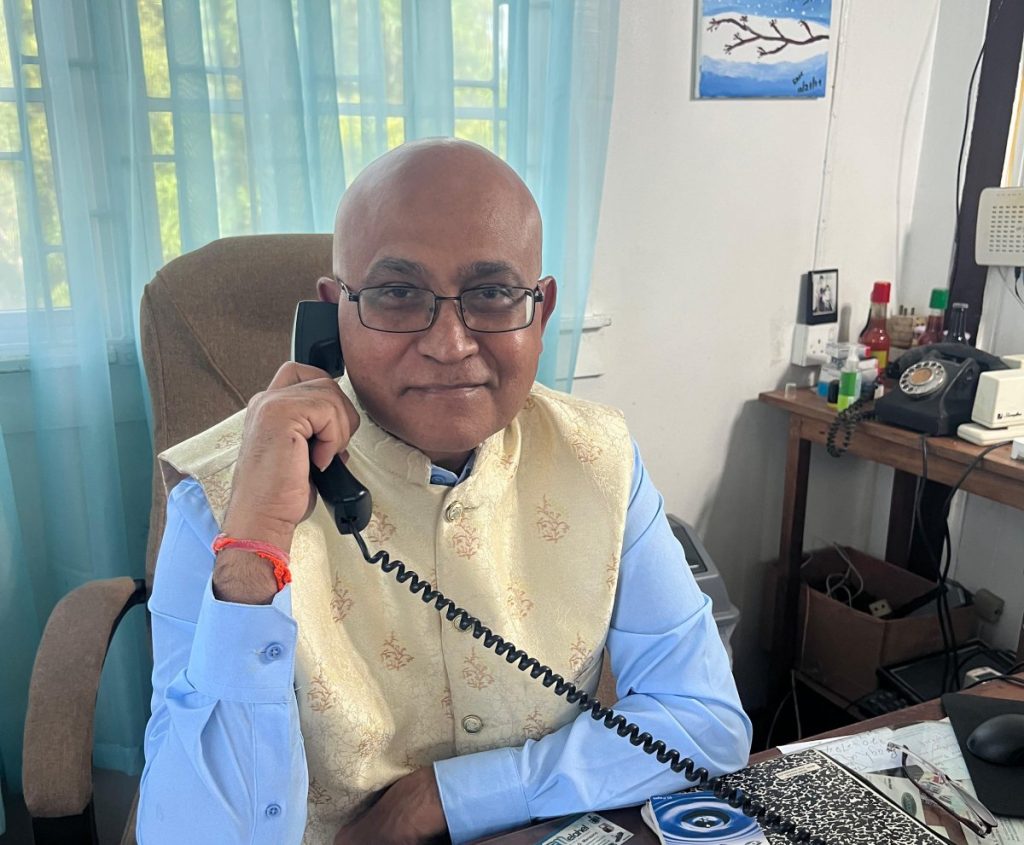
Dr Vishnu Bisram