


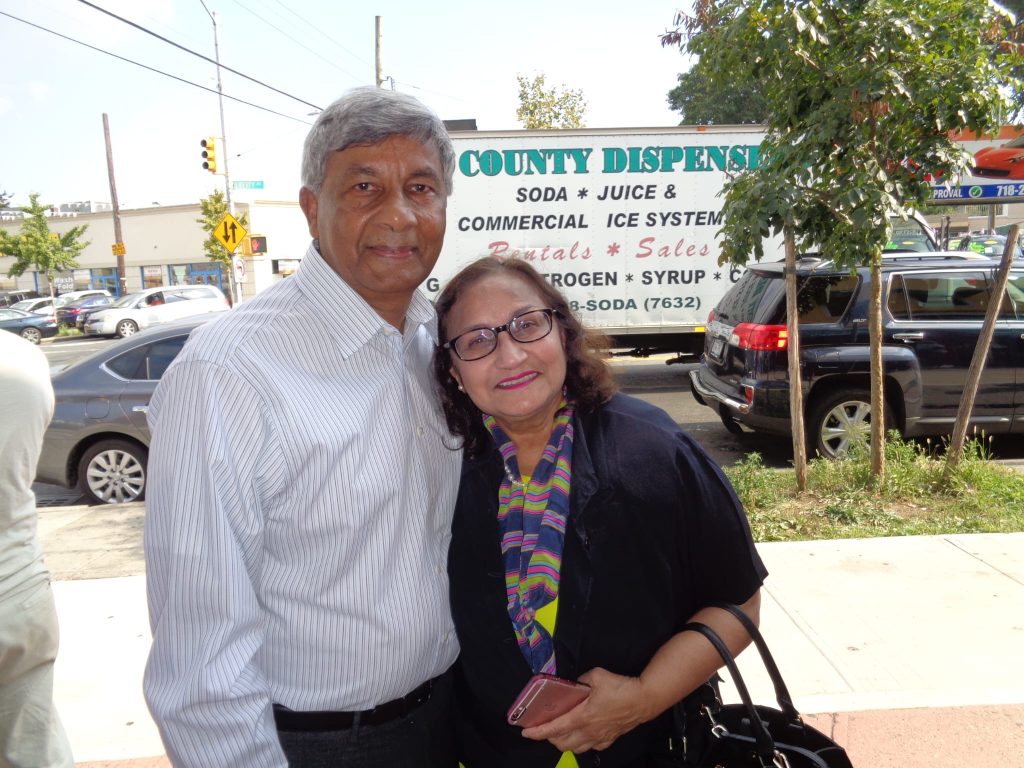
I learn of the passing of Dr. Dolly Zulakha Hassan (Sep 19), literary critic, a lawyer, a champion of democracy in Guyana, advocating from American freedom soil, during the period of the dictatorship and during the electoral shenanigans of 2020. She has been more than a scholar and lawyer. Her life, like that of a few others, stands as an enduring blueprint for how members of the Guyanese diaspora can successfully integrate into a new society while fiercely advocating for democracy in the former homeland. She was among a few of us Guyanese who came to the US to pursue tertiary education in the 1970s and early 1980s and who publicly displayed concern about mis-rule in Guyana, becoming activists in America for political change in Guyana. What stood out about this academic, and a few other Guyanese like Baytoram Ramharack, Vassan Ramracha, Chuck Mohan, among others, is their refusal to remain inside an intellectual ivory tower. She took her elitist educational background into grass roots activism like a few of us in New York. And like a few of us, she penned articles (gratis) for community publications on legal issues. To those who knew her personally, Dolly Hassan was more than her educational accomplishments. She lived a life with a purpose, serving the diaspora. She was a human being who touched lives, inspired others, and demonstrated through her example that compassion and conviction can exist together. As such, her passing is a loss to her family, friends, colleagues, and to the wider Guyanese community. Yet her legacy lives on in the people she helped and in her writings. Had Guyana initiated “Democracy Award”, she would be a viable candidate. She, like a few others in the diaspora, should have been honored by Guyana government a long time ago for championing democracy in tge former homeland.
She led a centrist group that worked with the leftist ACG, the PPP support group, and the right of center group that I belonged fighting for democracy. We cherished her support and the role she played in helping to restore democracy in our homeland.
Ashook Ramsaran, IDC President, paid tribute to Dolly:
“Dolly Hassan served the Caribbean community as a prominent immigration attorney with expertise and diligence. She understood the needs of the community she served with honor and distinction. She was highly respected and admired for her understanding of the laws and guidance to those who desperately needed such legal advice. Dr. Hassan was an Adjunct Professor at CUNY Law School and Supervising Attorney for the Liberty Center for Immigrants. She contributed regularly to the local media on changing US Immigration Law and related updates. She was a keynote speaker at the 2004 Human Rights Conference held at St. John’s University: “Human Rights Experiences: People of Indian Origin in the Caribbean, Americas Asia, Africa and Europe,” organized by GOPIO and the Guyanese East Indian Civic Association (GEICA) which later became the Indian Diaspora Council (IDC). Dr. Hassan will be remembered as a quiet stalwart of the Indo-Caribbean community who successfully guided thousands through the intricacies of immigration laws”.
I had the opportunity to engage Dolly a few times in person and on the phone. She was an amazing personality, unique in her education – an English Literature major and a lawyer. Dolly, like a few others, actively possessed an extraordinary blend of intellectual rigor, social conscience, and an unwavering commitment to human rights. She not only partook in the pro-democracy struggle for Guyana, she also assisted many Guyanese and others with their immigration issues, helping them to green cards and citizenship.
Dolly believed deeply in the dignity of every human being and in the importance of a society where democracy, justice, freedom, and respect for others could flourish. Her humanitarian spirit was reflected not merely in what she said, but in the concern that she showed for others and in her willingness to stand up for causes she believed were right. When Paul Nehru Tennassee was arrested on his arrival in Guyana around 1984 and placed on an ants nest and denied a teaching position at UG, Dolly, like a few others among us, reached out and took quick action. She, as did a few of us, lobbied Members of American Congress and wrote to President Reagan and others about rights abuses in Guyana. She also engaged Dr. Jagan multiple times, supporting free and fair elections. She can be compared with Moses Bhagwan in service to those who needed legal advice while combating authoritarianism in Guyana.
Dolly was also a gifted and thoughtful writer and what made her writing particularly admirable is carefully chosen words and graceful style of writing that revealed a mastery of the craft. Through her writing, Dolly gave expression to ideas, experiences, hopes, and concerns that might otherwise have gone unheard. Her words reflected both her intellect and her humanity, leaving a body of writing, if they can be put together, that will remain part of the legacy she leaves behind. The writings of this outstanding writer are marked by remarkable depth, clarity, and originality. Each article of hers reflected a keen understanding of an issue and she did so with an exceptional ability to express complex ideas in simple but powerful language, written with clarity and purpose. The writer’s words are not merely informative; they are thoughtful, engaging, and capable of leaving a lasting impression on the reader.
Before she became an advocate for democracy and a lawyer in the latter part of the 1980s, Dolly studied English Literature earning a doctorate in 1986 from the prestigious George Washington University analyzing the works of the celebrated novelist VS Naipaul, a brilliantly written dissertation that was later published in book form, “V. S. Naipaul and the West: From the Outside Looking In”. She taught English at a college in Washington and also in Saudi Arabia, before returning and earning a JD from CUNY Law School. Her studies of Naipaul’s works provided her with a foundational understanding of how fragile democracy can be in young nations like Guyana and how deeply the pain of political upheaval is felt by those forced to flee their homeland, enabling her to become a stronger champion of democracy in her former homeland. She decided to changed career, studying law and passing the bar exams in several territories. She was admitted to practice law in New York, Connecticut, and Washington, D.C. She stablished a law office on Liberty Avenue in Little Guyana. She turned her PhD and JD into a weapon for social equity. She has been a consistent outspoken defender of undocumented Guyanese and Caribbean nationals, warning against the predatory “consultants” and fraudsters who prey on vulnerable, desperate illegals and basement dwellers. And many turned to her. Just like how those of us turned to Moses Bhagwan for legal advice in case we were arrested in Guyana for championing democracy, several sought her legal opinion in New York on protests and immigration law.
And while practicing law, she continued her pro-democracy advocacy for Guyana. Dolly was among the civic voices emphasizing that true democracy requires adherence to the rule of law, constitutional supremacy, and transparent electoral processes. She was of the view that democracy does not end with free and fair elections.
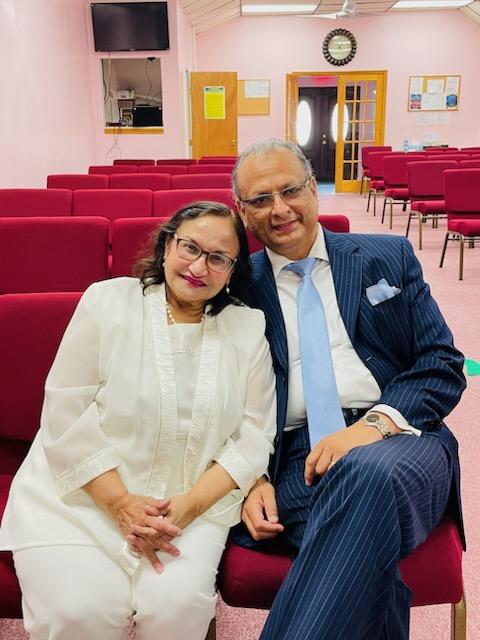

She has advocated that Guyana’s newfound economic wealth driven by its booming oil and gas sector must be coupled with robust democratic governance, human rights protections, and equitable social distribution so that ordinary citizens are lifted out of poverty.
As Guyana continues to navigate its rapid ascent on the global economic stage, the vigilance of human rights champions like Dr. Dolly Hassan remains as vital as ever. She teaches us that whether one is analyzing literature from the “outside looking in” or fighting for justice from the inside of a courtroom, the pursuit of human dignity, democratic fairness, and social justice is a lifelong, borderless calling.
Dr Dolly Hassan will be remembered as a compassionate humanitarian, a committed democratic activist, and an outstanding writer whose life was devoted to democracy, people, principle, and the power of the written word as has been that of a rare few of us in America.