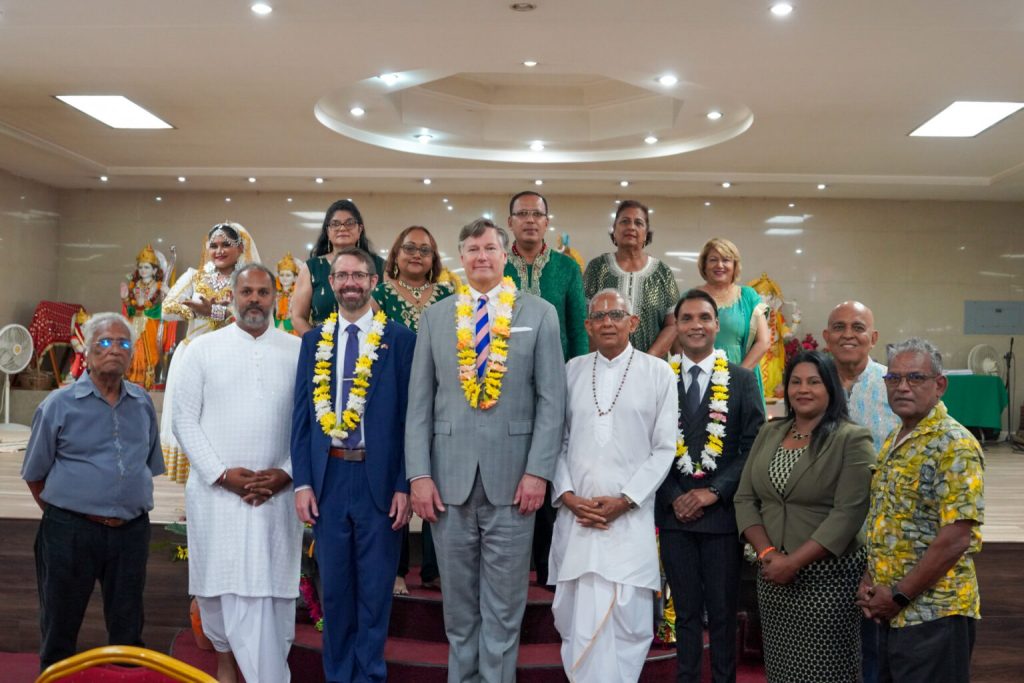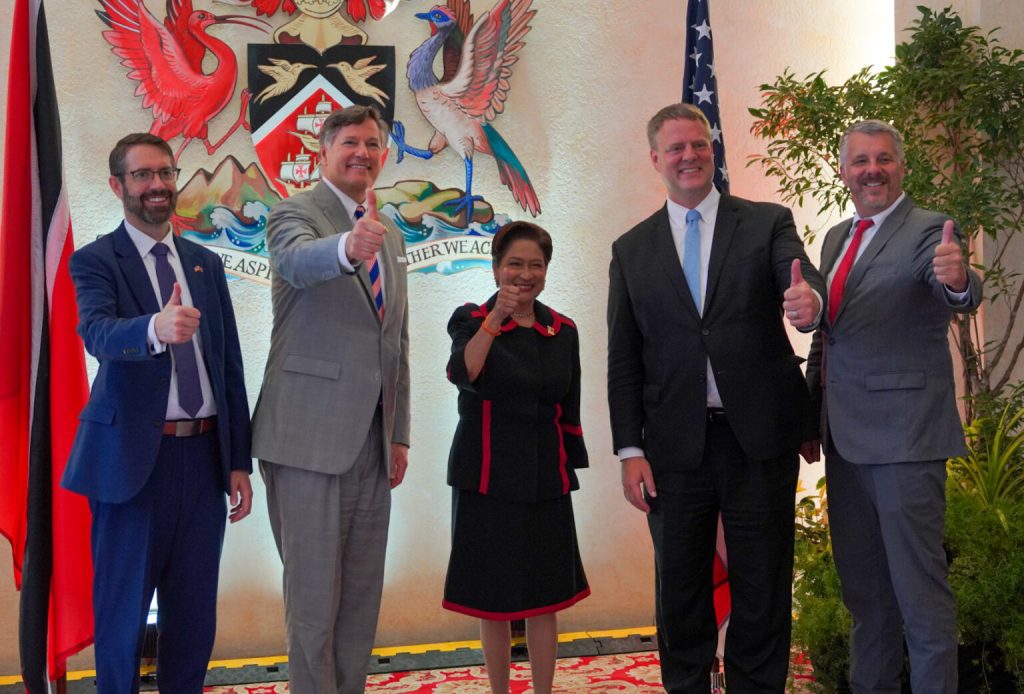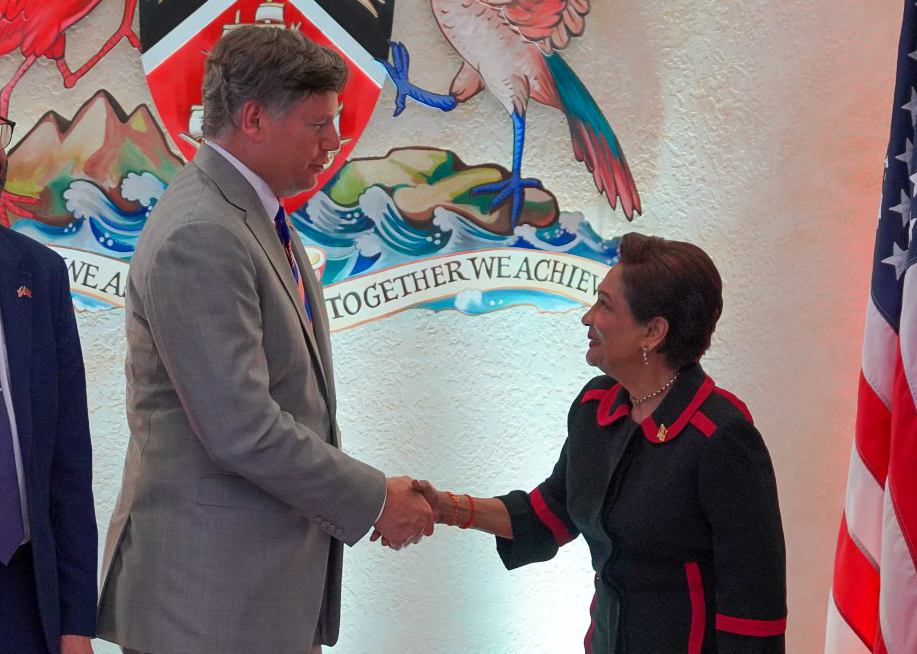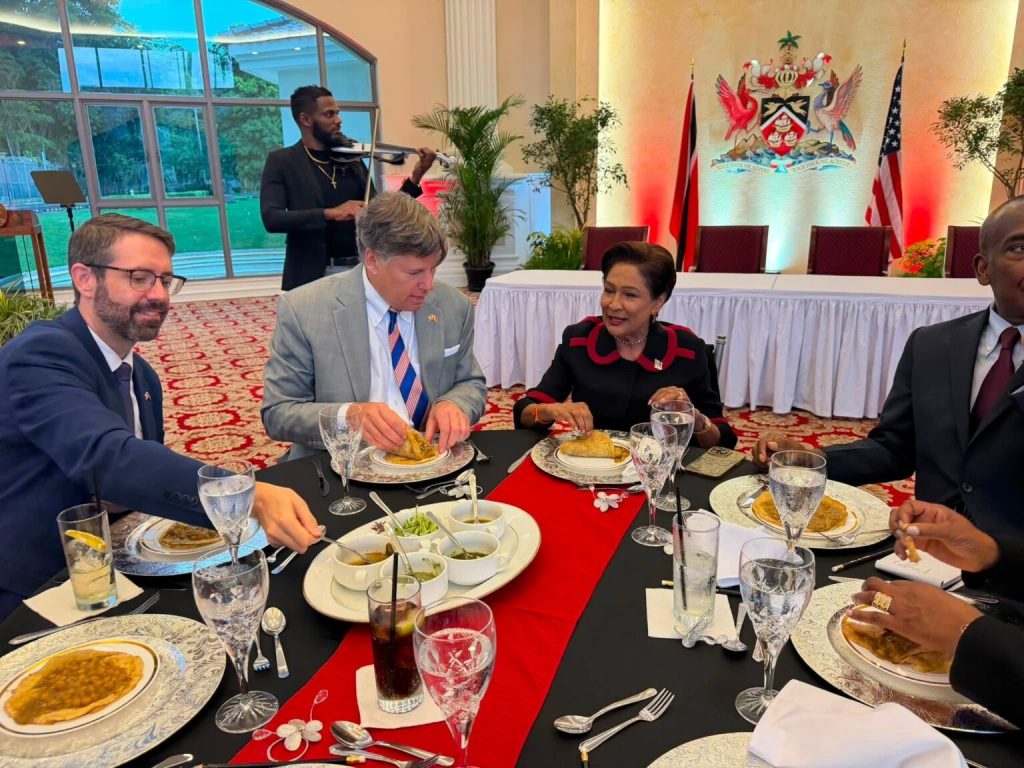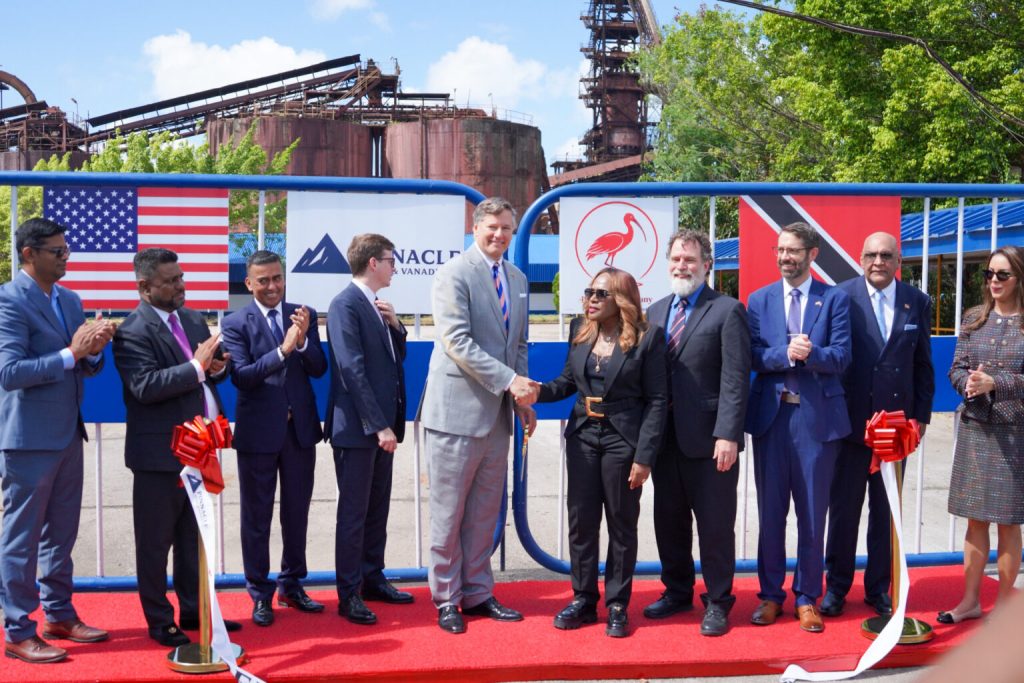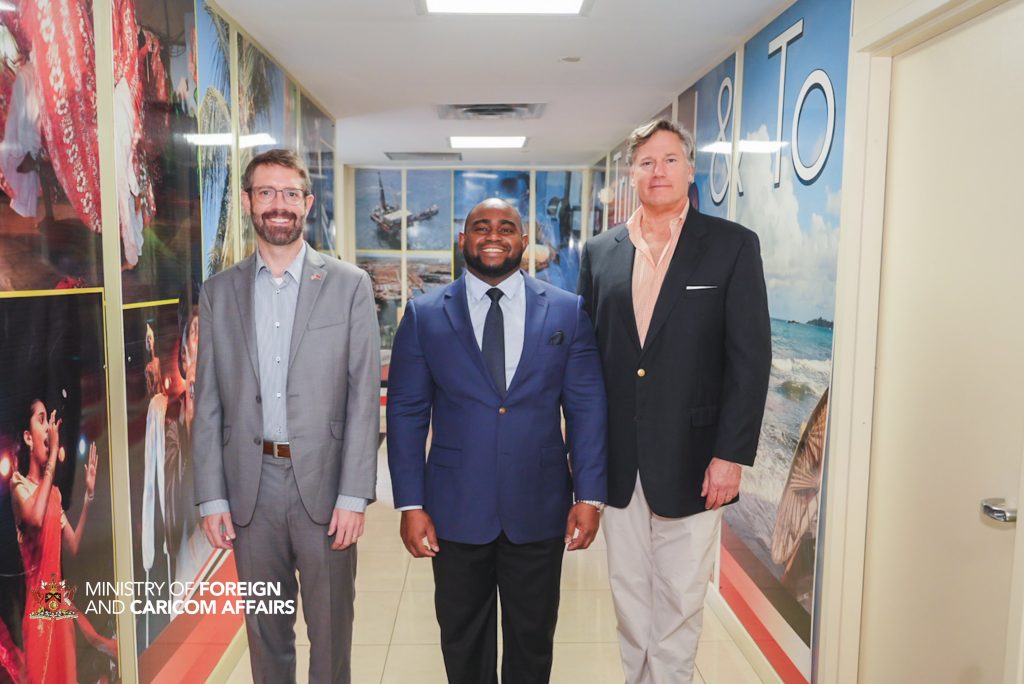
Washington sees a cooperative Trinidad and Tobago administration as an invaluable anchor of stability and investment in the region, countering transnational security threats. The expanding strategic alliance between Washington and Port of Spain, solidified through the recent appointment of the new Ambassador (herself a Trinidad born) and the arrival of a high-level delegation led by Deputy Secretary of State Christopher Landau, will redound to varied benefits for T&T. It has formalized an unprecedented alignment between the two nations, a relationship growing rapidly over the last 15 months. The US is strengthening ties with T&T and other nations to ward off threats from an active Chinese presence in the region. The US seeks partners to reduce Chinese influence and to guarantee critical supplies of key minerals and natural resources (energy, gas, etc.) for the West.
Landau’s visit centered on strengthening bilateral relationship, security cooperation, geopolitical, convergence, and energy availability. It is a transactional partnership, diplomacy that is the hallmark of the Trump’s presidency – on balanced trade, security cooperation, and private-sector economic alignment. President Trump’s foreign policy is focused on transactional alliance with countries. T&T, Guyana, Argentina, Chile, Dominican Republic, and just this month Colombia have become willing partners.
Both T&T and US have been beneficiaries of this new partnership – US security equipment and vessel on T&T soil and in its waters and to deter Venezuelan ambitions, American investments in and soft loans to T&T. It is also noted that T&T is not among countries that face visa sanctions of its citizens; Washington is not actively pursuing illegals from T&T in USA; nationals continue to be eligible for residency green cards.
This visit by Mr. Landau underscores US commitment to strengthening partnerships across the region, advancing shared priorities, including regional security, energy resilience, and economic prosperity. Using direct diplomacy, both countries have bypassed traditional inertia (and criticism in T&T by the opposition) to forge a highly synchronized partnership. For years, diplomatic relations between the US and T&T followed a predictable cycle of criticism or silence from POS. Since the change in Administration in May 2025, with the ascension of PM Kamla Persad Bissessar, a profound structural shift has occurred – wise aggressive courting of Washington, moving from hands off to embracing Washington under Trump’s leadership.
The bilateral engagement is now tightly anchored by Dep Sec of State Christopher Landau’s engagement with PM Kamla, coming on the heel of the PM’s visit to Washington last September and engaging President Trump last March in Florida.
At the absolute center of America’s foreign policy in the region is to weaken the Chinese presence in the global race for resource security. The global energy and mineral transition has shifted from a localized economic asset into an area of intense geopolitical competition. For Washington, the objective is to reduce the presence of extra-hemispheric competitors, particularly China, which has spent over a decade aggressively financing infrastructure across the Americas and Caribbean. By offering U.S. commercial guarantees and encouraging private-sector investment, Landau’s diplomatic presence seeks to lock in T&T’s energy and other critical products (methanol, etc.) for American and Western industrial supply chains. This is beneficial to T&T as it is vital mechanism to attract investments and scarce hard currency, rebuild its economy that was stagnant under the previous administration, and secure vital political leverage in Washington and international credit markets.
Beyond the economic framework, the Washington-POS alliance has taken on a distinctly security-focused character, positioning itself as a core regional ally of the US. This strategic alignment was highly visible in the shared diplomatic approach toward Venezuela and CARICOM under Trump’s presidency. It also creates a strong diplomatic front in the Organization of American States (OAS) and other multilateral forums, effectively shifting the balance of political influence in the region. It is noted that Washington has consistently praised T&T’s firm stance against authoritarian regimes in the hemisphere.
The broader economic discussions championed by Landau reflect a shared conviction that private-sector-led growth must continue to drive bilateral ties, but benefits must flow quickly to T&T. The Kamla administration’s fiscal measures and partnership with US have been met with enthusiastic approval in Washington, but the economy presents significant domestic hurdle for the PM. The partnership with USA creates some political volatility. The challenge for U.S. diplomacy will be ensuring that strategic partnerships in energy and cooperation yield tangible domestic benefits that can sustain public support for Kamla.
For Landau and the State Department, their strategy centers on transforming diplomatic goodwill into concrete corporate investments, aid to T&T address criminal violence, soft loans, and framing economic policy as a vital pillar of regional hemispheric security. Long-term stability of the relationship will depend on how effectively this partnership survives political landscapes and domestic economic pressures and the aid that flows into T&T. If the current partnership delivers durable growth, the alliance could become a blueprint for U.S engagement across the region. For now, Landau’s diplomatic engagements have successfully established a critical strategic anchor in POS, ensuring that as global competition intensifies, the US and T&T remain firmly aligned on the regional stage.