














By the mid-1980s the Temple in the Sea at Waterloo, Carapichaima, had crumbled. This iconic cultural landmark was no more and there was the urgent need for sons and daughters of the soil to step forward to rehabilitate and restore it to its past glory.
A few in search of name and glory were roaming the area making wild promises to rebuild the temple. One individual was appealing to the public for funds for the project while another, with a camera around his neck, was busy clicking photos. After several years there was no concrete commitment by any individual or group to rebuild the temple.
The leadership of the Hindu Seva Sangh looked on silently at the drama around this historic landmark. With the 150th anniversary of Indian Arrival Day (1845-1995) approaching, the Executive of the Sangh summoned a meeting and took a decision to build a statue to recognize and honor Sewdass Sadhu. The Seva Sangh, in the early 1980s, had collaborated with the St Patrick County Council under the chairmanship of Dr. Suruj Rambachan to construct the indentureship monument at Manmohansingh Park, Bonase, Cedros. With this accomplishment, the members of the Sangh were convinced that they had the experience and capacity to deliver the Sewdass Sadhu Monument.
The cost of constructing the sculpture was estimated at $50,000. The Couva Tabaquite Talparo Regional Corporation (CTTR), under the chairmanship of Ramchand Rajbal, joined hands with the Seva Sangh. In addition to granting permission to erect the statue on the Car Park of the Yankaran Cremation Site at Waterloo Bay, the CTTR contributed $10,000 for the construction of the base for the statue. Also on board were the widow and family of the Sadhu and other villagers.
The public came to learn that the Sadhu first built his temple on lands belonging to the sugar company and was arrested, taken to the court, fined and imprisoned for trespassing on private property. The Sadhu paid his fine and served his prison term but his resolve to build the temple only grew stronger in his heart. The Sadhu remarked: “They destroy my temple on land, now I am building in the sea. The sea belong to no one.”
With this resolve the Sadhu placed steel drums in the sea during low tide and began fulling them with dry gravel mixed with cement. All this work was done with two buckets hanging on either side of the handle of his bicycle. Not known to be talkative, villagers noticed the Sadhu going about this task daily, not soliciting help from anyone. This resolve rolled out day after day, week after week and months after months until his kutiya was completed, murtis were installed and opened to the public for worship.
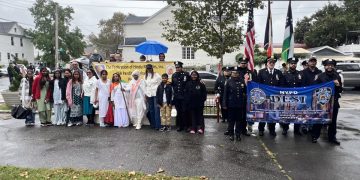
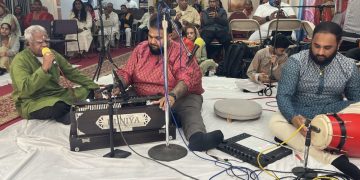
In 1994 the Hindu Seva Sangh organized the sod turning ceremony for the installation of the Sewdass Sadhu Monument. The event included a procession from St Mary Junction along the Waterloo Road and a cultural program. Dressed in colorful saris and kurtas, devotees played their dholaks, majeeras and chanted the Maha Mantra- Hare Ram Hare Krishna-as they walked along the road with police escort. Villagers lined the road while others looking on from their galleries waved their hands with broad expressions of solidarity on their faces, happy that this grand event was being held in recognition of a son of their district. To the back of the procession was a long trail of motor vehicles stretching for miles, all part of this grand event.
Basdeo Panday, MP for Couva North, was invited for the sod turning ceremony. The widow of the late Sadhu was garlanded and presented with a gift. Several artistes were on stage rendering songs and executing dances. A speech was made by Basdeo Panday on the significance of preserving our ancestral cultures. Also speaking on the program were Haripersad Harikissoon, President of the Hindu Seva Sangh and Ramchand Rajbal, Chairman of the C.T.T. Regional Corporation.
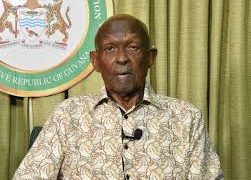
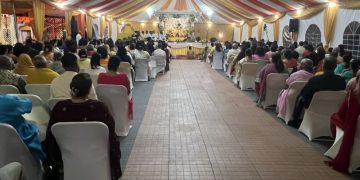
On May 30, 1995 (150th anniversary of Indian Arrival), President Noor Hassanali arrived at Waterloo Bay to unveil the statue. Hundreds were gathered for the historic event. A cultural program of songs, music and dances followed by speeches, all capturing the discipline, determination and steadfastness of the Sadhu to preserve his culture. The program culminated with the President unveiling the statue.
The Seva Sangh’s mission was to generate awareness of the heroism of the Sadhu and the erection of the Sewdass Sadhu Monument succeeded in doing just that. This was best demonstrated when a committed band of Hindus stepped forward and accepted the challenge to reconstruct the Temple in the Sea. Today the Temple in the Sea stands majestically at Waterloo Bay.
The Sewdass Sadhu Monument is a symbol of the devotion and determination of a simple Hindu man to practice his dharma against all odds.