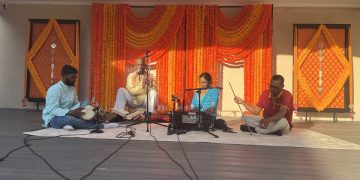



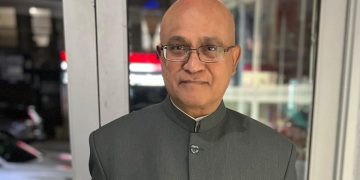
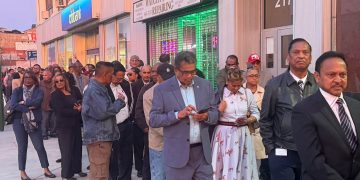
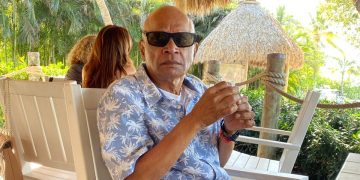

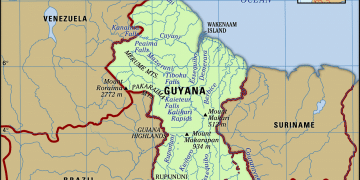
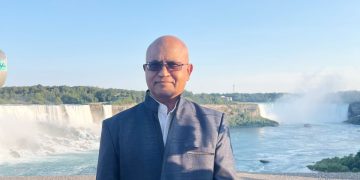
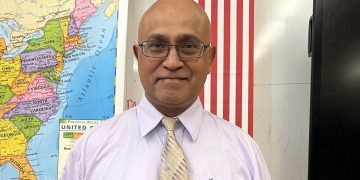
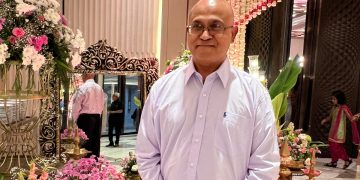
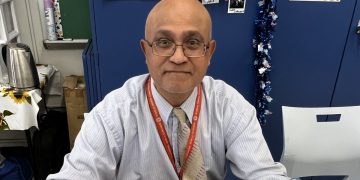




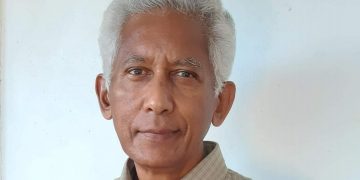
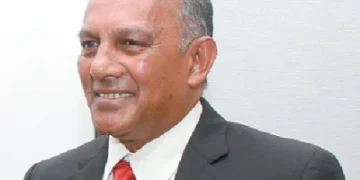
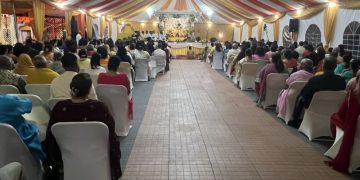
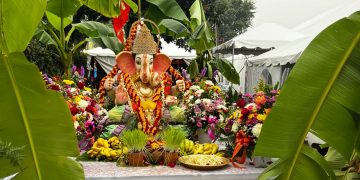
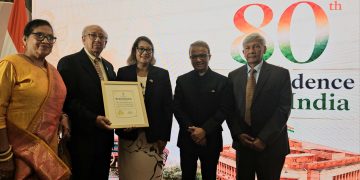
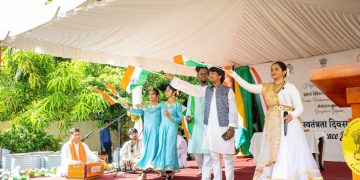
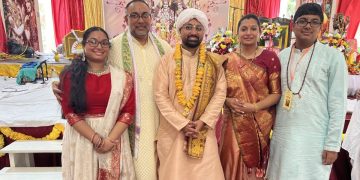
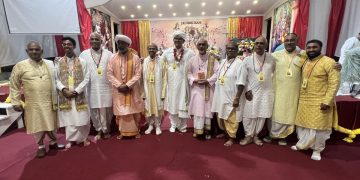

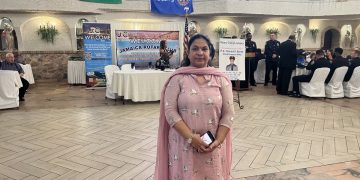
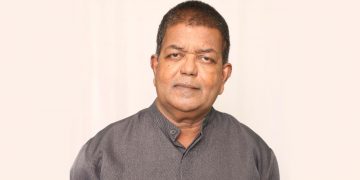
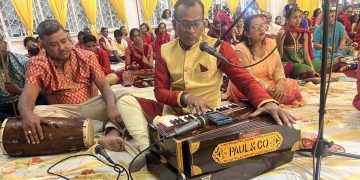
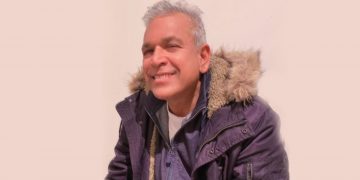

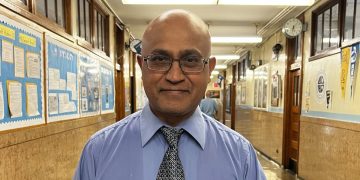
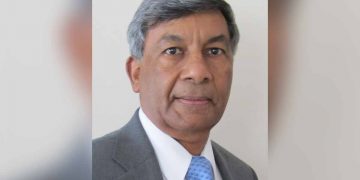

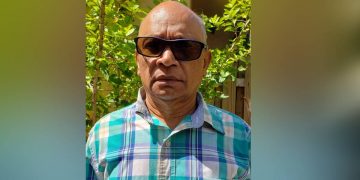
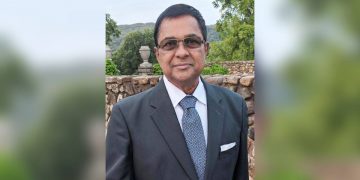
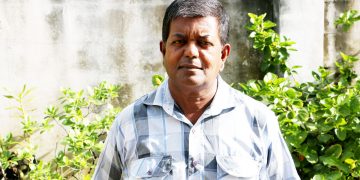
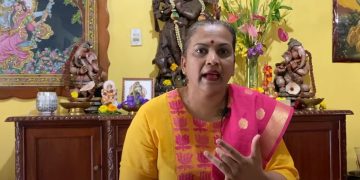
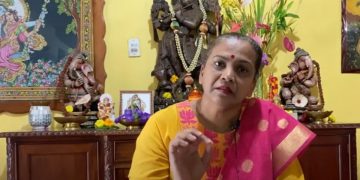
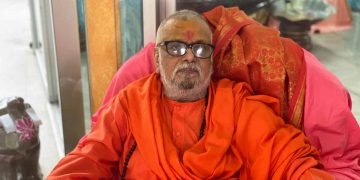
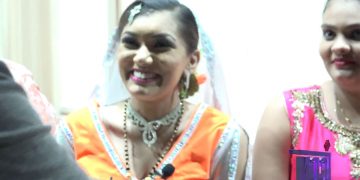

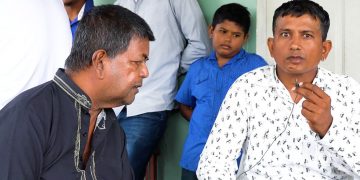
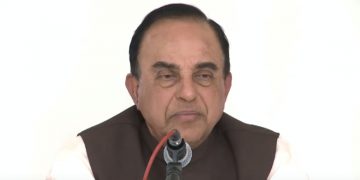
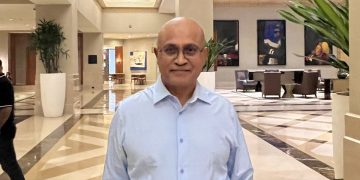

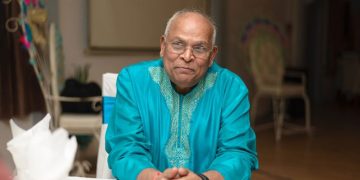


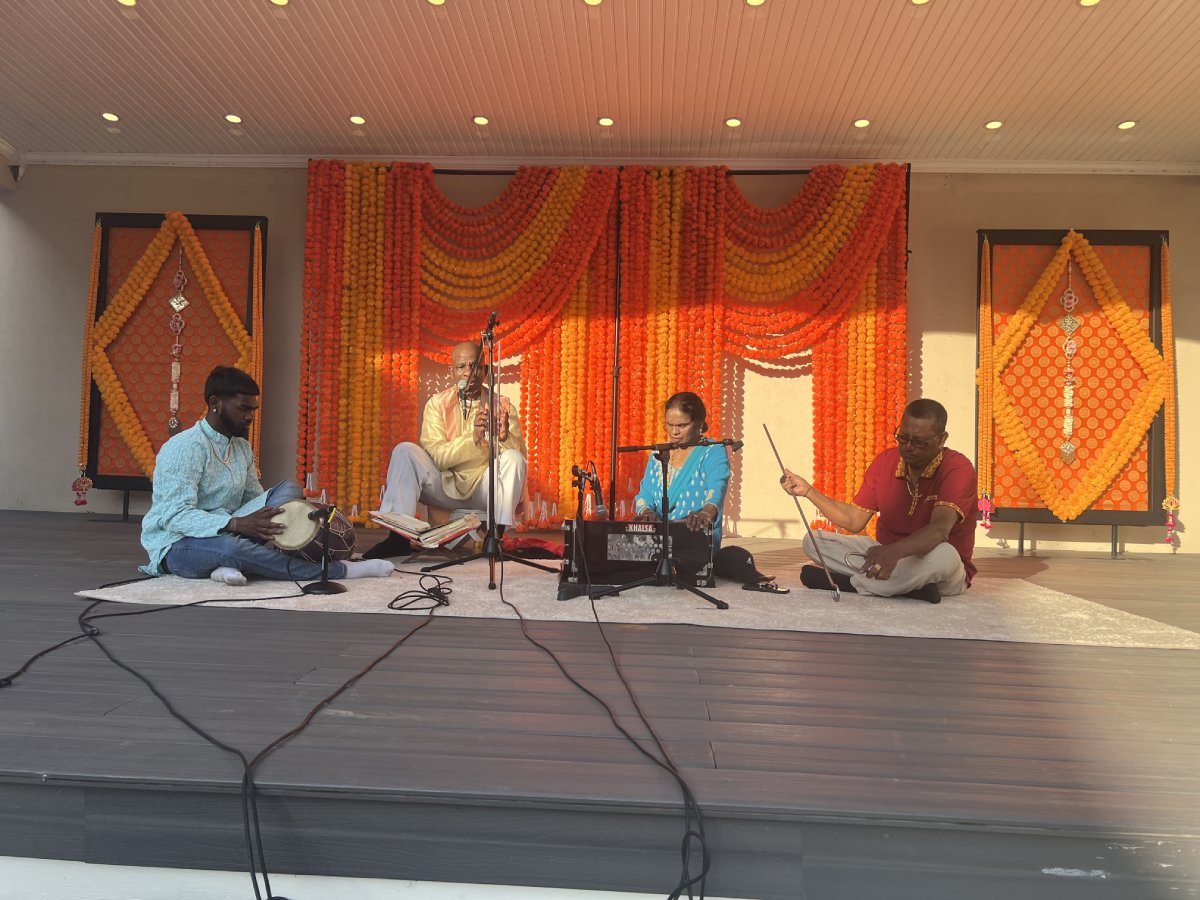
Traditional Taan or classical Indo Guyanese rural folk singing was featured in a Guyanese cultural concert in Jamaica, Queens last Sunday afternoon. Dozens of individuals and groups partook in the free concert to entertain hundreds. The concert was planned and organized by Guyana Hindu Dharmic Sabha USA led by Mr Dave Thakoordeen of Port Mourant. Traditional Guyanese snacks and soft drinks and vegetarian meal were available. The event was held at the compound of the Shri Surya Narayan Mandir founded by the late Dharmacharya Hardowar of Upper Corentyne. His son, Ram, an engineer by training and a Pandit, was elected as the Dharmacharya (religious leader) several years ago.
Taan was introduced in the Caribbean by the north India indentured laborers during the period (1838-1917). It is normally accompanied by traditional Indian musical instruments like harmonium, cymbal or jhaal, dholak, dantaal, among others. It is at the root of the Indo-Caribbean cultural identity and could be tied in with Hindu worshipping. This art singing and musical form came from the Bhojpuri speaking belt of Western UP and eastern Bihar. It is also known as local Indian classical singing in Guyana, Trinidad, and other islands. It is called ‘baithak gaana’ in Suriname where it is very popular. It once thrived in several other Caribbean territories like Jamaica, Grenada, and St. Lucia, but have disappeared. It has been traditionally sung during Phagwah, birth, wedding, and other rites of passage among Hindus. Music has been an important aspect of the lives of the indentured and played an important role in their cultural retention and identity. During indentureship, it allowed them to come together and recreate a new home in the alien surroundings.
Because of the way taan was sung and how it evolved during indentureship and after, it is considered as indigenous to Guyana, Trinidad, and Suriname. It has some originality in the Caribbean as the enslaved indentured laborers would sing taan during their time on the fields. The classical songs and chatney and their music are recognized as a distinct genre of music among the Indo-Caribbean people in the region and in their diaspora in North America, Europe, and elsewhere.The taan singing genre was the foundational root of modern chutney and soca. When indentured laborers arrived from India, they brought folk music and singing from memory as these art forms were not written. They also brought skills of playing classical instruments and memories of varied tunes. Skilled musicians and formal training were not available in the Caribbean. So the indentured laborers re-created and reconstructed these various traditions into a unique, localized taan singing and musical genre style. Over the years, especially in Suriname and Trinidad, it has evolved into a competitive, and concertized art form with groups from various communities competing for prizes. There has been countless recording of taan during the 1960s thru the 1990s.
Taan singing involves a lead vocalist singing in Bhojpuri, Hindi, or Caribbean Hindustani dialects accompanied by melodic variations. As noted by writers, “singers navigate specific vocal phrases, maintaining complex rhythms while demonstrating vocal control, deep emotion, and sustained notes”. The lead singer usually has a choir repeating verses. It is usually fast tempo accompanied by the musical instruments. It may not have music as there were also solo performances of only singing.
Taan singing has been dying out as an art form as happened in several of the islands. But efforts have been made to preserve it in Surinam and in Guyana and Trinidad; the governments of the latter two countries hardly provide support for traditional Indian art forms.
And its popularity has faced increasing challenges from the modern, fast-paced chutney genres; more and more indo-Caribbeans are tuned into chutney as opposed to taan.
In the olden days, it used to be called “Tent Singing” because they were sung at events held under temporary tents such as weddings and yajnas. Weddings and yagyas were generally held under tents to accompany the large audiences or guests. The singing, done in Bhojpuri or Hindi or Avadhi (Oudhi) or Brij would normally have a story behind or message to educate the public who understood those languages.
Attendees at the concert that also included dancing and a play on indentureship said they had a wonderful time.
For more picture click here, https://www.facebook.com/share/p/1B1Mwp7ke4/