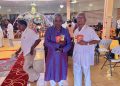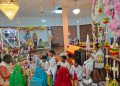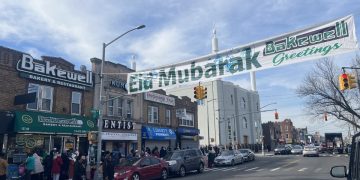



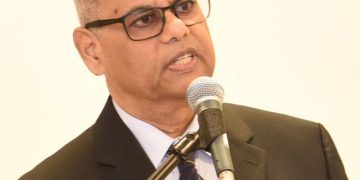




























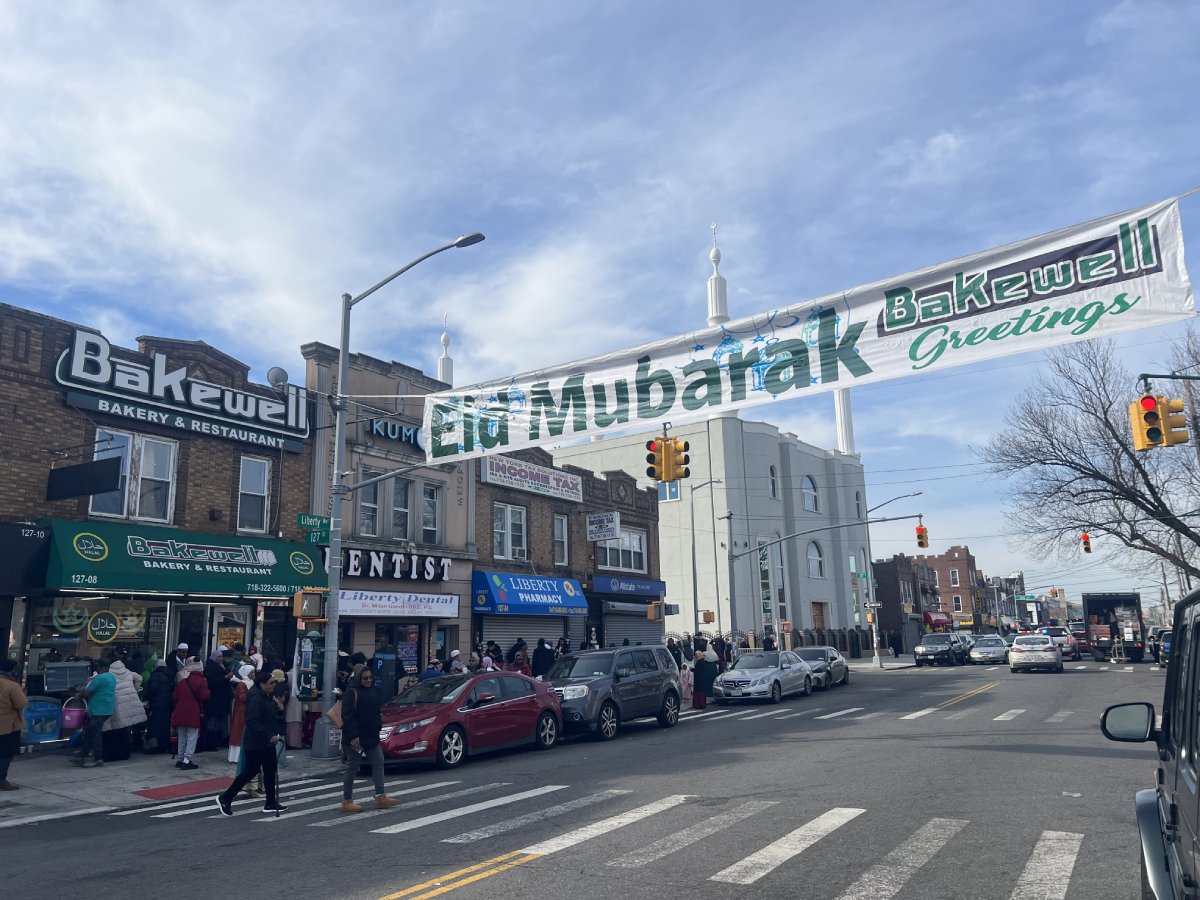
The large Guyanese and other Indo Caribbean and other Muslim communities in New York observed the Eid-ul-Fitr festival with traditional prayers at masjids across the city on a very cold Friday morning March 20, the first day of Spring. Eid culminates the month-long, dawn-to-dusk fasting period of Ramadan (also called rojah or Ramzan). Masjids held nightly prayers and organizations hosted Iftaar gathering (breaking of the fast). Politicians, including the Indian American Muslim Mayor of NYC Zoran Mamdani, the Governor of NY, Boro President of Brooklyn and Queens held Iftaar, signifying the importance of the Muslim community in the state and in political districts especially in NYC. There are several electoral representatives in the state and city. Politicians around the city conveyed Eid greetings. As in Guyana, vamazally was distributed on Eid.
Tens of thousands of Indian Guyanese and Trini Muslims are settled in the New York metro area; they turned out en masse to vote solidly for Zoran Mamdani last year. Eid is among the most important days for Muslims. It is a school holiday for New York City and private Islamic schools; the city subsidizes schools with books, children meals, transportation, and extra lessons. The city accords official recognition for Eid with an excused parking holiday. Muslim businesses were also closed for the day. Several Muslim owned-businesses sponsored gifts and or snacks for distribution at masjids. Bakewell sponsored snacks in the morning of Eid.
Hundreds showed up at the Jama Masjid in Woodhaven and Al Abidin Masjid in Richmond Hill, patronized by Guyanese and other Indo-Caribbean people, for the morning prayers to start the Eid festivities. Jama set up a huge tent. Several other Guyanese masjids in the Queens area (Jamaica, Hollis, Queens Village, Briarwood, etc.) also hosted prayers. Fasting ended on Thursday evening with the sighting of the new moon.
The masjids were overflowing with worshippers onto the sidewalks of both major masjids as the lead imam read from the Koran. The police facilitated the worshippers with a police vehicle parked in front of, or near the Jama masjid.
Islamic practices and festivals were transplanted in New York among the Indo-Caribbean community by Guyanese and Trinidadians since the late 1960s. Muslims of varied nationalities cooperated in practising and institutionalising their faith; non-Muslims, including the late Ramesh Kalicharran, also made contributions in establishing masjids in NY. Indo-Caribbean Muslims and Hindus collaborated with each other in practising their faiths during their early presence in NY in the late 1960s and 1970s thru 1980s. They rented and shared spaces at hotels and apartments for the observance of their religious festivals accommodating the observance of each other’s festivals. During the late 1980s, members of the two communities had raised funds and were in a position to purchase properties that wee transformed into masjids or mandirs. New temples and masjids were constructed during the 1990s and later. There are dozens of masjids and mandirs in the greater NY area. A few Guyanese churches have also been established. They cater for the spiritual needs of the large Indo-Caribbean community (Guyanese, Trinis, Surinamese, others) of over three quarter million in the NY environs.
Guyanese and each nationality or Islamic sect has its own masjid in America; worshippers tend to patronise their masjid of their own nationality or sect. Guyanese and Trinidadian Muslims tend to collaborate in masjid establishment. Non-West Indians also patronise Guyanese masjids. A few Indo-Caribbean Muslims patronise masjids of other nationalities where those of their group are not available in their communities. A few Pakistani and Bangladeshi Muslims patronize Indo-Caribbean masjids for services including the breaking of the fast and Friday juma.
During Ramadan that ended Thursday, masjids and jamaats held nightly services for breaking of the daytime fast with dates and delicious snacks. Homes and businesses of Muslims were beautifully decorated with green party favours and colourful flickering lights and a crescent, symbol of the Eid festival. For Eid, worshippers were immaculately dressed with traditional dress. They engaged in in ‘mangay’, ‘doa’ or supplication the lord. At the conclusion of the salaat or prayers, worshippers gave zakats (alms) to the poor, the masjids, imams or meiji, muezzin, and other Islamic causes. There was much joy among the jamaat or flock as they embraced or hugged each other, exchanged greetings, and shared gifts. Sawine or vermicelli (liquid and cake), pastries, dates, mithai, among other snacks and coffee were served.
For more pic click here: https://www.facebook.com/share/p/1CzyA92yZg/