










































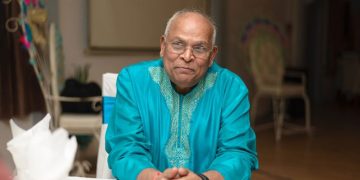






By : Adeel Ajaz Rahi
Trinidad is not merely a place it is an alchemy. It is where South America’s ancient breath meets the Caribbean’s rhythm, a crucible where the world’s grief borne on slave ships and indentured vessels was poured into humid soil and distilled into steelpan’s thunder, calypso’s wit, and the defiant joy of Carnival. To find it, do not look at a map. Listen instead for the song it planted in the blood of its people: a vibration of survival, now a soaring, self-made flight.
The story of sugar in Trinidad is inseparable from the story of its people. Across generations, this single crop shaped karma, culture, and identity, leaving behind a legacy both Kasht and Mithaas. During the era of slavery (1700–1838), sugarcane spread across the island, cultivated through the suffering of enslaved Africans. Their pain laid the foundation of the economy, though few could have imagined that sugar would one day give birth to a society woven from many peoples and paths.
When slavery ended, the plantations endured. Destiny turned again toward hardship. In 1845, indentureship began with the arrival of Indian laborers aboard the “Fatel Razack”. Bound by five-year girmit contracts and false promises of comfort, they crossed the “Kaala Pani” carrying little more than faith, memory, and endurance.

By 1917, nearly 140,000 Indians had arrived in Trinidad. Alongside their labor, they brought dharma, sanskaar, language, and song. The glow of deeyas during Diwali, the colors of Phagwa, the sound of bhajans and chautaal slowly settled into estate barracks and villages. This land shaped by sugar became “Chinidad” where Indian tradition met Caribbean soil and a new cultural world took form.
But Trinidad’s alchemy was not only forged in cane fields. It was carried in the voices of griots and pundits, in the drums of Shango and tassa, in the chants of Hosay and the hymns of Anglican choirs. Each community brought its own rhythm, and together they composed a symphony of survival. Africans, Indians, Chinese, Portuguese, Syrians, and Europeans all bore the weight of labor, but also the gift of memory. Out of hardship grew a mosaic of faiths and festivals: Carnival and Diwali, Hosay and Christmas, Phagwa and Emancipation Day.
Sugar was the axis, but culture became the orbit. The cane fields were not only sites of toil; they were classrooms of endurance, where languages blended, where Bhojpuri met Creole, where Hindi prayers echoed alongside African drumming. Out of this crucible emerged a people who refused erasure. They carried forward not only crops but cosmologies, not only sweat but stories.
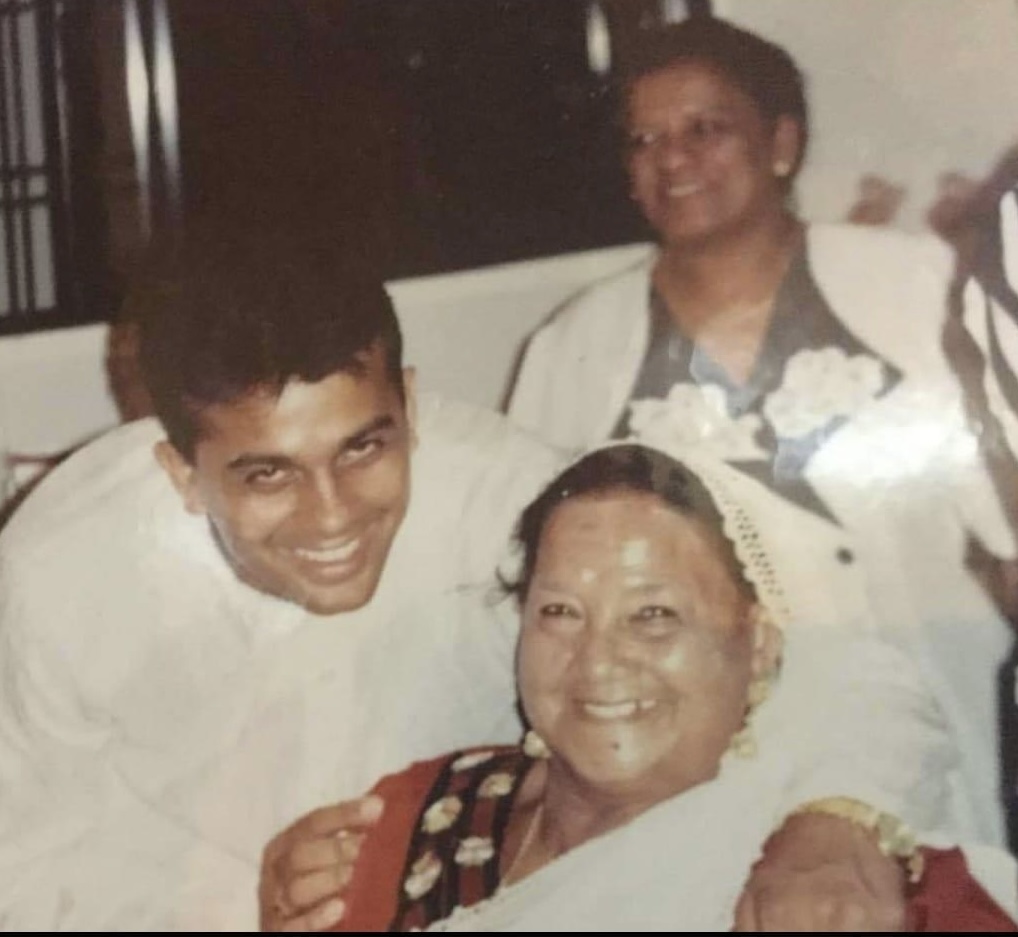 Trinidad’s soil absorbed grief, but it also yielded resilience. The sweetness of mithaas was never separate from the bitterness of kasht. Each generation inherited both the burden of history and the blessing of creativity. Steelpan rose from discarded oil drums, calypso from the wit of the street, chutney from the mingling of folk melodies. Every art form was an answer to suffering, a declaration that life could be remade from fragments.
Thus, Trinidad became more than geography. It became a vibration, a testament, a living archive of survival. To walk its land is to feel the pulse of centuries, to hear echoes of ships and factories, temples and mas camps, cane fields and panyards. To know Trinidad is to know that endurance can be transmuted into joy, that grief can be distilled into song, and that a people, though scarred, can rise in rhythm and light.
It was within this long current of history that “Soondrie Ramsawak” was born a daughter of indenture, rooted in the sugar estates. Her childhood reflected both hardship and relative comfort. Her father’s supervisory role on the estate provided a measure of stability and access to a credit “Khata” at the village shop, a small privilege that offered her early glimpses of dignity amid scarcity. This balance of struggle and security shaped her strength, her sense of responsibility, and her quiet resilience.
As the youngest child, Soondrie often accompanied her mother to “shaadis”, childbirth rituals, and “pujas”. In these spaces of shared life, she absorbed folk songs passed from mouth to ear, from heart to heart. Music became her “parampara” a tradition learned through devotion rather than instruction. Over time, her voice matured into something deeply expressive. At village “yagnas”, her “bhajans” flowed naturally alongside recitations from the “Ramayana”. People began to call her a nightingale, for her voice carried both “bhakti” and truth, weaving prayer into melody and memory into song.
Her most powerful contribution emerged through a song that gave voice to the pain of indentured life. Drawing from ancestral suffering, she composed lyrics that spoke of broken promises and endurance. The line, “Maitoe aaya Chinidad ko naukaria ho…” captured the sorrow of those who had believed in a kinder fate, only to find hardship awaiting them. Her language was not bound to one tongue it blended Bhojpuri, Hindi, Urdu, Tamil, and English, reflecting the lived speech of plantation life. Accompanying herself on the “dholak” or harmonium, she transformed music into “itihaas” history preserved through melody, testimony carried in rhythm.
Her songs were more than art; they were archives of survival. Each verse carried echoes of ships crossing the “kaala pani”, of cane fields heavy with sweat, of barracks filled with longing. In her voice, grief became remembrance, and remembrance became resistance. She sang not only for her generation but for those yet to come, ensuring that the story of indenture would not vanish into silence.
In this way, Soondrie’s music stood as both lament and legacy. It was a bridge between past and present, between ancestral pain and communal strength. Her nightingale voice reminded her people that even within hardship, there was dignity; even within sorrow, there was song. And in the alchemy of Trinidad, where grief was distilled into rhythm, her melodies became part of the island’s larger symphony of survival.
As Trinidad entered the era of large sugar factories (1917–1975), industrial life reshaped the rhythm of communities. The Usine of Ste. Madeleine became the “naadi” the pulse of daily existence. Work, worship, celebration, and grief all moved to its rhythm, as the factory whistle marked the tempo of life itself. Cane fields stretched endlessly, and the smoke rising from chimneys became a symbol of both sustenance and struggle.
It was within the industrial age that Soondrie’s life took a decisive turn. At the age of thirteen, she married Dwarika Ramawad and moved from Esperance to Gandhi Village. This settlement, deeply rooted in Indian life, was marked by long rows of cane fields and barracks that defined the horizon, carrying with them the legacy of indentured labor and ancestral memory.
Gandhi Village, located near Debe in southern Trinidad, was once called Cooliewood. In 1958, Trinidad’s Chief Minister Dr. Eric Williams renamed it Gandhi Village, giving the community a new identity one that symbolized freedom, culture, and struggle.

For Soondrie Dwarika, this village became more than a place to live; it was the stage upon which her voice rose. She was celebrated as the “Nightingale of Gandhi Village,” embodying the spirit of her people through song and story. The village itself became renowned for its vibrant Diwali illuminations, its enduring Indian cultural traditions, and the statue of Mahatma Gandhi that stood as a beacon of resilience and dignity.
The transition demanded immense “sahan-shakti”. Coming from a relatively sheltered home, she now faced exhausting labor: tending cattle, hauling molasses, and walking long distances through cane fields under the punishing sun. Dwarika, an only child raised with indulgence, carried a short temper, yet between them grew a companionship forged in necessity. His reliance on her strength and judgment sustained their “grihastha jeevan” through years of struggle, and together they learned to balance hardship with endurance.
Her entry into the household marked a spiritual rebirth. Her father-in-law renamed her “Mahadei”, invoking the protection of Lord Mahadeo and welcoming her into a sacred lineage. Names carried power, and this new identity became both shield and blessing. Her greatest support came from her mother-in-law, “Gangajellie”, lovingly called “Mai”, who encouraged her to raise a large family. Mai embodied the wisdom of tradition, performing daily oil massages for the children, nurturing them with patience and ritual.
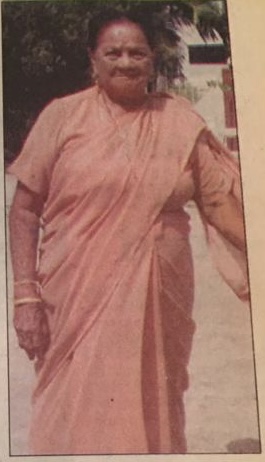
In this home, fourteen children were nurtured in the embrace of “Sanskaar”. One of them, however, passed away in childhood. Family lore recalls that the village midwife, before laying the child to rest, pierced a tiny hole in his ear with a needle, saying it would serve as a mark so that if the child returned to the family, he could be recognized. Years later, one of the younger boys was indeed born with a small hole in his ear, just like the kind made for earrings. Each evening, “Daada” gathered the grandchildren and recited moral stories from the “Ramayana”, quietly shaping their sense of right and wrong. The barracks may have echoed with the noise of labor, but within the household, discipline, devotion, and storytelling created a sanctuary of values.
Life in Gandhi Village was not only about survival it was about continuity. The rhythms of the sugar factory intertwined with the rhythms of family life. Festivals lit up the settlement: “Diwali” lamps glowing against the dark cane fields, “Phagwa” colors bursting across dusty yards, tassa drums echoing during weddings and “yagnas”. Mahadei’s voice, already known in her youth, now became part of this communal soundscape. Her “bhajans” rose above the hum of daily toil, reminding her family and neighbors that faith could soften the weight of hardship.
Her journey from Soondrie to “Mahadei” was more than a change of name it was a transformation of spirit. She became the axis around which her household turned, balancing labor with love, tradition with adaptation, and grief with resilience. In her story, one sees not only the endurance of a woman but the endurance of a people, who carried the burdens of history yet continued to build homes, raise families, and sing songs of survival.
Life demanded not only devotion but enterprise. After a family bus business faltered, the household turned to farming and dairy work. Mahadei assisted her father-in-law in selling produce and milk, gradually expanding beyond survival. What began with “hari sabzi” grew into a thriving trade in dry goods potatoes, saltfish, grains. Her sharp instincts for commerce transformed the household economy. The business flourished to such an extent that Dwarika left his job at the Pointe-a-Pierre oil fields to work alongside her, recognizing that her vision had become the family’s lifeline.
Their children became partners in this “vyavsaay”. Twin daughters earned the name “adding machines,” calculating accounts mentally with remarkable accuracy. Through their effort, the family acquired transport vehicles and distributed goods across the island, building prosperity through honesty and discipline. The rhythm of trade became the rhythm of family life, each child contributing to the collective enterprise, each hand strengthening the household’s foundation.
Yet Mahadei’s vision extended beyond economics. She challenged the norms of her time by insisting on education. In an era when girls’ schooling was discouraged, she attempted to send her eldest daughter to high school. Though early efforts met resistance, her “sankalp” did not weaken. Six of her children completed secondary education, a remarkable achievement in that era. Her eldest son finished a five-year high school program in just three years, balancing study with demanding farm chores cutting grass, delivering milk before classes each morning. In this way, Mahadei planted seeds of discipline and aspiration, ensuring that her children’s futures would not be confined to the cane fields.
The values she nurtured bore fruit beyond the family. Her children became agents of “seva” in their community. One son helped bring pipe-borne water to the village, transforming daily life for neighbors who had long relied on wells and rivers. A daughter served in the Red Cross, carrying forward the spirit of service learned at home, tending to the vulnerable with compassion. Others contributed through teaching, trade, and quiet acts of generosity.
Mahadei’s household became more than a family; it grew into a center of continuity, where tradition and progress coexisted. Her story mirrors the larger story of Trinidad itself: a people who, despite hardship, transformed survival into prosperity and grief into resilience. Through her labor, vision, and steadfast values, she ensured that her children and grandchildren inherited not only land and livelihood, but also dignity, discipline, and devotion.
In 1985, sorrow entered the household quietly and never fully departed. While helping his daughter raise a concrete home on family land, Dwarika Ramawad suffered a sudden stroke and passed away. His death was not only the loss of a husband and father, but the breaking of a rhythm shared for decades. The home itself felt altered; silences grew heavier, and familiar routines lost their ease.
Yet Soondrie blossomed, like a flower opening after Dwarika’s departure. In her solitude she did not present herself as broken. She stood powerfully strong for the children, who looked to her even though they were grown and independent. Each morning she sang, and she journeyed across countries to visit the places where her children lived.
Yet Mahadei’s legacy endured. She gave to society fourteen children, each of whom became a valuable member of the community. Not one fell into addiction or incarceration. Every child grew into a productive citizen creating employment, volunteering for the upliftment of the less privileged, and carrying forward the values instilled in them. Those who moved abroad transplanted the same principles, establishing organizations dedicated to community improvement.
When Mahadei left this world on July 3, 2002, the loss was felt deeply. Children, grandchildren, neighbors, and friends mourned as though a pillar had fallen. The voice that once filled courtyards and prayer gatherings was now silent, leaving behind a stillness that lingered long after the rituals were complete. Grief did not arrive as a single moment, but settled slowly, becoming a presence.
In her final days, she dressed with care to attend a wedding, where she was asked to sing. Returning home, she felt discomfort and was rushed to the local hospital. A sudden brain hemorrhage claimed her life, with two daughters at her side. In those last moments, she opened her eyes, reflecting what seemed like rainbow colors. A patient nearby urged her daughter, “Give her a few drops of water, and close her eyes.” Some believe this gesture marked her acceptance of the end.
It was early morning, the tropical sun brightening the ward, a gentle breeze flowing through the open window. The doctor spoke quietly with another patient at the far end. Two of Soondrie’s daughters sat at her feet. Her toenails were polished red, her skin freshly sponged with a soft fragrance, her white gown embroidered with small, colorful flowers. Though silent, she seemed to communicate wordlessly with her younger daughter, who felt the vibrations of her presence. A single question echoed: “Why are the boys taking so long?” Her sons had gone in search of a nursing home. In hindsight, it seems she knew she was leaving, and longed for her sons to be near.
Her children, in turn, gave nearly fifty grandchildren, and by the time Mahadei departed, she had already witnessed the flowering of her lineage. Through those grandchildren, and some twenty great-grandchildren, she left behind innumerable gifts of music, service, and citizenship. Her life became a testament to resilience: a woman whose household was not only a family, but a living institution of values, continuity, and hope.
Mahadei carried this grief with inward strength. Though high blood pressure weakened her body, she remained the emotional center of the family. She continued to guide, to listen, and to steady those around her. Her bhajans grew softer, often sung alone, as if each note were a prayer offered in remembrance. The house gradually grew quieter as age advanced, and the absence of her companion was felt in every corner.
Yet even in sorrow, she did not disappear. She remained in remembered songs, in habits passed down, in values quietly practiced. Her life became a continuing ashirvaad, shaping lives long after her passing. When the last sugar factory closed in 2003, it marked the end of an era, but Mahadei’s story endured beyond industry and time.
From cane fields to marketplaces, from sacred verses to family homes, her journey mirrors the larger journey of Trinidad itself. Shaped by loss, sustained by faith, and strengthened through love and labor, her life stands as a testament to endurance. She is remembered not only as a daughter of indenture, but as a matriarch whose spirit continues to dwell in the hearts of generations.
Following the passing of Soondrie and Dwarika, their children transformed their shared grief into a profound living tribute by formalizing the couple’s lifelong values through the establishment of the “Soondrie and Dwarika Community Centre”. Located at Dwarika Avenue, Gandhi Village, Debe, Trinidad and Tobago, the centre serves as a permanent anchor for the principles they held dear. By establishing this non-profit hub, the family has ensured that their parents’ spirit of service continues to empower the region through structured social welfare, holistic healthcare, and youth education initiatives.
More than just a facility, the centre stands as a cornerstone for cultural preservation, safeguarding the rich Indo-Trinidadian heritage they loved for generations to come. Within its walls, there is a tangible sense of continuity a feeling that Soondrie and Dwarika are still present and available, their guidance and warmth lingering in every act of kindness performed there. Through these tireless efforts, their children have shifted the narrative from one of loss to one of enduring connection, proving that while they have passed, their commitment to the social fabric of Debe remains vibrant, unbroken, and always within reach.
O Divine Presence, source of strength and compassion,
we bow in gratitude for the lives of Soondrie, and Dwarika.
Through their love, sacrifice, and unwavering faith,
they built not only a family but a living temple of values.
May their voices, once lifted in song and prayer,
continue to echo in the hearts of their children, grandchildren,
and generations yet to come.
May the centre that bears their names remain a beacon of service,
a sanctuary of culture, and a testament to endurance.
Grant us the wisdom to carry forward their legacy,
to serve with humility, to uplift with kindness,
and to live with the same courage they embodied.
Let their memory be our guiding light,
their blessings our shield,
and their spirit our eternal companion.
Jai Mahadeo!
Soondrie is mother of Bhanu Dwarika