




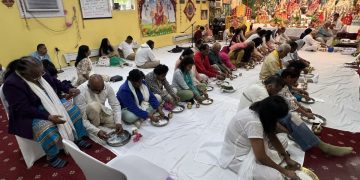
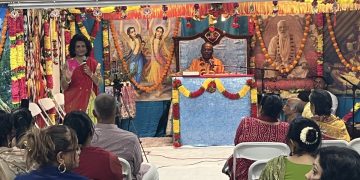
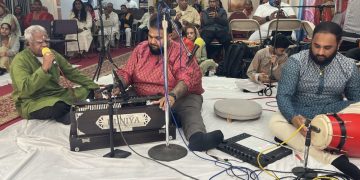
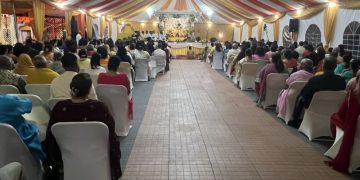
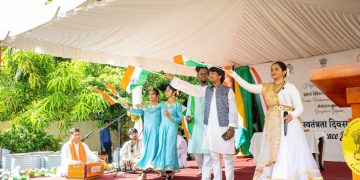





Indian Arrival Day celebrations must move beyond its fixation on curry duck competitions, songs, music, dances, sada roti and ‘pounding the damadole’ to embrace other methods of celebrations: essay writings, quizzes and conferences; the re-enactment landing of the Indians; a display of a barracks, village and market settings, a museum with artefacts including indentureship documents; and drama etc.
The academic aspects of the commemoration of this historical day cannot be overemphasized. We are living in the information age where knowledge is power, not curry duck and pounding the damadole. Many myths, half-truths and propaganda are peddled to discredit and belittle the contributions of our Indian ancestors. Debates and discussions must be encouraged to bring out facts and data to refute half-truths and propaganda; hence the need for research and academic papers on indentureship.
In the past, the NCIC, a premier cultural organization in the country, hosted an academic conference annually to commemorate Indian Arrival Day. However, this year there was no such conference. One of the leaders behind these conferences was the late Professor Brinsley Samaroo. Interestingly, the Department of History at the St Augustine Campus of the University of the West Indies also failed in this respect.
Essay writing, quiz, painting, and debating competitions can also be held to engage the participation of the youths. These would provide an opportunity for in-depth learning of the social conditions surrounding indentureship.
Drama is another avenue to highlight the various struggles in the evolution of the Indian community. The Hosay massacre and the struggle of the community against the Literacy Test for the right to vote in 1946, etcetera, are two aspects of our history that can be highlighted through drama.
Focus must also be placed on the re-creation of the scene at the Port of Calcutta where the Indians were lodged before embarking on ships for the long voyages across the kala pani; also, their arrival at Nelson Island where they went through a period of quarantine. The Creative Arts Department at the St Augustine Campus can play a significant role in this aspect of the ccommemoration. In the past the Creative Arts Department successfully staged a play on the life of Sewdass Sadhu of Waterloo in Carapichaima, Trinidad; and continues to contribute toward our annual Ram Leela celebrations.
The creation of an indentureship village is central to preserving aspects of our indentureship experience for future generations. A replica of the Fatal Rozack can be constructed for use as a museum to house artefacts brought by our ancestors. The indentureship village can also include a market, a pasture with animals, traditional houses with dirt walls and thatched roofs, and the carts used to transport the cane from the fields to the factory, other tools and utensils, etc.
Also, fashion shows on the traditional clothing – dhoti and gangri and jewelry – worn by our ancestors should be displayed to create a better appreciation of how the early Indians dressed. Opportunities should be provided to display the preparation of traditional meals and other delicacies. Traditional medicinal plants used by our ancestors with handouts on their benefits can also be on display.
Indian Arrival Day did not reach its finality when it was declared a national holiday in 1995 but remains an ongoing saga. While the masses have opted to observe the day with the cooking of curry duck, songs, music, dance, food, tassa and ‘pounding the damadole,’ the challenge remains for those with conviction to step forward and make their inputs and not be distracted by naysayers who sit on the wings making puerile remarks.
Indian Arrival Day commemoration is a community project and should not be allowed to be hijacked by curry duck crews who promote an eat and shit culture – kaye, pio, maujh karo – eat, drink and merry.