

















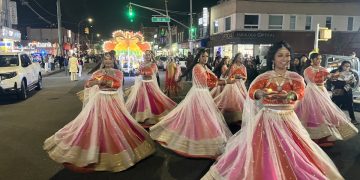
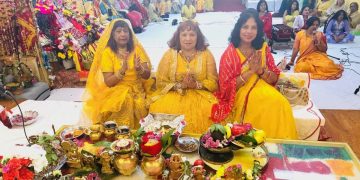
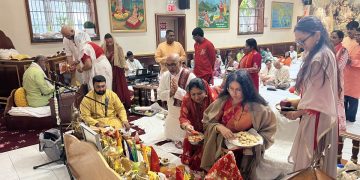
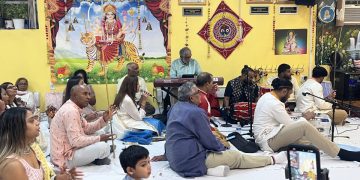
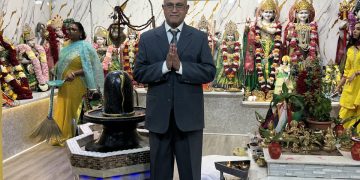
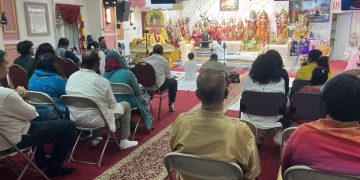
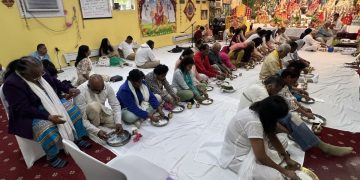
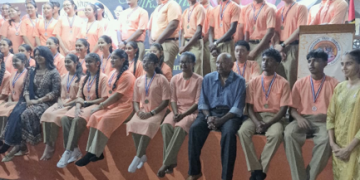






















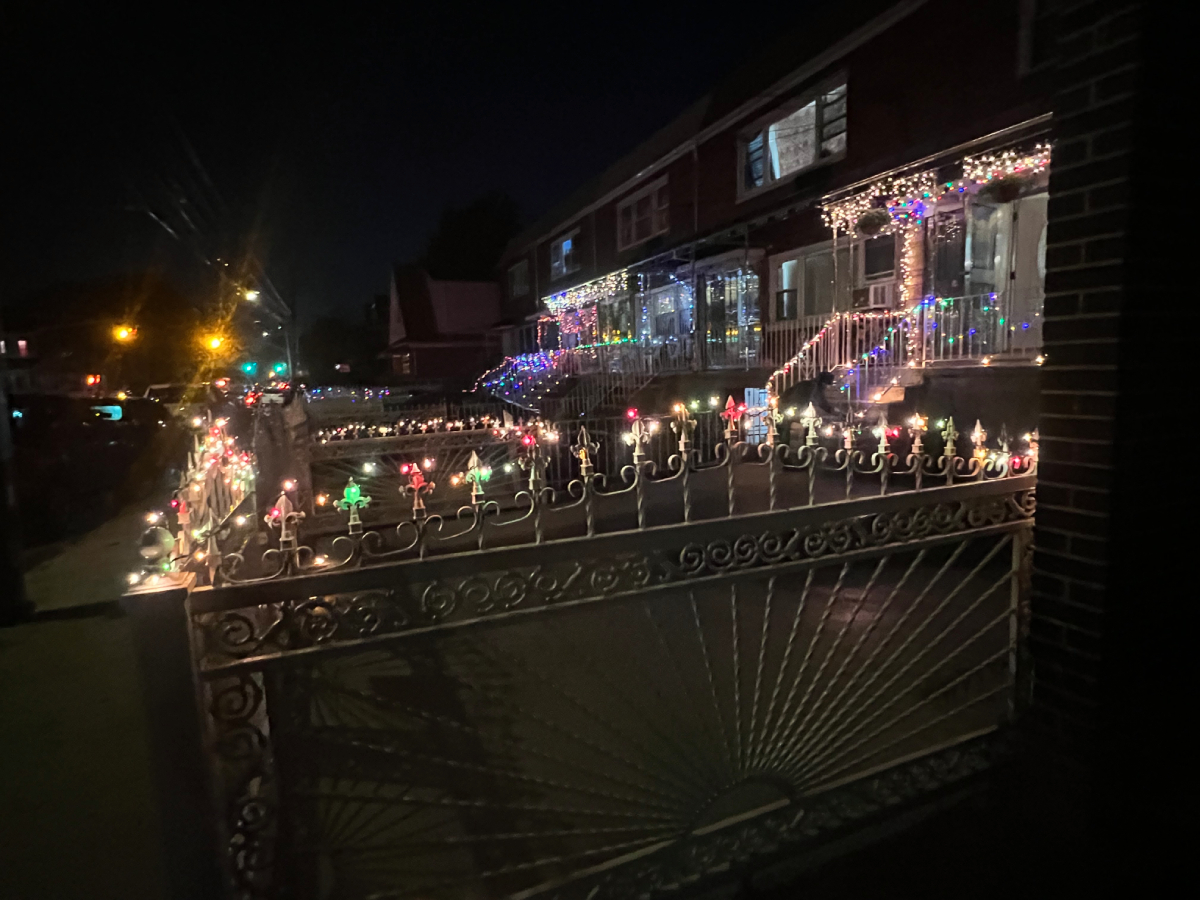
Richmond Hill (Little Guyana, Little Trinidad) and other parts of Queens were transformed into a magnificent spectacle of light, colour, music and devotion as tens of thousands celebrate Diwali, the Hindu festival of lights, in their homes and in mandirs. It was a perfect evening to celebrate Diwali – no rain and light wind unlike in previous years when it was mostly windy and rainy. Hindus in other parts of New York and all across USA, numbering in the millions, also celebrated Diwali. Politicians hosted celebrations last week and some have planned celebrations this and next week.
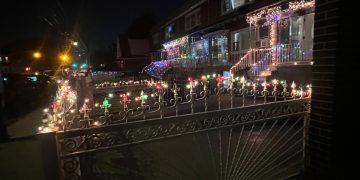
As darkness descended Sunday evening, the Indo-Caribbean Hindu neighborhoods of Queens and Brooklyn took on an extraordinary appearance, with rows of glowing diyas, dazzling electronic lights, colourful decorations, fireworks, sparkles, and the sounds of devotional bhajans creating an atmosphere of spiritual exhilaration and cultural pride. Homes were brialliantly illuminated. It was a night when tradition and modernity blended beautifully, bringing together generations of Indo-Caribbean families and members of the wider community in a celebration of their ancestral heritage. Non-Hindus (born Americans and others) were guests for dinner at many homes.
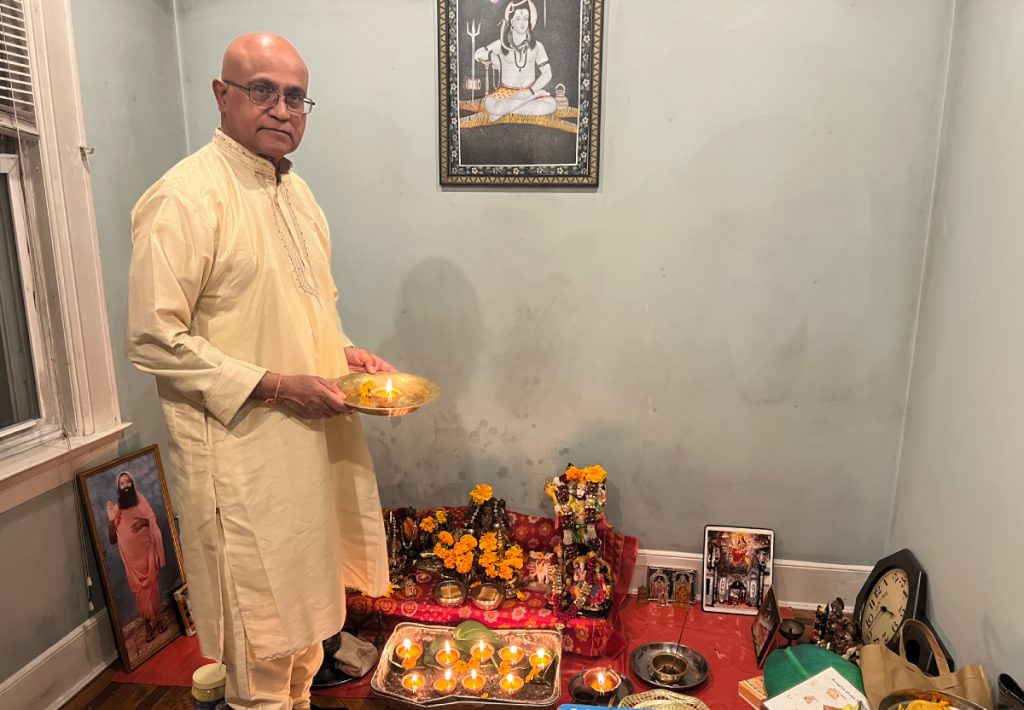 Diwali is much more than a festival marked by illumination and festivities. It symbolizes the triumph of good over evil, light over darkness, and knowledge over ignorance. For Hindus, it is a deeply meaningful occasion associated with the return of Lord Rama to Ayodhya after fourteen years of exile and his victory over the demon king Ravana. The people of Ayodhya welcomed Rama, Sita and his brother Lakshmana by lighting rows of oil lamps, establishing a tradition that has endured for thousands of years. Today, that ancient tradition finds a vibrant expression thousands of miles away in the Caribbean and in North America, Europe, etc. where Indo-Caribbean Hindus have migrated and settled. In Richmond Hill, Indo-Caribbean immigrants and descendants in the tens of thousands continue to preserve and celebrate the religious and cultural practices inherited from their fore-parents who came from India to the Caribbean (1838-1917).
One of the most beautiful sights of Diwali night was the countless diyas illuminating the yards, patios, steps, entrances, windows, porches of homes and the pavements of streets. Their gentle flames and electronic lighting created an atmosphere of warmth, serenity and spirituality. Families carefully placed the little earthen lamps, often filled with oil or ghee, symbolizing the invitation of divine blessings into their homes. The flickering flames represented hope, purity, prosperity and the eternal human aspiration to overcome darkness.
Alongside these traditional lamps were spectacular displays of modern electronic illumination. Homes and buildings were decorated with strings of colourful LED lights, flashing decorations and elaborate illuminated designs. The brilliant displays of red, green, blue, yellow and golden lights transformed residential streets into a dazzling panorama. Some homes featured elaborate arrangements around their entrances, while others displayed decorative patterns and festive symbols. The combination of traditional diyas and contemporary electronic lighting illustrated how the Indo-Caribbean community has embraced modernity without abandoning its cultural roots.
The excitement intensified with the sounds and spectacular displays of firecrackers. Bursts of colourful fireworks and sparkles illuminated the night sky, creating moments of excitement and celebration. Children watched with delight as sparkling lights streaked across the darkness, while adults joined in the festive spirit. The occasional loud explosions added to the celebratory atmosphere, reminding everyone of the exuberance with which Diwali is traditionally welcomed. Although fireworks are a familiar part of Diwali celebrations, responsible use and consideration for neighbours, children, older residents and animals remain important. The Punjabis burst loud fireworks and firecrackers.
Music was another essential feature of the evening. Devotional bhajans, religious songs and familiar melodies associated with Lord Rama, Lord Krishna, Goddess Lakshmi and other Hindu deities could be heard from homes and community gatherings. The melodious chanting of prayers and devotional songs created an atmosphere of reverence amid the excitement. For many families, Diwali is incomplete without prayers, the singing of bhajans and the invocation of divine blessings for health, happiness, peace and prosperity.
The spiritual dimension of the celebration was particularly evident as families performed Lakshmi Puja, seeking the blessings of Goddess Lakshmi, the deity associated with wealth and prosperity. Puja was also performed in mandirs. Offerings of flowers, fruits, sweets and incense accompanied prayers and the lighting of lamps. The sacred sounds of mantras and devotional hymns reminded participants that the essence of Diwali is not simply external illumination but also the awakening of goodness, compassion and wisdom within the human heart.
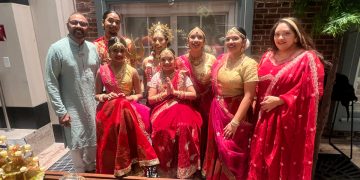
Food and hospitality added another dimension to the festivities. Tables were filled with traditional Indian and Indo-Caribbean delicacies, including mithai, ladoos, barfi, gulab jamun, rasmalai, mohanbhog or parsad, ghoja, gulgula, puri, bara, phulourie, sahena, kachori, alou, channa, roti, dhal, blackeye, and an assortment of other savoury snacks. Families exchanged sweets and gifts, visited relatives and welcomed friends and neighbours. Hindus were dressed in colorful new clothing. Children, dressed in colourful traditional clothing, enjoyed the celebrations while older generations took pride in seeing their cultural heritage being embraced by younger members of the community.
Richmond Hill’s Diwali celebration also represented something larger than a religious observance. It was a powerful demonstration of the cultural resilience of the Indo-Caribbean Hindu community, particularly descendants of the Indian indentured immigrants who arrived in then British Guiana, Trinidad, Suriname and other Caribbean (Dutch and French) territories during the nineteenth and early twentieth centuries. Their ancestors carried with them their languages, religious traditions, music, customs and festivals despite the hardships of indentureship and the challenges of establishing new lives in unfamiliar surroundings.
Generations later, Diwali remains one of the strongest expressions of that inherited identity. Although the rulers in the colonies discouraged cultural celebrations and sought ‘to christianize’ the societies, Hindus and Muslims held on to their practices. The Indians transplanted these cultural practices in their new adapted homelands of North America and Europe. The celebration in Richmond Hill, Florida, and other parts of USA demonstrates that geographical distance from India has not diminished the emotional and spiritual connections of its descendants to their ancestral homeland. Rather, those connections have been nurtured and transmitted through family traditions, temples, cultural organizations and community celebrations.
It is also a celebration of multicultural America. People from different ethnic, religious and cultural backgrounds in USA have held on to their customs and cultural practices, language, etc. that they brought from around the world. New Yorkers and Americans in certain p[arts of USA where Hindus dwell in significant numbers are increasingly becoming familiar with Diwali and other Hindu festivals. Politicians have been hosting Diwali celebrations – White House, Governor House, Legislatures, politicians’ offices, etc. held celebrations or observances over the last couple decades. The celebration gets mainstream media coverage. Non-Hindus get invitation to dinners at homes of Hindus. More and more Americans understand the festival — its message of peace, goodwill and the triumph of righteousness. The festival provides an opportunity for cultural understanding, inter-community friendship and appreciation of the contributions made by Indian-origin communities to American society.
As the night progressed and the diyas continued to flicker, the electronic lights sparkled and the last fireworks illuminated the skies, Richmond Hill offered a memorable picture of cultural pride and communal harmony – where Hindus, Muslims, Christians, Punjabis, Indians from India and the Caribbean and elsewhere live. The celebrations demonstrated that traditions can travel across oceans, survive generations and flourish in new environments thanks to Indo-Caribbeans who are determined to hold on to their identity.
Ultimately, the greatest significance of Diwali night was not the brilliance of the lights or the spectacular fireworks, but the spirit that united the community. It was a celebration of faith, family, friendship, heritage and hope. The little diyas carried a profound message: even the smallest flame can dispel darkness.
Richmond Hill shone brightly on Diwali night, reaffirming the timeless message of the festival: Let there be light in every home, peace in every heart, goodness in every action and hope in every life.
As evening descended, Richmond Hill’s familiar streets assumed an almost magical appearance. Along Liberty Avenue, 101st Avenue, 103 Ave, Lefferts Boulevard and the surrounding residential roads, the atmosphere became electric with excitement. Homes, storefronts, apartment buildings and community establishments were dressed in festive decorations. Strings of colourful electronic lights hung from balconies, rooflines, fences and doorways, while illuminated arches, decorative lanterns and flashing motifs transformed ordinary buildings into brilliant displays of celebration. The streets seemed to compete with one another in their splendour, as families took pride in decorating their homes to welcome Goddess Lakshmi. Many homes distributed parsad and delicacies to passersby and to neighbors.
Outside many houses, small rows of earthen diyas glowed along steps, windowsills, porches and entranceways. Their golden flames flickered gently in the evening breeze, offering a beautiful contrast to the dazzling electronic displays. Some families had created elaborate rangoli designs at their doorsteps, using brightly coloured powders and flower petals to welcome visitors and invite good fortune. The traditional Om and swastika symbols, images of Lakshmi and Lord Ganesh, and colourful Diwali greetings added to the festive appearance.
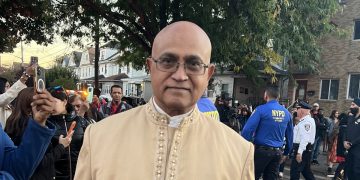
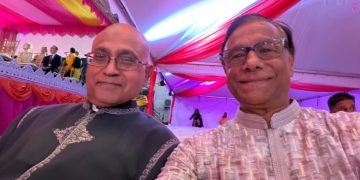
The sidewalks were alive with activity. Families emerged from their homes dressed in colourful saris, lehengas, kurtas and sherwanis. Women shimmered in traditional jewellery, while children, excited by the festivities, proudly displayed their new clothes. Groups of friends stopped to admire the decorations, take photographs and exchange Diwali greetings. Parents held the hands of young children as they walked past illuminated homes, while grandparents watched with satisfaction as another generation embraced the traditions they had inherited.
The aroma of freshly prepared delicacies drifted through the neighbourhood. The smell of curry, bara, phulourie, puri, channa, katahar or chaitaigne, curried mango, pumpkin, dhall, mithai and other traditional foods mingled with the scent of incense and the occasional fragrance of burning samagri and camphor and smell of burning ghee. From open doors and windows came the sounds of bhajans, religious chants and devotional music. In some homes, families gathered around their prayer altars, while in others, the celebrations spilled onto porches and front yards, where relatives and neighbours exchanged sweets and extended greetings.
Every so often, the quiet glow of the diyas was interrupted by the spectacular explosion of fireworks. Rockets shot into the dark sky, bursting into showers of red, green, gold and silver. Sparklers illuminated children’s faces, while firecrackers added their unmistakable crackling sounds to the evening. For a moment, the sky above Richmond Hill became a canvas of brilliant colours, with excited voices and expressions of delight accompanying each display.
Traffic moved slowly through some of the decorated streets as motorists paused to admire the illuminated homes and festive surroundings. The occasional honking of horns, the laughter of children, the chatter of families and the rhythmic sounds of devotional songs created a distinctive Diwali soundtrack. Some residents stood outside their homes greeting passersby, while others visited friends and relatives, turning the neighbourhood into a vast gathering of families and friends.
What made the scene particularly remarkable was the intergenerational character of the celebration. Elderly residents, many of whom had brought the traditions of Guyana, Trinidad, Suriname and India to New York, could be seen alongside children and grandchildren born and raised in America. The older generation recalled the simpler Diwali celebrations of their childhood in Guyana and other parts of the Caribbean, while the younger generation experienced the festival with the excitement and possibilities of life in a modern American city.
For one special night, November 8, Richmond Hill seemed to transport its residents to a little India in the heart of Queens, while retaining its distinctive Indo-Caribbean Hindu character. The streets were not merely decorated; they were alive with history, faith, music, food and a shared sense of belonging. It was a magnificent demonstration that the traditions brought across oceans by earlier generations continue to flourish in the Indian (Hindu) diaspora. Diwali celebration was not only one night. It was observed two nights before and ends the day after Diwali on Monday with final rituals. Many homes lit deyas in from of their homes and in their altars.
click here for more picture, https://www.facebook.com/share/p/1Ph3Rjbaup/