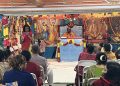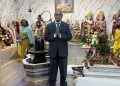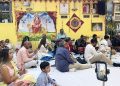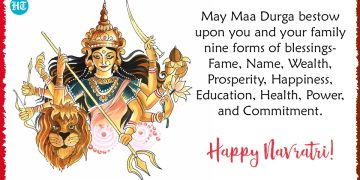











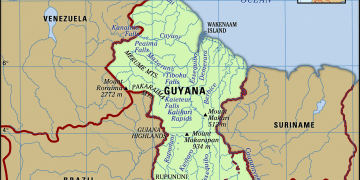







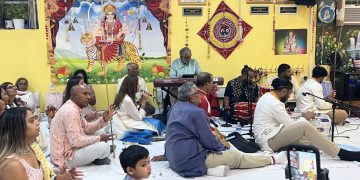
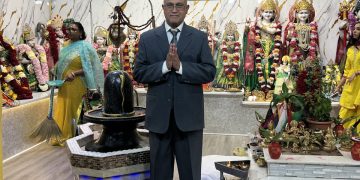
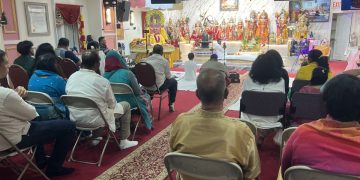
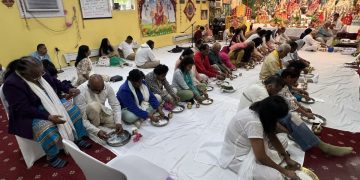
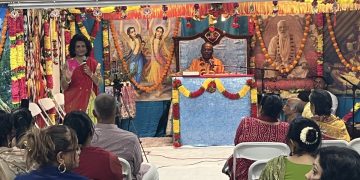
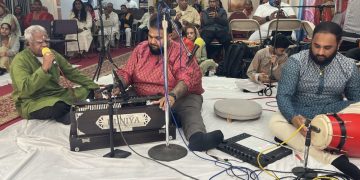
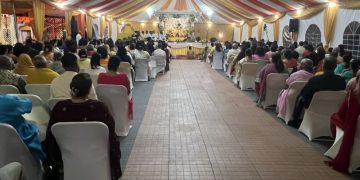
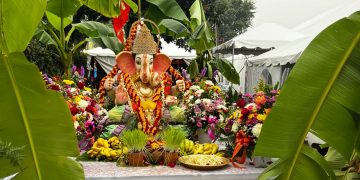








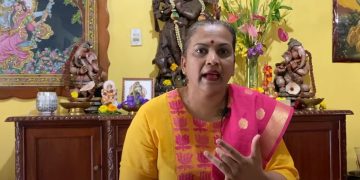
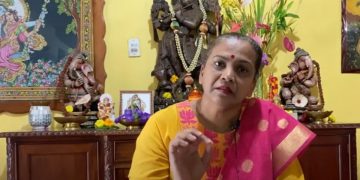
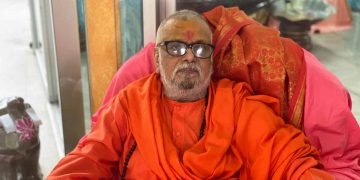








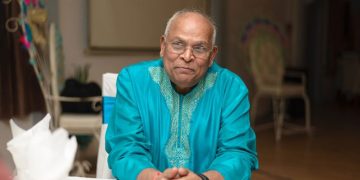




Guyanese and other Indian Caribbean Hindus in USA are observing the auspicious Hindu festival of Navratri, nine nights of worshipping the Goddess Durga and her reincarnations.Caribbean American Mandirs around the USA and Mandirs throughout Guyana, Trinidad, Suriname have been holding nightly service since the festival began last Thursday evening March 19. It concludes on Friday evening. Temples throughout the New York metropolitan area have been packed with devotees.
Navratri is one the holiest periods for Hindus during which they fast. The festival concludes with the celebration of Ram Naumi (the appearance of Lord Rama in the world thousands of years ago). And not surprisingly, temples have been holding Ramayan or Devi sessions nightly during the period and many persons have been conducting poojas at their home. The observance mirrors those of the Hindu Caribbeans.
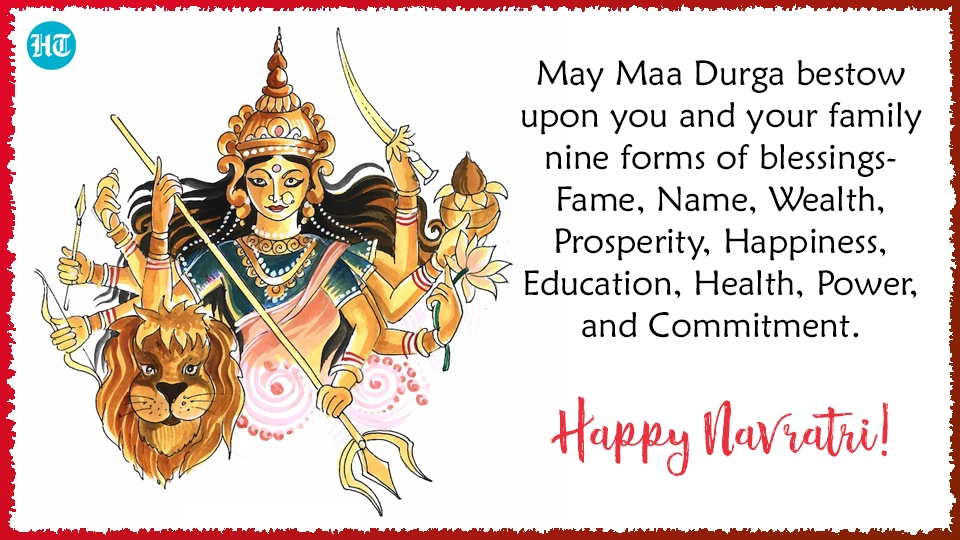
During Navratri, devotees worship the feminine aspects of the lord — Goddess Durga and her reincarnations, Laxmi and Saraswati. Goddess Durga is also the collective manifestation of Brahma (creator), Vishnu (preserver), and Shiva (destroyer). As pandits explained, when devotees worship Durga, they are worshipping the other manifestations of God. People worship for protection, love and comfort and Goddess Durga offers divine protection and removal of diseases. The celebration is held over nine days because nine has significance for them. Nav means nine and ratri means night. It is a festival that is celebrated during the night with prayers and spiritual dancing and a discourse. Each Goddess Durga, Lakshmi and Saraswati is worshipped for three nights to offer protection (Durga), provide wealth (Lakshmi) and guide the devotee to knowledge (Saraswati) respectively. Durga means fort or a place that is protected. She is the General in charge of security of the nation. People pray to Durga for protection, strength and shakti (power) in defense against their many enemies. When people worship Durga, they are worshipping the other manifestations of God and are seeking divine protection and removal of disease. A devotee prostrates to Mother Lakshmi, the Goddess of prosperity, so that he or she can become wealthy, kind and generous towards others. And a devotee worships Mother Saraswati for wisdom.
People fasting, visit mandirs, and perform pujas as well as invite pandits to conduct special services at their home. They are well attired for the mandir service in beautiful colorful traditional Indian outfits. Fasting is for purification of the minds and bodies. Devotees pray with intense devotion.
During Navratri, devotees normally hold special prayers in the mornings and in the evenings to pay obeisance to the universal mother. As noted, the mother provides her children with sustenance and as such she must be propitiated. During this time worshippers tend to fast for the entire period, avoiding meat, sex, fish, eggs and maintain cleanliness in the homes for almost two weeks. During Navratri, a devotee becomes conscious of his/her faults, limitations and internal enemies such as lust, hatred, greed and anger and want to reform his life. People make sacrifices in their fast so they can become conscious of their faults and correct them. By worshipping Durga and her sisters, these internal enemies are destroyed and are replaced by love, cheerfulness, compassion, and devotion.
In the mornings, Guyanese Hindus offer jaal or dhar which is a mixture of curd, milk, honey, sugar, neem, cloves, hardi (turmeric), tills, and other sweet spices, and they also make other offerings like clothing.
The famed Lord Rama is associated with this Spring Navratri — his appearance or birth or navami at the end of the nine nights. He is glorified by Hindus worldwide.
For more pic click here: https://www.facebook.com/share/p/1XSwvAZU6e/