






A popular joke in the country was that Chanka Maharaj, speaking in a political rally said: “What the people need is B-R-E-D… and someone in the crowd shouted: You miss out the A and Chanka re-spelt…B-R-E-D-A.” It is pitiable that most of our people learn ‘this side’ of Chanka while remaining unaware of the many positive contributions he had made toward the development of the country.
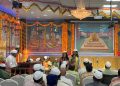
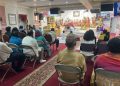
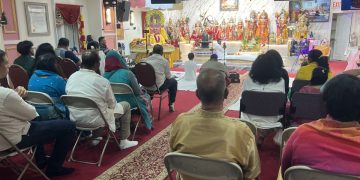
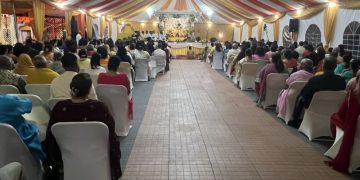
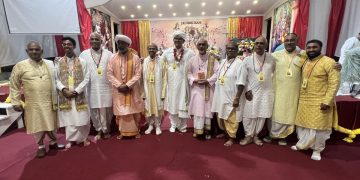
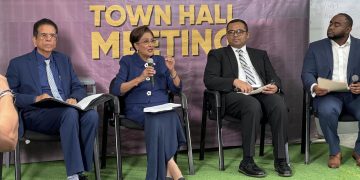
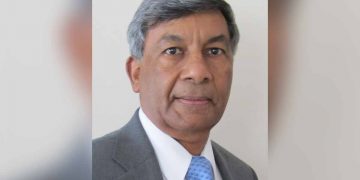
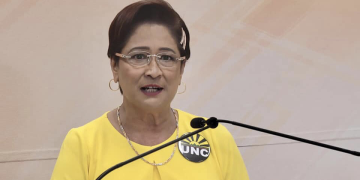
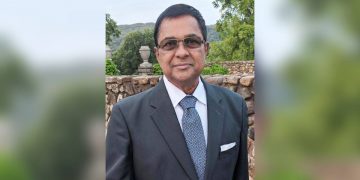
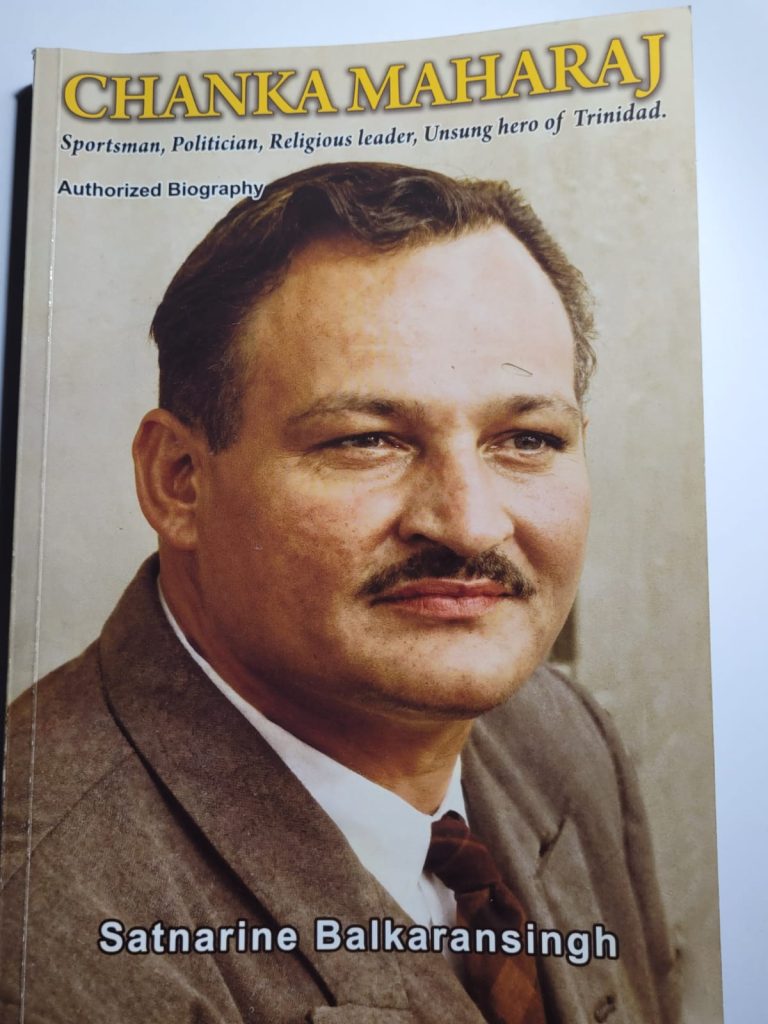
I want to congratulate Sat Balkaransingh for putting together a well-researched and brilliantly written biography of Chanka Maharaj, a man whose love for service to the people remains second to none to date. I must also congratulate the family for taking the initiative to have this book written and launched. And kudos to the large audience that came out last Saturday evening at the Mahatma Gandhi Institute for the launch of this monumental book, including the many academics present: Dr. Bhoe Tiwarie, Dr. Winston Dookeran, Professor Kelvin Singh and Professor Kenneth Ramchand. Their presence is a definite endorsement of this monumental biography of this selfless man of the people!
Oral history can say so much. I have heard many stories of Chanka and his many contributions including the founding of the Maha Sabha and its school building program and his years of service in the Legislative Assembly. However, after reading this biography, it dawned on me that Chanka Maharaj had set a bench mark for politicians and other public figures to aspire toward. Now that this biography is out, I do hope and pray that some of us would use this bench mark to measure their contribution and service to the community.
 Chanka was rooted in his ancestral culture, thus providing him with a firm platform to reach out to the world. While a proud Hindu, he did not confine his service to the Hindu community but also reached out to other groups including the Islamic and the members of the Ethiopian Orthodox Church. After failing to get Dr Patrick Solomon to inaugurate the opening of its church at Claxton Bay, Reverend Springer approached Chanka Maharaj and he agreed to and did the needful. Chanka went on to donate 200 coconut plants to Ethiopia and seeds from that original batch were donated to other African nations.
Being elected to political office brought Chanka closer to the people. He continued to fraternize with all-from the commoner to Prime Ministers and Presidents. Chanka worked with Doon Pandit and other pandits to start a Pandit Parishad in 1950. He later collaborated with other leaders such as Bhadase Maraj and Simbhoonath Capildeo to forge the Maha Sabha and the launching of its school building program. Chanka’s election to the Road Board (1941-45) and the Legislative Council (1946-56) cemented a bond of service to his constituents and the nation at large. His common touch with the people was well displayed in his love for cooking paratha and mohanbhog in pujas and yagyas. After his defeat in the General Elections of 1956 by Kamal Mohammed of the PNM, Chanka was never bitter but continued his service to the people until his passing in 1966.
Sat Balkaransingh is no neophyte in the world of academia and the arts. His previous research and publications on the Indian diaspora have placed him in good stead to reproduce this work on Chanka Maharaj. This is a niche where Sat Balkaransingh is well grounded and hence the success of this latest writing on the indomitable Chanka Maharaj.
In a time when several have chosen a life of dormancy after retirement, Sat Balkaransingh has opened a new but familiar area of interest – writing on the popular festivals, personalities and the arts including the culture and cuisine of our First People. His works on Ramleela and Hosay have highlighted the many personalities and the efforts that go into the planning and execution of those artforms.
Not compromising academic standards, Sat Balkaransingh has provided endnotes at the end of every chapter including sources for his materials. Additionally, there are the following: a family tree of the Chanka Maharaj family, numerous pictures throughout the text, a comprehensive glossary and an index.
Dr Winston Dookeran, former minister of government, in the foreword to the publication wrote: “… he built institutions with an eye well beyond his time… he clearly got several well-known people in and out of Trinidad to work with him for the betterment of the lives of so many.”
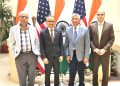
Also commending the publication were Dr Pradeep Singh Raj Purohit, High Commissioner of India to Trinidad and Tobago, Professor Kelvin Singh (Retired) of UWI, and Dr Aastha Agarwal, Assistant Professor of Political Science, University of Delhi, India.
I heartily recommend this book to all who are engaged in public life. The life of Chanka Maharaj would definitely inspire them to a life of service to their respective constituencies and the nation at large.