





















The term used to describe Guyanese migrants (outside of Guyana) have undergone change from when they first settled overseas starting the 1950s (initially to England). Guyanese abroad and ‘Overseas Based’ Guyanese or expatriates were or have been used to describe or refer to them. The terms have undergone change from the 1950s/1960s to now. Migration to UK had slowed over the last twenty years and has practically stopped. Migration to USA has eased since President Trump assumed his second term last year, closing the borders and limiting chain migration as well as tourist and student visas. Foreign citizenship and Guyanese national identity have transcended physical borders; foreigners with roots in Guyana still see themselves as Guyanese although they may not view themselves as overseas based or Guyanese abroad.
Initially, during the 1950s and 1960s, the term for migrants was Guyanese abroad as they were expected to return. But they made their home first in UK and then USA (1970s) and Canada (also 1970s) and other countries; there are few countries where Guyanese have not settled.
Few Guyanese who traveled abroad as visitors or students returned ‘home’; there was always the talk of returning home after studies or earning ‘enough’ money, but they never did although they have maintained a link (house or other property) in the former homeland. Once they have acquired ‘status’ (residency and subsequently citizenship), chain migration began (1970s onwards to UK, USA, Canada, etc.).
‘Guyanese abroad’ became ‘overseas-based’ Guyanese – as though they would return one day as ‘parodied’ by commentators and even newspaper editorial (SN March 13); they are not coming back. Over the last couple decades, ‘overseas-based’ has been transitioned into ‘Guyanese diaspora’, a term coined by several of us in New York since the late 1970s when we were engaged in that long struggle to restore democratic governance to Guyana. Around the same time, Vassan Ramracha, Baytoram Ramharack, and myself coined ‘Little Guyana’ – 14th Street Manhattan and Richmond Hill, South Queens where we descended on weekends (Saturdays, Sundays, and school holidays) to engage Guyanese during the period 1977 to 1992. Little Guyana became a reality a decade ago – a Richmond Hill street was co-named.
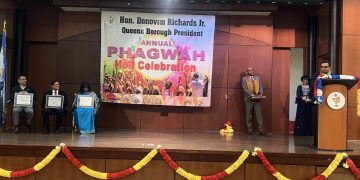
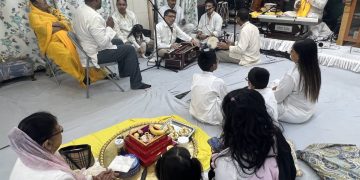
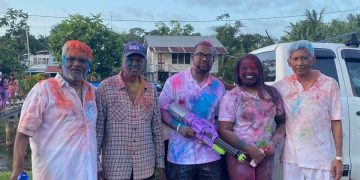
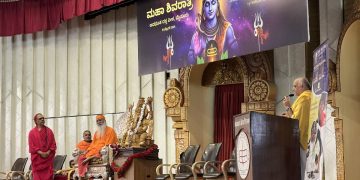
Even the term ‘diaspora’ is misused by officials and others. Not every Guyanese living abroad or nationals of another country living ‘outside’ is considered as ‘diaspora’. The diaspora refers to people from an ethnic group (nationality) outside of the country who are actively involved in affairs of, continuous engagements, and transnational interconnections with their former homeland. If migrants and kins (siblings) have no interest in the former homeland, those persons are not considered as diaspora. Most of the descendants of Guyanese in North America and elsewhere have maintained connections (religious, cultural, social, family, emotional) to their origin country and it will be correct to refer to them as diaspora.
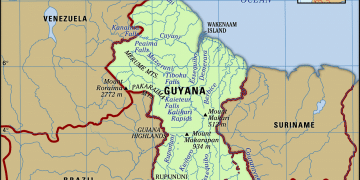
It is not known exactly how many Guyanese migrated post-independence and how many returned (estimated less than 1% if that many) to live in Guyana. It is estimated that over a million Guyanese (migrants and their children, grandchildren, etc. – into their fourth generation are in USA alone since the first wave post-1965 when migration was open to Guyanese. Hundreds of thousands more departed for UK (their first option of migration while Guyana was still a colony – 1950s onwards) and Canada (1970s onwards) and the Caribbean (1980s onwards) – English, French Dutch — almost all of the islands as well as French Guiana and Brazil. Surinam saw tens of thousands of Guyanese migrants as did Venezuela. Thousands of Guyanese who had once settled in UK, Canada, Venezuela, Suriname, and the Caribbean have managed to get to USA which they have made their new home. Several Guyanese on scholarship or members of sports team or delegations to conferences opted not to return especially during the 1980s and later when economic conditions were unbearable during the height of the dictatorship. Guyanese used any means to escape the homeland — back track, purchasing visas, business marriages, name change, passports of others, etc. to get them out of the country, to USA, Canada and Caribbean countries, etc. In terms of ethnic distribution of migrants, it is estimated that almost 60% were Indians, 30% Africans, and the remaining 10% Portuguese, Chinese, Amerindians, and Mixed races.
From time to time, Guyanese returned home for brief stays to see relatives, friends, neighbors and or to rehabilitate their homes, take care legal issues relating to property, for funerals, marriages, business, etc. And it will be correct to refer to them as overseas-based or even diaspora or Guyanese abroad. They have established roots, built families, own homes or business and vehicles in their new host or adopted homeland. They are not incentivized to return permanently to their former ‘homeland’ although they may be willing to provide various forms of support to Guyana and loved ones. The government just a few years ago, before oil, depended on utilizing diaspora for remittances and entrepreneurial networks. Over the last five years, the government has been engaging the diaspora for economic, political, and social development. They can play important role in technology transfer, skill sharing, and enhancing diplomatic ties between Guyana and their host or adopted countries. Guyana has outreaches to maintain links with diasporic communities. The hope also is to leverage their skills, knowledge, and investment, turning their emigration into an asset for the former homeland.