













































Reference to your news report, President Irfaan Ali deserves applause for his firm, unwavering, uncompromising, dignified, courageous, and unequivocal response to suggestions emanating from Washington that Guyana should consider negotiations with Venezuela over the longstanding border controversy involving the Essequibo region. His response and that of Minister Hugh Todd demonstrates political maturity and national pride in Guyana’s sovereignty and territorial integrity.
At a time when international diplomacy is undergoing considerable changes and powerful nations are increasingly asserting their geopolitical interests, President Ali has sent an important message: Guyana is a sovereign nation whose territorial integrity cannot be treated as a bargaining chip in negotiations between the US and Venezuela.
 The reports that a senior American official, an emissary of Secretary Marco Rubio, had discussed with a senior Guyana official last September the possibility of Guyana discussing territorial concessions with Venezuela understandably generated concern among Guyanese at home and throughout the diaspora. The suggestion has been particularly troubling because Guyana has already pursued a legal process before the International Court of Justice (ICJ) to obtain a definitive resolution of the controversy. Secretary Pete Hegseth a few days ago also offered Venezuela’s military advanced training and assistance to reclaim lost territory; it is not clear what this means in the context of the border controversy.
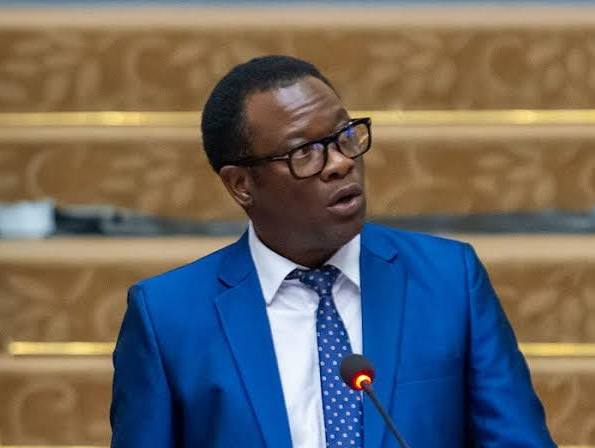 President Ali and Todd’s position that Guyana will not surrender any portion of its territory is therefore necessary. His declaration that the country’s sovereignty, territorial integrity and national patrimony are not negotiable reflects the responsibility of a head of state to defend the interests of his nation.
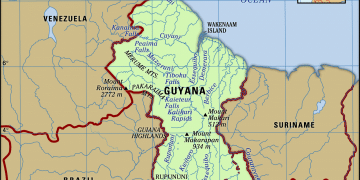
The border matter is at the ICJ with a ruling expected soon. The historical and legal foundations of Guyana’s position cannot be casually dismissed. The 1899 Arbitral Award, then backed by SA, established the boundary between British Guiana and Venezuela. Guyana maintains that the award constituted a full, final and binding settlement. Venezuela subsequently, with support from USA, revived its territorial claim in 1965, creating a controversy that has persisted till now. The UN Secretary General referred the matter to the ICJ. The US backed a judicial resolution until recently and in fact seemed to backing Guyana.
Guyana has pursued diplomatic engagement and international adjudication. Guyana has presented its case in the Court’s proceedings that concluded in May 2026. An objective assessment of the evidence puts Guyana in a strong position.
President Irfaan Ali and Minister Todd’s position, speaking on behalf of the nation, is an extraordinary demonstration of political courage and an unyielding determination to defend Guyana’s territorial integrity. It is a powerful assertion of national sovereignty, constitutional responsibility and the dignity of an independent nation. The President has had close relations with Washington and with President Trump.
President Ali demonstrated that friendship with the US does not translate into submission, and that strategic partnerships cannot supersede Guyana’s national interests. What makes his position particularly commendable is that he has refused to be intimidated by the geopolitical weight of either Washington or Caracas. International law must be obeyed. He has demonstrated that Guyana, notwithstanding its relatively small population and geographical size, possesses the confidence and sovereign authority to determine its own destiny. A country’s size does not diminish its rights under international law, nor does the power of another nation entitle it to dictate the disposition of its territory.