
















Dear Editor,
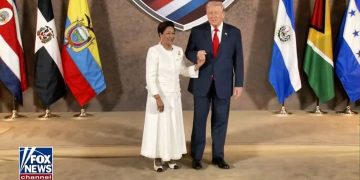
In an interview seen on News Source Guyana on March 30th, US Ambassador Ms Nicole Theriot stated that the US is monitoring the Guyana-Venezuela case at the International Court of Justice (ICJ) and is “prepared to stand with Guyana against Venezuela…we are willing and ready to defend Guyana…we stand by you against any threat…” In my view, and I believe in the view of most Guyanese, these words as well as the earlier statement by US Secretary of State Mr Marco Rubio, are reassuring and indicate that President Ali’s support of US foreign policy is paying dividends as Guyana faces threat to its territorial integrity from Venezuela.
Over the past few months letter writers in the major national newspapers and social media activists on television have been excoriating President Ali for embracing United States (US) policy in the Caribbean and distancing his government’s relations with Cuba, claiming that Guyana has surrendered its sovereignty to the US. It seems that these individuals neither have an understanding of the dynamics of government nor a familiarity with Guyana’s past history. And the tiny few critics from the Burnham era, seem to have selective amnesia.
For the record, Guyana’s sovereignty has been influenced by the US since Guyana, then British Guiana, was a colony of Britain in the late nineteenth century. In 1823, US President James Monroe enunciated the Monroe doctrine. The US Government website https://www.archives.gov/milestone-documents/monroe-doctrine notes “The European powers, according to Monroe, were obligated to respect the Western Hemisphere as the United States’ sphere of interest” and “warned European powers not to interfere in the affairs of the Western Hemisphere”.
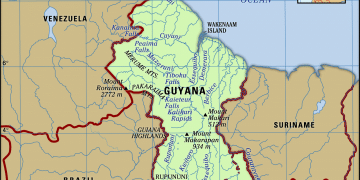
I believe every adult Guyanese is aware of the Guyana-Venezuela border dispute which has been ongoing since before Guyana’s independence in 1966. That dispute stems from the 1899 Arbitration Award which settled the matter between Venezuela and Britain, the colonial power that governed Guyana at the time, but which Venezuela resurrected just prior to Guyana’s independence. What may not be widely known is the US role in the 1899 settlement of the border dispute that was simmering since 1841.
A further US government Office of the Historian document at https://history.state.gov/milestones/1866-1898/venezuela is informative. It states “ In 1876 Venezuela protested and appealed to the United States for assistance, citing the Monroe Doctrine as justification for U.S. involvement. For the next 19 years Venezuela repeatedly petitioned for U.S. assistance, calling on its neighbor to the north to intervene by either sponsoring arbitration or intervening with force”. Finally, in 1895 the US intervened, and when Britain refused to submit the matter to arbitration, “ (US) President Grover Cleveland asked Congress for authorization to appoint a boundary commission, proposing that the commission’s findings be enforced “by every means.” Congress passed the measure unanimously and talk of war with Great Britain began to circulate in the U.S. press”. Finally Britain acquiesced, the matter was arbitrated, and the 1899 settlement was approved by all.
While Venezuela was unhappy with the outcome, this document notes “Internationally the incident marked the United States as a world power and gave notice that under the Monroe Doctrine it would exercise its claimed prerogatives in the Western Hemisphere”. In 1904 President Theodore Roosevelt added the Roosevelt Corollary justifying US authority to intervene in any country in Latin America “to restore order”, a euphemism for regime change. Subsequently, the corollary was officially abandoned by President Franklin Roosevelt but it continued to influence US policy indirectly.
Fast forward to the early 1960s when Guyana was on the verge of gaining independence under the PPP government headed by Dr Cheddi Jagan, a nationalist and self-proclaimed Marxist who expressed support for the 1959 Cuban revolution. From 1961 to 1964, US administration under President Kennedy and then under President Johnson pressured the British government to prevent Guyana from gaining independence under a Jagan led government. Britain succumbed to the pressure, independence was delayed, the voting system was changed from first past the post to Proportional Representation, and new elections held in 1964. Although the PPP won the elections by a plurality of votes, contrary to British convention, Dr Jagan was not allowed to form the government. Instead, Mr Burnham, leader of the PNC and who had given assurance to the US that a government under him will not trade with Cuba or recognize the former Soviet Union, was asked to form a government. As suggested to him by the US in order to have a governing majority, he joined with Mr Peter D’Aguiar, leader of the business oriented conservative party, in forming a coalition government of their two parties, the PNC and the UF. Independence was then granted in 1966 with Mr Burnham as Prime Minister and Mr D’Aguiar as Finance Minister. So, once again the US influence was effective and, although Mr Burnham kept his promise to the US up to 1972 regarding no trade with Cuba and no diplomatic relation with the Soviet Union, no concern was ever expressed about Guyana surrendering its sovereignty to the US.
The US aided Prime Minister Burnham in rigging the 1968 elections to retain power. From then onwards until 1992, Mr Burnham’s party, the PNC, rigged every national election to retain power. Finally in 1992, with the economy in shambles, poverty and starvation rampant, and major sources of loan financing no loner available, then President Mr Desmond Hoyte reluctantly accepted the recommendations of former US President Jimmy Carter and held free and fair elections, then won by the PPP, still under the leadership of Dr Cheddi Jagan.
Subsequently, the PPP, under new leadership, continued to win future elections until 2015 when the US, dissatisfied with decisions of then President Donald Ramotar, took an active role through the International Republican Institute in defeating the Ramotar led PPP in the 2015 national elections. Mr David Granger, then leader of the PNC became President. However, shortly after his party lost a No Confidence Vote in parliament, he started to act unconstitutionally. In the ensuing 2020 national elections, Guyana Election Commission officials attempted to declare fraudulent results in favour of Mr Granger’s party. The US and Canadian ambassadors took a leading role in protesting the apparent fraud and a series of court challenges followed, lasting five months during which time Mr Granger refused to concede defeat. Finally, after US threats of sanctions against government officials, Mr Granger conceded defeat, and allowed the PPP to form the government under Dr Mohamed Irfan Ali as President.
With Guyana becoming an important oil producer in the region, Venezuela commenced aggressive activities both militarily and legislatively against Guyana’s territorial integrity despite the fact that the border dispute is before the ICJ. Militarily, Guyana is no match for Venezuela. The website GlobalMilitary.net which tracks world military forces through open-source intelligence offers following comparison:
“Venezuela (ranked #46 globally) holds a stronger overall military position than Guyana (#148) on the Global Military Index. Venezuela fields 343,000 active troops — 114:1 Guyana’s 3,000, backed by 8,000 reserves and 220,000 paramilitary. Venezuela’s $0.8B defense budget is 3.8x that of Guyana ($0.2B). In the air, Guyana operates 11 aircraft including 0 combat jets, while Venezuela fields 226 with 54 fighters. Venezuela operates a 42-ship naval fleet; Guyana has no navy. On the ground, Guyana deploys 0 main battle tanks vs 172 for Venezuela. Neither Guyana nor Venezuela possesses nuclear weapon”.
President Ali’s foremost responsibility to the nation is to protect its territorial integrity. With such an overwhelming military strength in Venezuela’s favour, undoubtedly Guyana needs the support of the US. From the statements of Secretary Rubio and now Ambassador Theriot, Guyana has this support which is certainly based on President Ali’s US policy. Consequently it is difficult to understand the criticism of armchair critics who have no official responsibility for the nation’s sovereignty.
Yours faithfully,
Harry Hergash