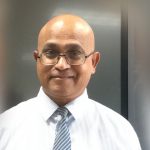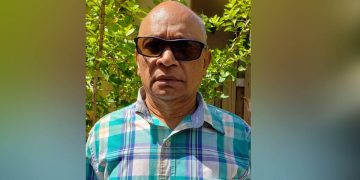




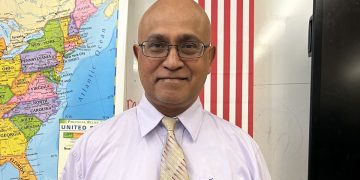
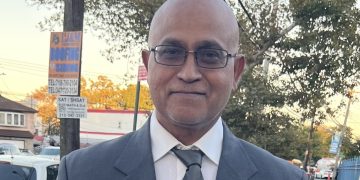
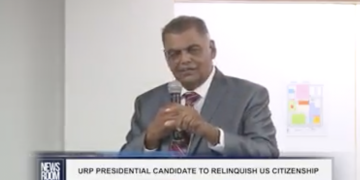
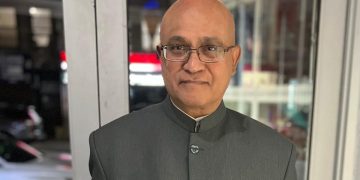
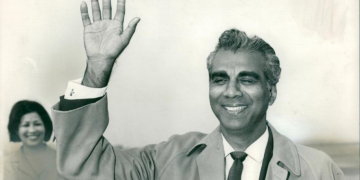
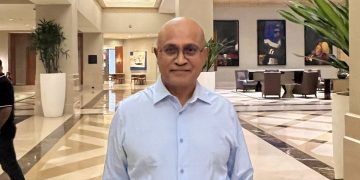
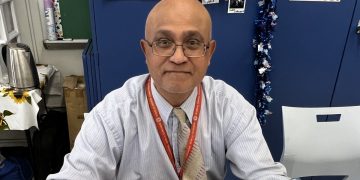
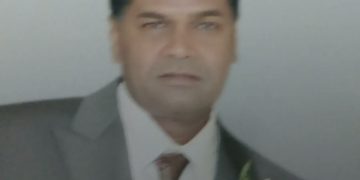
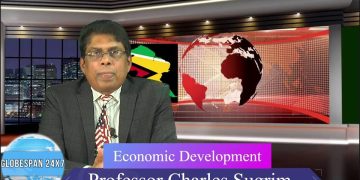
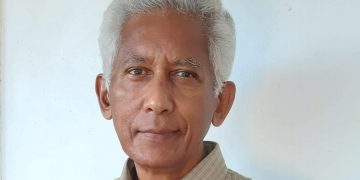
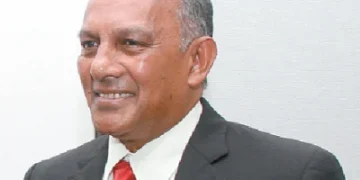

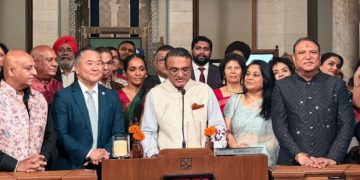
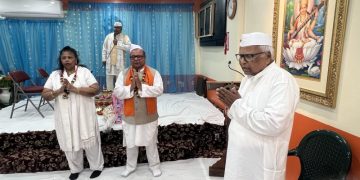
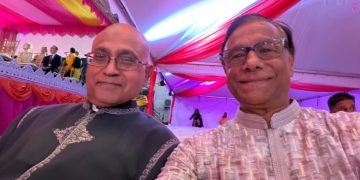
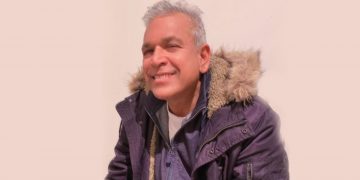
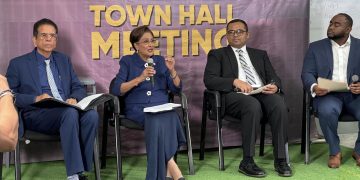
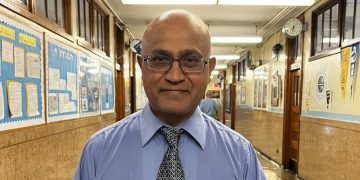
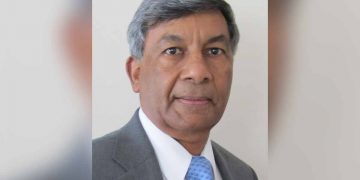
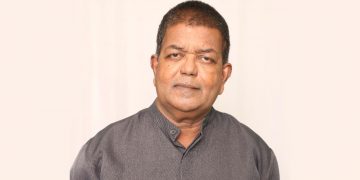
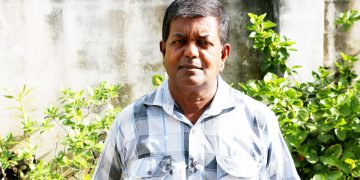

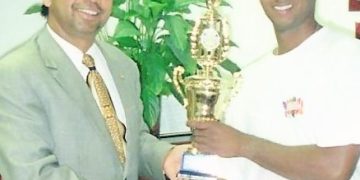
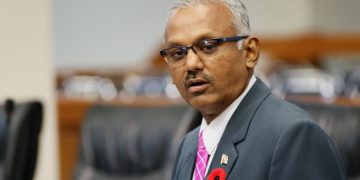
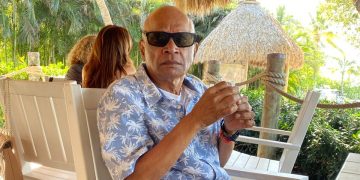


In the struggle for free and fair elections and the restoration of democracy in Guyana, during the 1970s and beyond, the contributions of a small number of individuals within Guyana and throughout the international community have been an important part of the wider democratic conversation. Among those whose role deserves recognition is Mr. Vassan Ramracha, whose involvement across the United States, Trinidad, and Guyana can be examined as part of the continuing history of advocacy for democratic governance in Guyana. In examining Mr. Ramracha’s role, particular attention should be given to the part he and his brother Rennie, a NYU educated political scientist and CCNY Adjunct Professor, played in raising awareness of issues in Guyana and Trinidad, participating in discussions and supporting efforts to keep the question of democratic governance in Guyana before the international community.
Vassan Ramracha represents a rare example of an Indian or Trinidadian or a Caribbean person or a non-Guyanese national being engaged in a political struggle in which geographical distance has not meant political disengagement or non-involvement. Few played a greater role than him in combating the dictatorship. He fearlessly fought for Guyana’s democracy with no gratitude from the beneficiaries. His unwavering concern about human rights abuses in Guyana during the dictatorship is noble. His longstanding involvement and immersion in Guyanese affairs, participation in the struggle for democratic reform, political writings and his interest in the historical and social development of Guyana and of Indian Caribbean people demonstrate a sustained engagement with Guyana and with NY Guyanese. Vassan has also been involved on matters concerning the Indian diaspora, hosting many meetings with nationals from India and Indo Guyanese. One can accurately describe him a dedicated activist who translated political convictions into practical involvement; a contributor to the documentation of Guyana’s political history; a mentor who helped shape the political consciousness of younger Guyanese activists; a cultural promoter; a persistent commentator on the challenges confronting Guyanese and Trinidadian society, and the Indo-Caribbean diaspora in USA.
As an activist, commentator, educator and advocate, Vassan has contributed to political discussions that extend beyond the borders of Guyana, Trinidad, America, India. His work reflects a serious concern about the welfare and future of Indians in the diaspora and a broad commitment to political participation, historical documentation relating to Indians, ethnic equality, and the state and future of the Indo-Caribbean community in the Caribbean as well as in USA. He has also contributed to documenting the experiences of Indo Guyanese and Trinidadian diaspora on cultural and religious activities in New York and of activists whose contributions also in NY to Guyana’s democratic struggle deserve historical recognition.
Vassan’s arguments and writings are sometimes forceful, outspoken, thought-provoking, and controversial, reflecting his willingness to engage contentious questions about race, politics, economic development, ideology, and national identity. Regardless of whether readers agree with the position he advances, his participation in these debates forms part of the wider history of diaspora involvement in the affairs of the diaspora community in USA and of the politics of Guyana and Trinidad and Tobago.
During the 1970s and onwards, Trinidad born Vassan Ramracha played one of the most important roles in the struggle for free and fair elections and restoration of democracy in Guyana not only in his home country of Trinidad but also in USA and in Guyana. He was among the pioneers, if not the first one, of the movement in America to champion or launch a struggle for restoration of democracy in Guyana at a time when virtually no Guyanese in USA was publicly showing interest about rights abuses and lack of democracy in their homeland. He appealed to Guyanese to take an active interest in the affairs of their homeland, especially human rights abuses particularly of Indians. He is credited for his influence and mentoring role of Vishnu Bisram, Baytoram Ramharack, and others who joined him in becoming selflessly dedicated and committed to the Guyanese struggle in NY since our freshman days in college in 1977 and continuing beyond 1992 when democracy was restored in the country.
The Earliest to launch or pioneer the Struggle for Democracy in Guyana
Vassan was among the earliest, since around 1970, to encourage and urge Guyanese in New York to play an active role in combating the Burnham racist dictatorship. However, few took him on. He had belonged to a religious and cultural group of Indo Caribbean Hindus formed at the Clarks apartment hotel in mid-Manhattan and led by Pt Oumadatt Maharaj (of East Coast), Pt Shastri, and Pt Chandrika Misir, both Berbicians. Holding an executive position, he appealed to the members and other Guyanese to voice concerns about human rights abuses in Guyana. He was blanked as Guyanese were more interested in day-to-day survival and regularizing their stay in USA. They had given up on Guyana and sought to build a new life in America. Seeking to eke out a living, they were not interested in Guyana but to build a new life in USA. Vassan and his brother, Rennie, persisted in their efforts to appeal to Guyanese to become involved in a movement to focus attention on Guyana hoping that they can contribute to influencing the American political establishment to pressure the Guyanese dictatorship to democratize the country. They continued their advocacy against rights abuses in Guyana and sought American assistance to end persecution of Indo Guyanese and others.
Vassan’s concern about Guyana and his appeal for Guyanese to become politically active would eventually gain traction. In the Fall of 1977, he met me (Vishnu Bisram), Baytoram Ramharack, and others in City College, CCNY, and a productive relationship began that resulted in formation of a student club and later community organizations rooted in cultural and political activism, exposing abuses in Guyana and that would help to usher in democratic change in Guyana.
Vassan’s role in struggle for democracy in Guyana as well as promoting historical consciousness of Indian people, is an illustration that a struggle for democracy or rights is never confined by geographical boundaries. It is a struggle that brings together people from different countries, backgrounds and walks of life who share a common belief in freedom, justice, accountability and the fundamental right of citizens to choose their government through free and fair elections.
The international dimension of the Struggle for FFE in Guyana
The Guyanese democratic struggle for free and fair elections (FFE) and restoration of democratic governance must be understood within the context of the country’s political history and the determination of citizens, both at home and abroad, to defend democratic principles. For Guyanese living in the United States, the struggle often meant finding ways to make their voices heard beyond the borders of their homeland. It involved political discussions, public advocacy, community organisation, publication and distribution of pamphlets and newsletter, protests, rallies, communication with elected representatives and efforts to bring international attention to concerns about mis-governance, human rights, racism, and electoral integrity.
Mr. Ramracha has himself written about the role of the Guyanese diaspora in this struggle. In his February 26, 2023 article, The Struggle for Democracy in Guyana, published by Indo-Caribbean Diaspora News, he describes the different organisations and groups that participated in the overseas movement and identifies individuals (including Vishnu Bisram, Baytoram Ramharack, Prem, among others) who were involved in organising and advancing the Guyana cause.
His account is significant because the history of democratic advocacy was not regularly in news and hardly ever penned. It should include not only the activities of political leaders but also the contributions of ordinary citizens, students, community organisers and diaspora activists who helped sustain public attention on Guyana’s political circumstances.
The United States: Advocacy beyond borders
The US provided an important setting for Guyanese diaspora activism because of the absolute freedom one enjoys in America. One historically has been free to express views and opinions, of engaging in protests, criticizing the American government and politicians, lobbying the political directorate for redress of grievances without fear of being victimized. One could appeal to politicians and the administration to address rights abuses in Guyana. Living in USA or Canada or anywhere abroad should not necessarily mean abandoning responsibility towards the democratic future of and rights abuses in Guyana. For many, like this writer, Vassan, Baytoram, and others, it created opportunities to engage with American, Indian (from India) and Guyanese opposition politicians, international institutions like UN and OAS, civil society organisations, political representatives and the wider public to educate them about human rights abuses in Guyana and to develop experience on political and grass roots activism as well as to organize cultural and social activities that brought Indians together. (Baytoram penned countless articles about the Guyanese struggle and what needed to be done to usher in democracy). Such deep involvement forms part of a broader tradition of diaspora participation in the affairs of homeland and in establishing a community (with social and cultural institutions). The promotion of culture and identity and struggle for democracy is strengthened when people are free as in USA and can remain engaged, demand transparency and accountability, and insist that electoral outcomes (as in Guyana) reflect the freely expressed wishes of the electorate.
Trinidad: Caribbean Solidarity
Trinidad and Tobago also occupies an important place in the wider Caribbean conversation about Guyana’s democratic development. The government of T&T historically from 1966 onwards supported the dictatorship (1966-92 except the NAR Administration 1986-91). The relationship between Guyana and T&T is rooted in shared Caribbean history, migration, culture and regional cooperation. The political developments in one Caribbean country inevitably attract interest from citizens and communities throughout the region. The governments in the region gave support to the dictatorship because of race and ideology (supportive of American position closing its eyes on democratic abuses in Guyana). The involvement of Guyanese and other concerned citizens in T&T helped provide another platform for discussion on Guyana. Indo-Trinis and left-wing organizations called for restoration of democratic rule and FFE in Guyana; Indo-Trinis were giving solidarity to Indo-Guyanese who were denied their right to democratically choose a government. The T&T government was largely silent on the issue of democracy in Guyana. Those Trinis supportive of FEE subscribed to the principle that democracy, constitutional government and respect for the people’s electoral choice were/are not merely domestic concerns but also matters of wider Caribbean significance. They felt election riggings must be condemned but the T&T government refused to condemn electoral fraud in Guyana. Mr. Ramracha’s connection to Guyana democratic discussion in Trinidad and in America, across geographical spaces deserves to be documented as part of the wider history of diaspora and regional engagement.
Guyana: Taking the struggle to the homeland
One of the most interesting aspects of Mr. Ramracha’s contribution, according to his published account, was the direct involvement of diaspora activists in Guyana’s political affairs. He made multiple trips to Guyana to give solidarity to the struggle within the homeland and to join protests and to distribute literature. He was also involved in polling with Baytoram Ramharack, Ravi Dev and myself.
His article records that he and other individuals participated in distributing political literature in New York, engaging the Guyanese community and organising demonstrations. He also describes the establishment of the Indo-Caribbean Club at City College of New York in 1977, which he says was founded to encourage brotherhood and address issues affecting Guyana.
Vassan played a historic role in the formation of the Conservative Party of Guyana NY branch and the subsequent formation of the Jaguar Committee for Democracy. Members of the Jaguar group travelled to Guyana during the summer months, using their own financial resources to support political activities directed at securing democratic change.
Vassan also participated in demonstrations all over NY and Washington and in Guyana, and outside the United Nations in New York when Guyanese political officials during the 1980s thru 1992) addressed that international institution, as well as protests against visits by prominent PNC officials.
These activities illustrated several methods through which overseas activists sought to influence international awareness of Guyana’s political situation. They included public demonstrations, political publications, community engagement and efforts to communicate concerns to influential institutions.
It is important to recognise that Mr. Ramracha’s 2023 article of the struggle against Guyana’s dictatorship is a first-person account of the movement. His recollections provide valuable material for documenting his participation, while the contributions and perspectives of other activists should also be included in a comprehensive historical record.
The significance of the 1992 democratic restoration
The struggle for free and fair elections in Guyana reached a historic turning point with the October 5, 1992 general elections, which brought an end to the long period of PNC government under the electoral system that had been rigged in 1968 onwards.
The return to electoral competition in 1992 was an important milestone in Guyana’s democratic development. International engagement, domestic political organisation and sustained advocacy all formed part of the wider circumstances surrounding that transition.
The Jaguar Committee for Democracy and other diaspora groups were instrumental in lobbying the USA administration and Congress to pressure the Hoyte government to hold FFE. He participated in demonstrations, political mobilisation and efforts to draw the attention of American political circles to Guyana.
His perspective raises an important historical question: how much of the contribution made by Guyanese living overseas has been properly recorded and acknowledged in the history of the country’s democratic development?
The story of democracy in Guyana should not be limited to the names of those who occupied political office. It should also acknowledge those who worked outside government, sometimes with limited resources, to keep democratic demands alive.
The 2020 electoral crisis: A reminder of the importance of vigilance
The events surrounding Guyana’s March 2, 2020 general and regional elections demonstrated that the protection of democracy remains an ongoing responsibility.
Following the elections, the tabulation of votes in Region Four became the centre of a prolonged controversy. International observer missions, including the Commonwealth, the European Union, the Organization of American States and The Carter Center, raised concerns about transparency in the tabulation process.
The Carter Center reported that the initial Region Four tabulation was not credible because it had not been conducted transparently in the presence of observers. A national recount subsequently took place, with CARICOM observers present. The recount results became the basis for the final declaration.
The Carter Center
The crisis demonstrated why electoral accountability, transparency and the rule of law must remain central to Guyana’s democratic institutions.
It also reinforced the importance of an engaged diaspora. Guyanese living in the United States, Trinidad and Tobago, Canada, the United Kingdom and elsewhere have a continuing interest in the constitutional development and democratic stability of their homeland.
The historical experiences of activists such as Mr. Ramracha provide an opportunity to examine how that international interest developed over several decades.
A contribution that deserves historical recognition
Mr. Ramracha’s story is also a reminder of the importance of preserving the history of political activism within the Caribbean diaspora.
Born in Trinidad, educated in Trinidad and the United States, and professionally established as an educator in the United States, he represents a connection between different Caribbean communities and the international environment in which political ideas and democratic advocacy developed. His published biography identifies his academic qualifications as master’s degrees in Education and Political Science.
ICDN
Vassan has written regularly in various publications and has two manuscripts awaiting publishing. He has been a regular contributor to ICDN. His personal account of the movement provides a starting point for understanding the activities of a generation of Guyanese and Indo-Caribbean activists who believed that the political future of Guyana required sustained attention beyond its borders. He has been a committed diaspora activist, politically engaged intellectual, democratic campaigner and persistent advocate whose concern for Guyana has transcended geographical boundaries.
The contribution of Mr. Ramracha should be considered alongside those of his fellow activists, including the organisers, demonstrators, writers and community members who participated in the movement. No individual should claim sole ownership of a collective struggle. Equally, no individual who made a meaningful contribution should be forgotten.
Democracy is a continuing responsibility
The restoration of democracy is not simply an event recorded in the history books. It is a continuing responsibility that requires independent institutions, transparent elections, respect for constitutional rights, freedom of expression and accountability from those entrusted with public office.
The history of Guyana’s democratic struggle demonstrates that citizens can make a difference whether they live in America, Trinidad, Guyana, Canada, UK. Mr. Vassan Ramracha’s involvement in diaspora events, activities, discussions, political advocacy and demonstrations forms part of that history. His collection of writings and speeches deserve to be preserved, discussed and considered by future generations seeking to understand the international dimension of Guyana’s struggle for democratic governance, politics of T&T, and the state of the Indian diaspora in USA.
As Guyana continues its democratic journey and rapid economic development, it is important to remember the individuals who participated in the struggle and to ensure that their experiences are not lost to history. The story of democracy in Guyana is not only the story of presidents, political parties and elections. It is also the story of activists who spoke out, organized rallies and movements, protested and demanded that the people’s voice be respected. Mr. Vassan Ramracha’s account is one contribution to that important chapter of Guyana’s history.