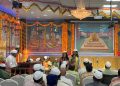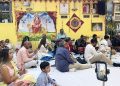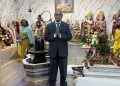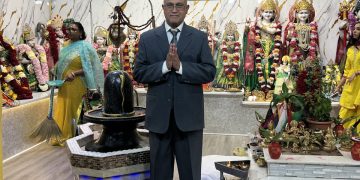















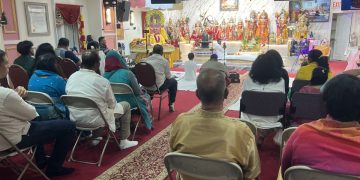
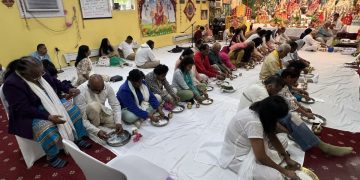
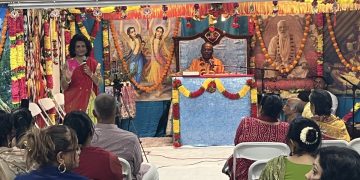
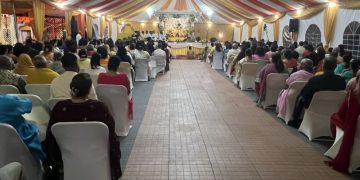
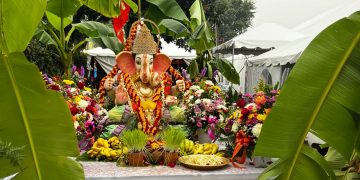
















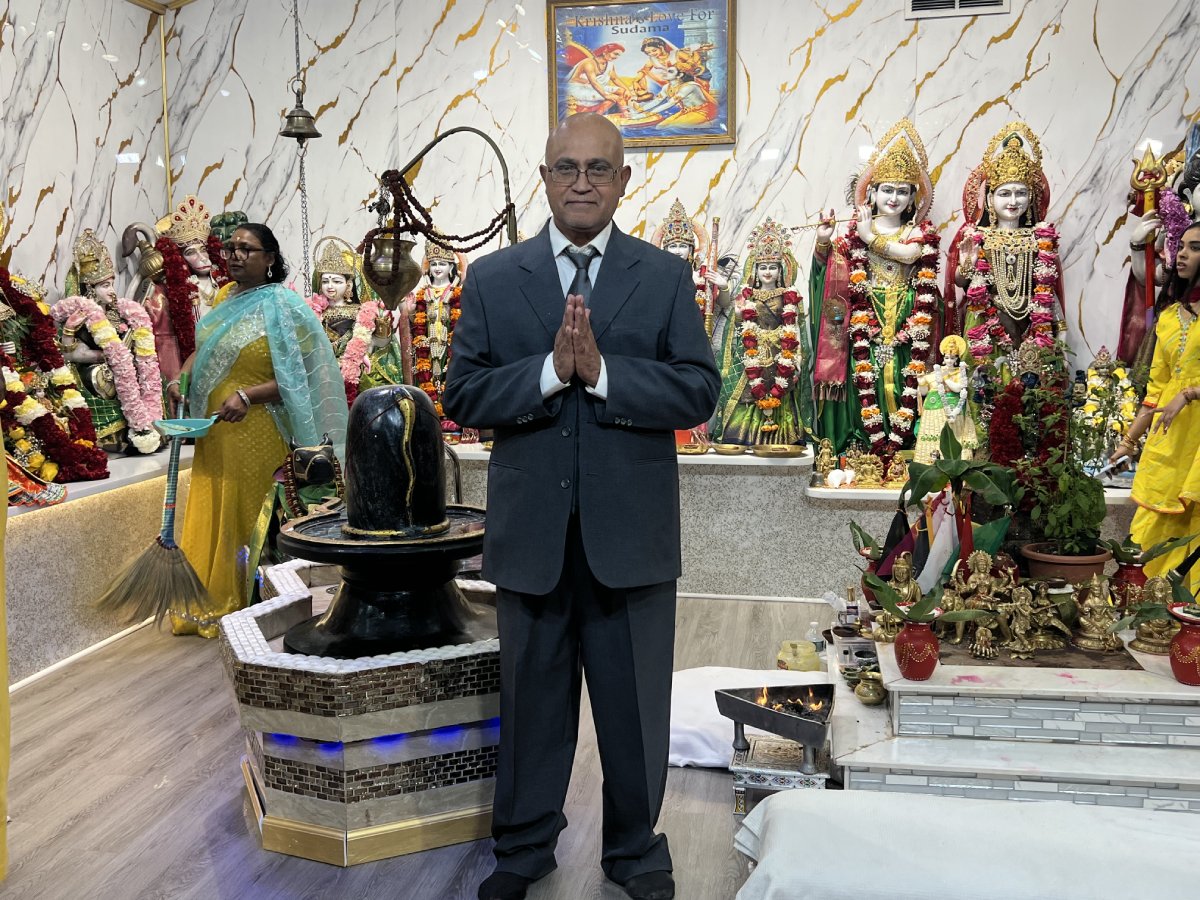
Navratri celebrations are being held all over the globe among Hindus. In USA, every mandir is hosting observance of Navratri with puja and a discourse of the Devis, Hindu Goddesses. Many Hindus also conduct puja at home. Durga puja (Durga Paath) is performed around this time of the year; Goddess Durga and her feminine re-incarnations are worshipped during Navratri, nine nights of worshipping the Goddesses (three each night for Durga, Lakshmi, and Saraswati). Navratri is the holiest period in the Hindu calendar, a precursor to the Diwali celebrations, one of the most cherished festivals in the Hindu calendar. Mandirs in Richmond Hill, Queens, and in other parts of New York City and NY State tend to be packed to capacity as devotees flocked for blessings.
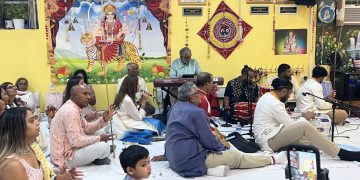
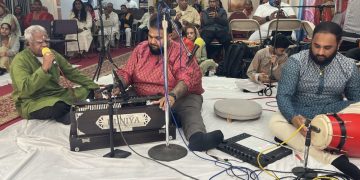
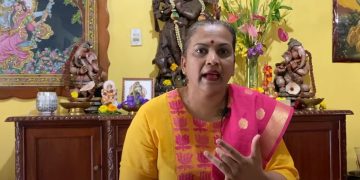
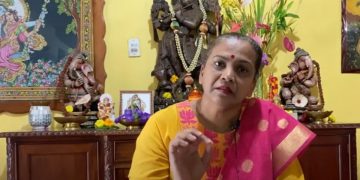
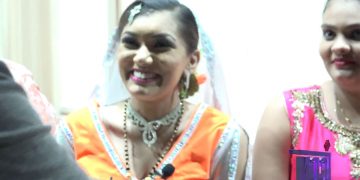
The Trinidadian founded Sudama Mandir in Richmond Hill, also patronized by Guyanese and nationals of other countries, has been holding nightly puja and discourse since last Sunday as has other mandirs. A different pandit conducted the discourse nightly. Pt Hemraj Singh of Floridaled the discourse Thursday evening; Pandit Dhanraj Rishi Ramjugh of NY held fort Wednesday evening. Devotion was accompanied by religious music and songs (bhajans) and festive enthusiasm at Sudama and other mandirs. Throughout Navratri’s service, worshippers engaged in heartfelt prayer, chanting of mantras, singing, clapping to music, reflecting on the timeless teachings embedded within the sacred observance. The nightly katha offered attendees a chance to delve deeper into spiritual lore, emphasizing the enduring message that faith and collective devotion provide a powerful anchor in navigating life’s challenges.
The evenings at Sudama and elsewhere were marked by prayers, devotional singing and a spirit of togetherness as worshippers came together to worship Goddesses Durga, Lakshmi, and Saraswati and to celebrate the triumph of good over evil. The sacred occasion offered devotees an opportunity to seek divine blessings, renew their faith and share in the rich cultural and spiritual traditions of Hinduism that they brought to USA from the Caribbean, South Asia, and elsewhere.
Navratri, meaning “nine nights,” is dedicated to the worship of the Divine Mother in her various forms, symbolizing strength, courage, wisdom and the victory of righteousness. The festival holds deep religious and cultural significance for Hindu communities around the world. At Sudama Mandir, the celebrations provided a welcoming setting for people of different generations to come together in prayer and fellowship. Sweet smelling burning incense from the havan kund and agarbatie waft in the air in the mandir. The atmosphere reflected the essence of Navratri — devotion to the Divine Mother, lovely music and rendition of bhajans, and gratitude for her blessings and a shared commitment to preserving religious and cultural heritage.
For many attendees, the celebrations were also an opportunity to pass cherished traditions on to younger generations, helping children and youth develop a deeper appreciation of their faith and cultural roots. Through worship, cultural expression and community participation, these gatherings help ensure that the values and teachings associated with the festival continue to inspire future generations. Observing Navratri provides faith in living a good life that will be rewarded with overcoming adversity. Navratri and other festivals play an essential role in fostering unity, strengthening neighborhood bonds, and keeping foundational cultural values vibrant and alive. The sacred aartee concluding nightly service echoed with a shared sense of peace, gratitude, and renewal in a religious life, carrying the blessings of the sacred festival forward.
For more picture click here,
https://www.facebook.com/share/p/1DG4Lyh85M/