


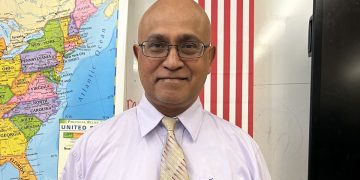
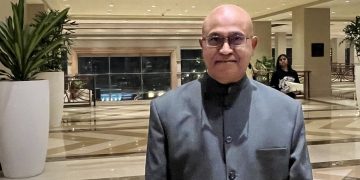
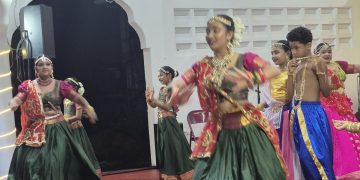
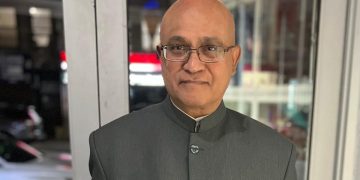
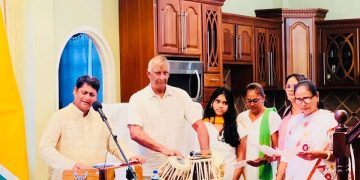
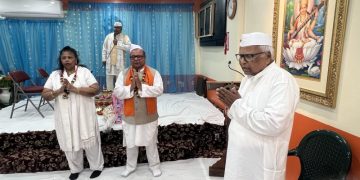
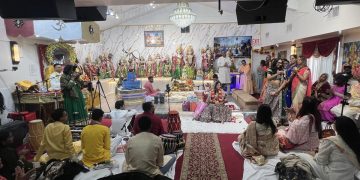
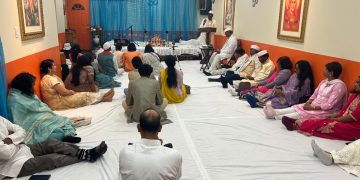
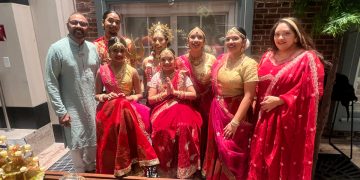
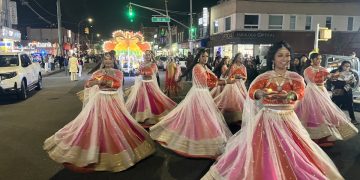
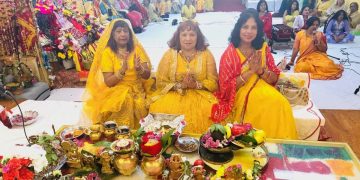


Affiliates of the Indian Diaspora Council (NY) in collaboration with the India Consulate in New York will host a cultural program featuring Indo-Caribbean performances and brief speeches in effort to strengthen ties between the (PIO) Indo-Caribbean diaspora and Indian nationals (NRIs) in the greater NY area. It was an idea conceived by Guyanese American Ashok Ramsaran although such engagements were discussed by a few of us including Deo Gosine and myself. It was granted a green light after Ramsaran’s discussion with the Consulate General (Ambassador Binaya Srikanta Pradhan). The program is slated for November 21 at the Consulate on 63rd and 5th Ave. overlooking Central Park in Manhattan; it is a historic place as I used to go there during the late 1970s and 1980s to read Indian newspapers and magazines and to learn Hindi. The goal is that the cultural program and short remarks will enable Indian nationals to better understand and relate with “estranged” Indian nationals and Indo-Caribbean people – hundreds of thousands of who (from Guyana, Trinidad, Suriname, Jamaica and other Caribbean islands) reside in the greater New York area. (Indians began arriving in the Caribbean as indentured laborers, carrying with them their religious beliefs, languages, music, customs, cuisine, and cultural traditions. Despite the hardships of indentureship, successive generations preserved much of their ancestral heritage while developing a distinctive Indo-Caribbean identity. A million Indo-Caribbeans, inclusive of their American born), have made USA home). The public is invited to the Nov 21 event. RSVP is advised because of limited space.
Although Indo-Caribbeans and Indian nationals in America share common ancestral roots, their historical experiences and cultural development have been different. Indian nationals have an opportunity to better understand Indo-Caribbeans. Indian nationals who migrated to America in recent decades can learn about the extraordinary history of Indian settlement in the Caribbean, including the experiences of indentured laborers and their descendants. At the same time, Indo-Caribbeans can become more familiar with contemporary India, its economic transformation, cultural developments, educational opportunities, and expanding global influence. The program can encourage greater interaction between these communities, breaking down social and cultural barriers and creating opportunities for friendship, professional networking, business partnerships, and collaborative community activities.
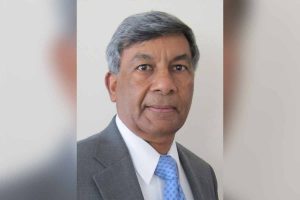
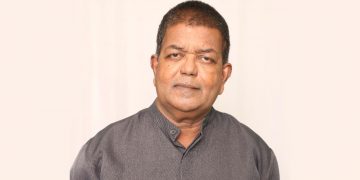
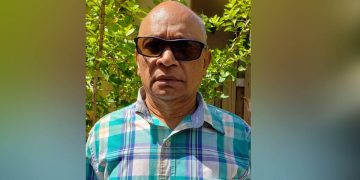
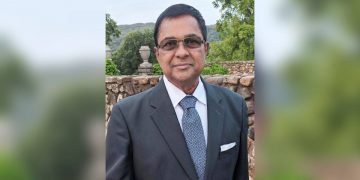
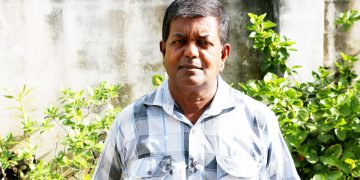
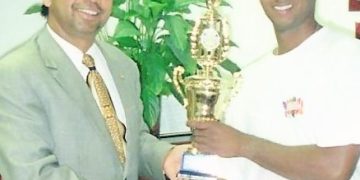
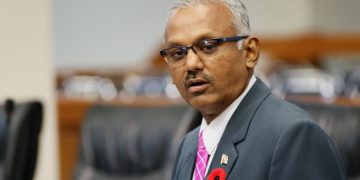
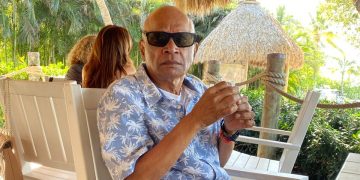
The initiators, planners, and organizers deserve high praise for this program as Indo-Caribbeans seek to build closer relations with their ancestral homeland (their nanni). Prime Minister Modi in recent years has urged closer linkage with the diaspora from the indentured laborer heritage (so called girmitiyas). He also advised students to conduct research on the girmitiya diaspora. Such linkage and closer ties and conducting research on girmitiyas, has long been championed by scholars like Dr Ganesh Chand and Dr Biman Prasad of Fiji, Maurits Hassankhan of Suriname, Dr Sat Balkaransingh of Trinidad, Mookeshwar Choonie of Mauritius, Ravi Dev and myself of Guyana, among others. Ramsaran and this writer held many discussions over the years on having engagements with the India Consulate of NY as well as the kind of cultural program planned for November 21. Ashok, Deo Gosine, and me have consistently demonstrated an extraordinary commitment to strengthening the bonds between India and the Caribbean diaspora. Through our involvement, conferences, and cultural initiatives, we have helped brought greater international recognition to the distinctive history and achievements of the Indo-Caribbean community.
The Indian Consulate in Manhattan provides an appropriate and prestigious venue for showcasing the cultural richness of a community whose ancestors originated in India, but whose identities and traditions have evolved through generations of Caribbean and American experience. It is a great effort of strengthening of India-diaspora relations. Indo-Caribbean community has an important place within the larger Indian diaspora family. Its history is unique, its cultural contributions are substantial, and its connections with India deserve continued attention and institutional support.
It is hoped there will be ongoing celebrations and displays at the Consulate of varied Indian diaspora cultures, not just Indo-Caribbean but also Indo-African, Indo-Mauritian, Indo-Burmese, Indo-Fijian, Indo-Malaysian (Singapore) as well and if not in NY, then in Los Angeles (Indo-Fijian diaspora) wherever the diaspora has communities in USA. In reciprocal programs, representatives of the NY Consulate and other Indian missions in America should be invited to the Indo-Caribbean community in Queens (or Bronx or Brooklyn) for a cultural variety program and lectures about India and the Indo-Caribbean diaspora. As India expands its engagement with overseas Indians, initiatives such as this should become more frequent and receive greater encouragement from Indian diplomatic missions and cultural institutions. They can serve as bridges connecting India with the descendants of indentured immigrants throughout the Caribbean, North America, Europe, and other parts of the world.
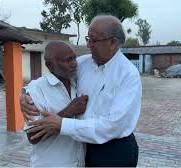
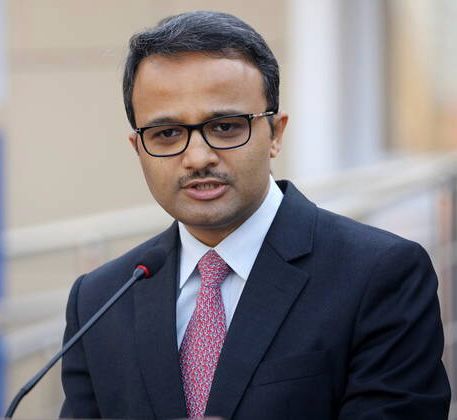 The celebration, preservation, propagation, and promotion of Indo-Caribbean culture, history, traditions, and heritage require vision, dedication, leadership, and an enduring commitment to keeping ancestral connections alive. One must pay tribute to those (advocates, community leaders, organizations, etc.) who have contributed since the late 1960s towards the survival of Indian heritage in NY and other parts of America. It takes a lot, commitment, time, money, energy, effort to establish cultural institutions in a new strange environment and to organize cultural programs like Indian Arrival Day celebrations (from 1984 onwards) and that planned for November 21. I organized many of such programs in my youthful years in college and right after. It drained energy. So those who have organized or are organizing non-commercial cultural programs deserve commendation and salute for their volunteerism in seeking to propagate or promote Indian culture in America. Such programs were meaningful celebrations of the rich and enduring legacy of the descendants of Indian indentured immigrants who brought it from India to the Caribbean between (1838-1917) and from the Caribbean to USA post 1965. Their sacrifices, resilience, determination, and contributions helped shape the social, cultural, economic, and political development of countries and territories such as Guyana, Trinidad and Tobago, Suriname, Jamaica, Grenada, St. Lucia, Guadeloupe, Martinique, and other Caribbean territories.
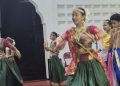
The Indo-Caribbean community has preserved and enriched many aspects of Indian civilization, including music, dance, religious traditions, language, cuisine, festivals, dress, and family values. On music, there is tassa, classical Indian music, bhajans, biraha, sohar, folk performances, and traditional dances, and the Caribbean creativity of the meodious sounds of fast tempo chutney.
The November 21st program provides an important opportunity for nationals from India and ‘Americans’ to get a taste of Indo-Caribbean culture as well as for younger Indo-Caribbeans to reconnect with their ancestral roots. Many descendants of indentured immigrants, particularly those born and raised in North America, are increasingly interested in understanding their family histories and discovering the remarkable journeys of their fore parents. Cultural presentations, historical discussions, and artistic performances help ensure that this legacy is not lost but transmitted to future generations.
The collaboration between the Indian Diaspora Council and the Indian Consulate also reinforces the importance of people-to-people diplomacy. India’s relationship with its diaspora cannot be measured solely through trade, investment, or diplomatic engagements. It must also be nurtured through cultural connections, historical recognition, mutual respect, and meaningful engagement with communities whose ancestors carried Indian traditions across oceans and preserved them under difficult circumstances. November 21 is a celebration of identity, history, heritage, and the enduring bonds between India and its overseas descendants. It honors the past, celebrates the present, and inspires future generations to cherish and strengthen their ancestral connections.
Credit must be extended to volunteers and everyone who contributed to bringing this program to fruition. I salute Boysie Siew for his generous donation to help pull off the program. Their collective efforts deserve recognition and appreciation.
The Indian Consulate is also applauded. By hosting an Indo-Caribbean cultural program, the Consulate demonstrates that its engagement with the diaspora extends beyond Indian nationals and recent immigrants to include descendants of Indians who settled in the Caribbean generations ago. This engagement can create lasting institutional relationships between the Consulate and Indo-Caribbean organizations, cultural associations, religious institutions, academics, professionals, and community leaders. It can also encourage regular consultations, cultural exchanges, commemorative events, and collaborative programs. The Consulate can play an important role in promoting Indo-Caribbean performers, artists, writers, historians, and cultural organizations through exhibitions, festivals, seminars, and cultural presentations. The November 21 initiative could become the foundation for an ongoing Indo-Caribbean cultural partnership with the Consulate.