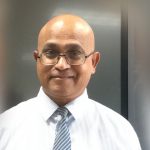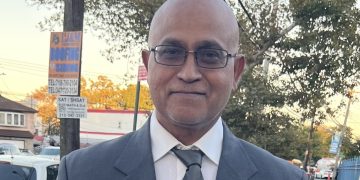



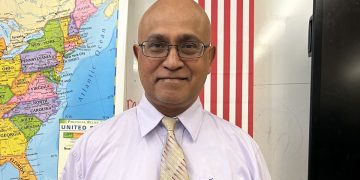
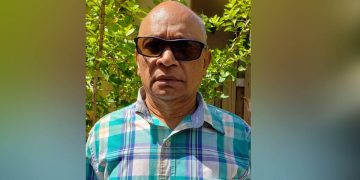
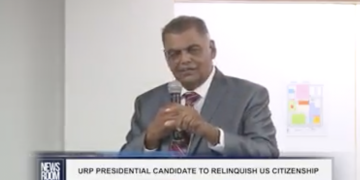
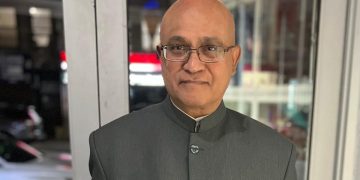
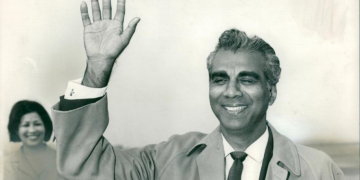
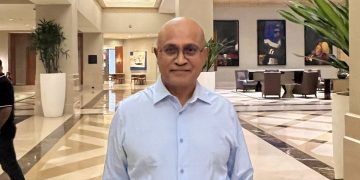
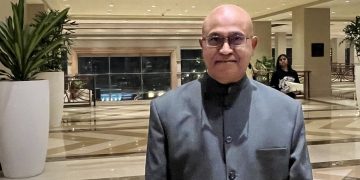
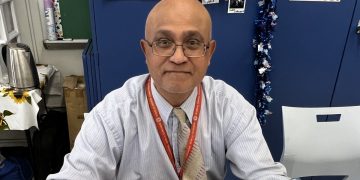
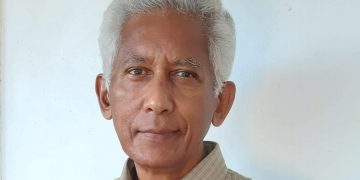
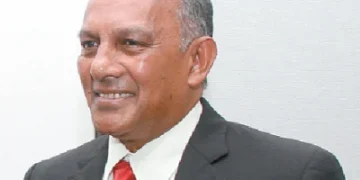
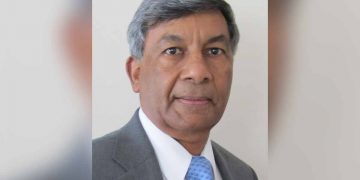
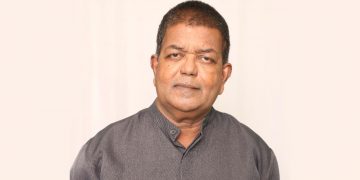
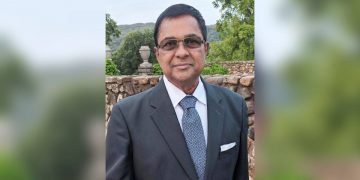
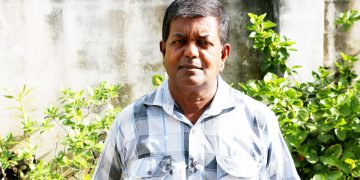

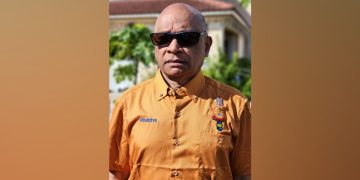
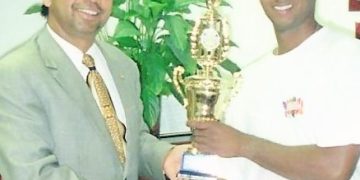
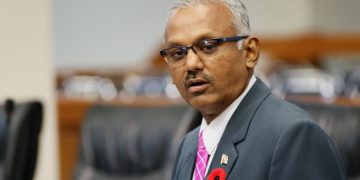
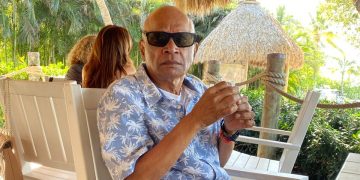

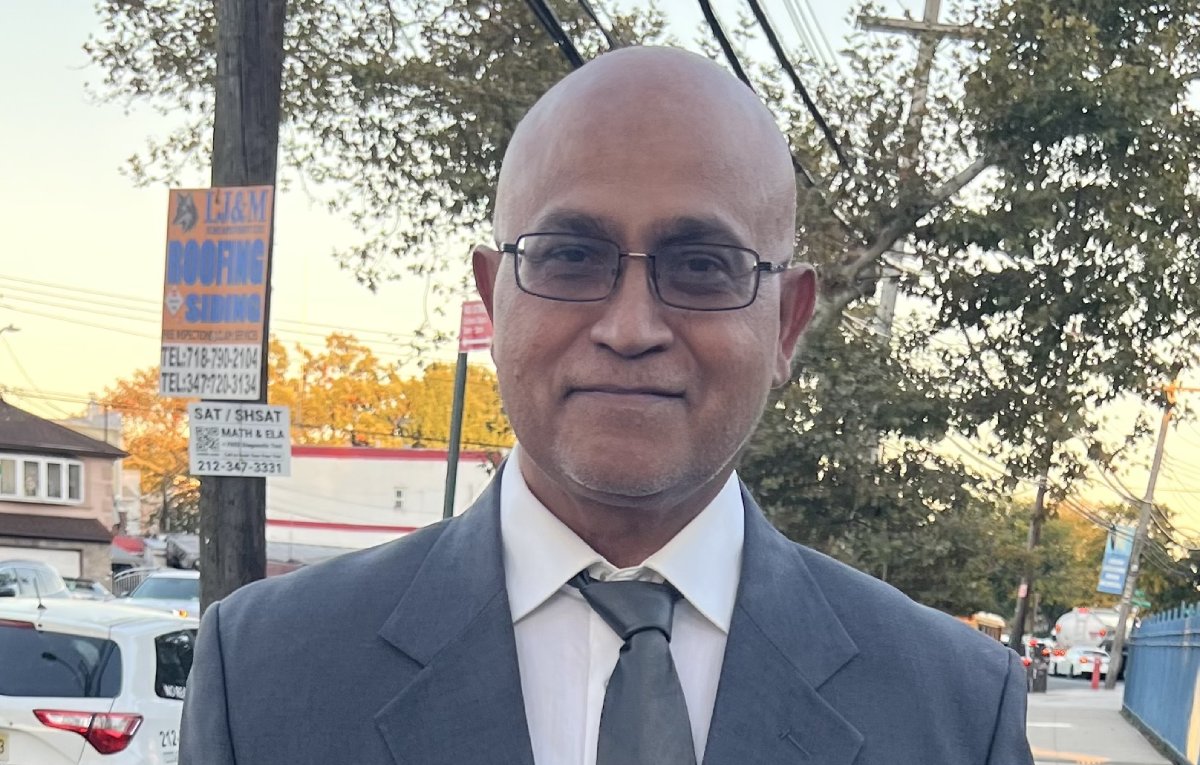
Vassan Ramracha, like myself and Baytoram Ramharack and a few others, was a pioneer in cultural, social and political organizing of Indian students and planning activities at City College of NY during the late 1970s and 1980s when he was pursuing BA in Political Science; Vassan subsequently did MA in International Relations and diplomas in other areas. He taught for over two decades. (Baytoram also did Pol Science while I studied Bio-Chemistry before venturing into the social sciences, humanities and educational administration). Vassan, Baytoram, and myself developed a deep-rooted commitment to Indian students at CCNY during our studies and to the wider Indian community from the 1970s till now. Both Baytoram and Vassan, as was me, were persistent commentators on the challenges confronting Guyanese society and of Indians in NY. We were committed diaspora activist, politically engaged intellectual, and persistent advocates of Indian interests whose concern for the diaspora transcended geographical boundaries. So much of our work has not been documented as pioneers of Indian students’ activism in USA. Our involvement in community affairs included writing, political organizing, advocacy, educational support, and cultural activities on campus as well as in the community or planning and organizing cultural programs in addition to events related to political mobilization. We translated convictions into practical involvement on campus and in our multiple activities across NY and even trips to Washinton, Toronto, Trinidad, and Guyana. We organized several cultural programs on campus as well as in various parts of the city. Papos West Indian Store on Grand Concourse in Bronx had a Indian cultural orchestra band that was sponsored by our organization at City College Finley Ballroom to a packed crowd of hundreds in Spring 1980 for Indian Arrival and many similar programs were organized at Washington Irving HS auditorium in 1984 and others around the city. Nohar Singh in his youth helped in organizing some of these cultural as well as political activities at a time when few were willing to do same.
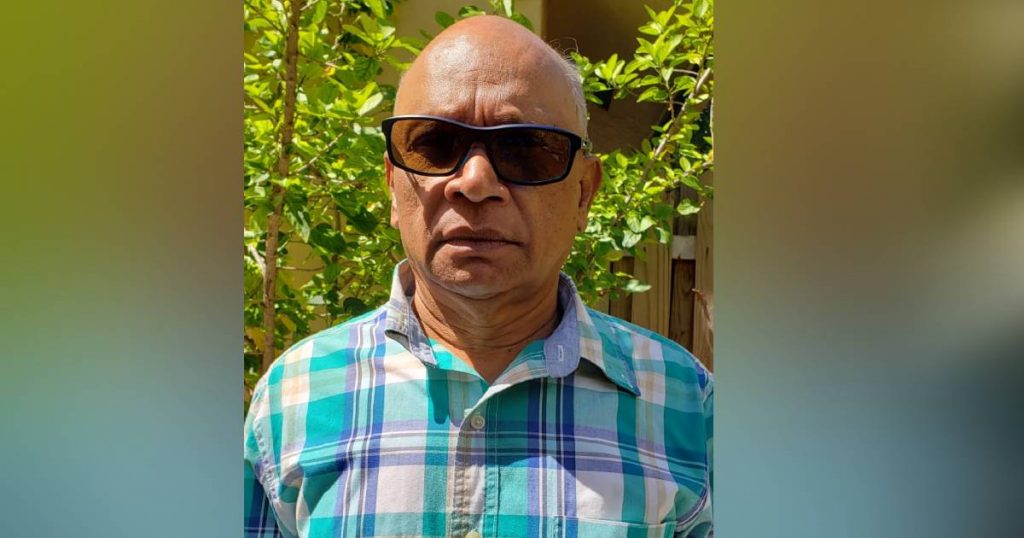
Like me, Vassan contributed significantly to the vibrancy of campus life among Indians of all nationalities. They appreciated his varied attempts at Indian cultural promotion on campus. Vassan would rent Bollywood films and documentaries about life in India and Guyana and aired them in a students’ lounge at Finley Students Center between 1978 and 1981. In our Indo Club that he co-founded, he urged me to spearhead Indian cultural programs resulting in my organizing multiple activities annually including Indian concerts, parties, and other recreational activities (table tennis, cards, dominoes, cricket). Approval was also granted to start a radio program at the college radio station (WCCR) on campus in 1979 that I hosted and that was banned because it aired Bollywood songs) and our club members also received approval for training in TV media at the college’s TV studio.
On the political front, Vassan encouraged me to seek elective office to the Student Government. I ran for the Senate representing the natural sciences and won in 1978 and re-elected until I finished my undergraduate studies in 1982. Vassan himself was elected Treasurer in 1979. Because of him, I became involved in organizing cultural, social and political activities on campus. This contributed to appreciation of Indian culture by Indo-Caribbean students and others as well as community (ethnic) consciousness among Indian students.
Vassan created an environment of intellectual and social engagement among Indian diaspora students – debate, discussion, and get togethers to unwind. The Indo Club activities at City College happened during a period when young people of all backgrounds, particularly those from immigrant and Caribbean backgrounds, were seeking to establish their identities, preserve their cultural heritage and become more actively involved in the political and social developments affecting their communities and home countries of ancestral origin. Africans, Afro-Caribbeans, Hispanics from the various Latino countries, Puerto Ricans, Italians, Irish, Jewish, Greeks, among others, formed ethnic clubs; there were over fifty ethnic Clubs. The Indo Club was founded on his advice to promote Indian culture and ethnic identity. Since here were ethnic clubs of all other groups or nationalities, why not also Indians (those from the Caribbean).
For many students of Indo-Caribbean and South Asian and Indian African descent, the college experience was not confined to classrooms, examinations and academic pursuits. There was a strong desire to maintain connections with their cultural roots while becoming integrated into American society. Cultural activities tend to provide an important avenue for achieving this balance. Through the Indo organization and promotion of cultural programs, Vassan, Baytoram Ramharack, and myself (Vishnu Bisram) helped create opportunities for students and members of the wider community to appreciate Indian traditions, music, and shared experiences and to better understand their heritage and ancestry and be proud of their identity. Vassan recognized that a college campus could serve as a platform for bringing people together around common interests and concerns. Social activities encouraged interaction among students from different ethnic, national and religious backgrounds. They helped build friendships, establish networks and create a sense of belonging among young immigrants navigating life in New York.
 The club’s activities were particularly significant for students who themselves or parents had migrated from India, Guyana, Trinidad and Tobago, Suriname and other Caribbean territories or were of such parentage; almost all of the students were Indo Caribbeans. Their cultural identities were shaped by their history and experience of the Indian presence in each Caribbean territory and the culture inherited from their parents and preceding generations and ethnic roots. Campus cultural gatherings provided opportunities to celebrate this diversity, strengthen friendship and introduce others to the history of their presence in as well as their contributions to their respective countries and communities in USA.
Equally important to culture and social activities was the club’s engagement in political activities as articulated by Vassan and to which Baytoram and I subscribed. The 1970s and 1980s were turbulent decades internationally and particularly significant for the Caribbean where Indians were culturally and politically marginalized. Guyana, Trinidad and Tobago and other countries were experiencing important political, economic and social developments. Issues of democracy, governance, political freedom, human rights, economic opportunity and the future of developing countries generated considerable interest among Caribbean students in New York. City College provided an intellectual environment in which these matters could be discussed and debated and Afro students hosted regular seminars. Political gatherings, discussions and student activities allowed young people to exchange ideas, challenge prevailing positions and develop a greater understanding of the political forces shaping their homelands. Indian students were not into political activities and seminars or inviting Indian scholars to talk about India and Indians in the Caribbean or America. Only a handful of us were interested in the politics of India and the Indian experience in the Caribbean, Africa, and elsewhere.
For Vassan, political engagement was an important extension of education. He understood that students should not remain detached observers of developments affecting their countries and communities. They could become informed participants in discussions about democracy, development, social justice and political accountability. The Indo Club’s organizing efforts and the intellectualism helped contribute to a campus atmosphere in which cultural pride and political consciousness could coexist. The Club sponsored several seminars and lectures by Indian scholars from India and the Caribbean (including Profs Chaitram Singh, Brinsley Samaroo, Ken Ramchand, among others to deliver lectures on campus between 1980 and 1985. Vassan also hosted engagements with Indian scholars and journalists at his home for discussion about India and the Indo-Caribbean people. These were not isolated interests. Cultural identity helped young people understand their historical experiences, while political discussions encouraged them to consider the challenges and opportunities confronting their communities. The importance of such organizing should also be understood against the background of New York’s immigrant experience during those decades. Many Caribbean immigrants were establishing themselves professionally and socially while maintaining strong emotional and family connections with their homelands. Young people at CCNY were part of a generation seeking to make its mark in American society without abandoning its cultural heritage.
The spirit of volunteerism in organizing cultural, social, and political activities and initiatives undertaken by Vassan, Baytoram, and myself were unique for Indian students on campus. Everyone seemed busy and engrossed in their studies, with no time to focus on ethnic identity or planning cultural and other activities. Organizing cultural, social and political programs required interest, commitment, personal initiative, coordination and the ability to bring people together. And it also required the willingness to dip into one’s pocket to fund activities that would benefit Indian students and help others to understand and develop and appreciation of Indian culture. It also led to a feeling of pride to promote one’s culture amongst a diverse student population. And for that one must express and show appreciation of the work of Vassan, Baytoram, myself and others who founded Indo Club and organized so many activities that benefited fellow Indians.
Looking back, the significance of the efforts extends beyond the individual activities organized during those years. They formed part of a broader tradition of Indo-Caribbean community building in New York. The cultural, Social, religious, and political awareness developed at CCNY helped prepare young people to participate in community organizations, cultural institutions, public affairs and diaspora initiatives in later years.
The 1970s and 1980s were formative decades for the Caribbean diaspora in New York. The activities at City College were part of the foundation upon which subsequent generations built their cultural organizations, political networks and community institutions. Vassan, Bayotram, and my years of involvement at CCNY as well as at CUNY Grad Center (where I also founded an organization and was also was elected to the doctoral Students Government) in organizing cultural, social and political activities at City College and the Graduate center deserves recognition as part of this important history. This writer also organized several programs at CUNY Graduate center on 42nd Street between 5th and 6th Avenues. Baytoram and Vassan organized multiple activities at Hunter College when they were students post graduate studies to upgrade their knowledge skills. Because of the pioneering work done by Indo-Caribbean students at CCNY, students from other colleges and universities use it as a model to start Indian students club at campuses. We became mentors who helped shape the political consciousness of younger Indian activists.
All three of us spoke at Brooklyn College, Lehman College, and other campuses about the Indo-Caribbean experience at events organized by Indo-Caribbean students who were mentored by us at one time or another. All of the varied events organized by the Indo Club and other Indian student organizations reflected a commitment to student organizing, participation, cultural preservation, community solidarity and political awareness.
The Indo Club contributions to Indian students in NY and to Indian community organizing illustrate an enduring lesson: education is not simply about acquiring academic qualifications. It is also about developing leadership, encouraging participation, forming community organization, preserving heritage, using knowledge to serve society, and being proud of who you are.
For those who experienced the CCNY campus atmosphere of the 1970s and 1980s, the memories of those activities remain part of a formative chapter in the development of Indo-Caribbean community life in New York. They remind us that the pioneering work of the 1970s and 1980s by Indo Club students led to the creation of institutions, networks and cultural traditions that would be enjoyed by subsequent generations of Indian college students as well as the Indian community at large in USA. The later generations were nurtured by the earlier generation off students at CCNY who made sacrifices in their education, taking the initiative to organize initially students and later the larger Indo-Caribbean community and to serve in leadership positions as well as to encourage wide participation. It should be noted that from the late 1970s, Baytoram, Vassan, and myself have continued to write about the community and to comment about political issues in Guyana. This writer also comments on issues in Trinidad and Tobago.
Vassan Ramracha