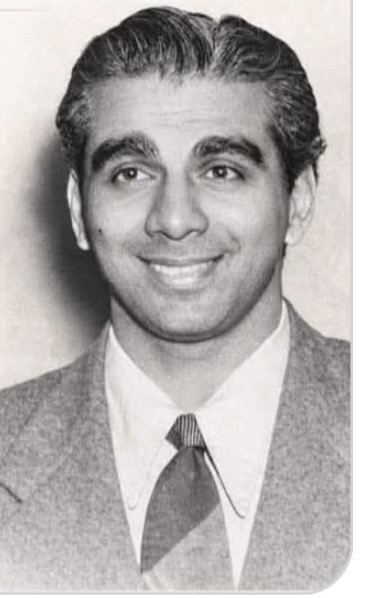



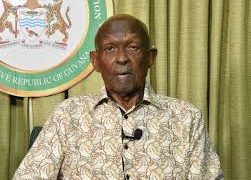

As I re-visit Port Mourant, my home village, memories harp back on Dr Cheddi Jagan, late ruler of Guyana. I had many encounters with, observing, engaging and interviewing Dr Cheddi Jagan in USA and in Guyana. He remained a committed democratic socialist, never an opportunist.
Cheddi was a charismatic socialist leader, a formidable statesman, a true legend, who erroneously (my analysis) was allied with the Soviet bloc, Cuba, and other left (revolutionary) governments and movements in the Caribbean. The West has opposed such leaning. His political life was characterized by anti-imperialistic stances and social democratic principles. Those principled characteristics hurt Guyana in the long run as is well argued in countless articles.Washington has zero tolerance for left wing political rulers.
Jagan was known for advocating universal education and healthcare and workers’ rights, but these are not considered as positives by rulers in the west. He was a staunch critic of (hostile towards) the U.S and the West (capitalist countries) — considered a terrible mistake given that every Guyanese wanted to migrate to USA. He was known for his passionate rhetoric on communist philosophy and desire to unite workers, drawing the ire of Washington for socialist rhetoric and close ties with communist countries. Not surprisingly, US and Britain toppled his left-wing government in 1953 and again in 1964; US perceived Jagan (and PPP) as a threat to its and the West interests due to his closeness with USSR and Cuba, especially during the heightened Cold War era and tension in the Caribbean. But Cheddi harbored no authoritarian tendencies, supporting participatory democracy, and it would not have been practical to turn Guyana into a beachhead for USSR the way Cuba was.
He visited New York several times, and I had the opportunity to meet and or engage and interview him there and in Guyana for several media articles when he was Opposition Leader as well as later as President. Jagan discussed his opposition to imperialism and exploitative capitalism, what he thought (was) the superiority of socialism, and the non-aligned movement for which he expressed enthusiastic support. In his talks, he was unequivocal of views of USA and the West, viewing them as exploitative of the poor and the working class. There were always rapturous responses among his (left wing) audience, giving an insight into how this message was received.
He was a guest at City College when I was a student: I was elected to the student government (late 1970s and early 1980s) serving in various positions. Jagan’s lectures and seminars were organized by Chuck Mohan; Arjune Karshan and Mel Carpen also played a role in organizing his programs at CCNY and generally in NY; Karshan always accompanied Cheddi. Janet Jagan also spoke at CCNY several times. Prof Mathias facilitated the classrooms. The student government of which I was an elected officer, often sponsored the lectures. I attended several of their talks. Cheddi also spoke at other locations including in Little Guyana during the late 1980s and just before he was elected President in October 1992. In August 1989, he was a guest at the weeklong GOPIO Convention in Manhattan where he interacted almost daily. At GOPIO, he pled for help to convince Washington he was not a threat to their interests. In 1991, he stayed for a week in Jamaica, Queens, compliments of the late Ramesh Kalicharran, allowing for extensive engagement. Meetings were arranged with American politicians and influential media houses. He also met with Arthur Schlesinger who was my Professor in three courses. Cheddi always spoke pleasantly about people he knew in USA. He spoke of his love, respect, and admiration of those of us in America who fought for free and fair elections. As non-ACG activists, my colleagues and I did a lot of unpaid lobbying for Guyana. He expressed appreciation for our work.
After my visit to East Germany and the Soviet Union, we met at Freedom House to discuss strategies on free and fair elections; he spoke highly of the German model of housing development convinced it could be emulated in Guyana. He even asked me to study it and consider working in such a project when ge forms the government; he was convinced if victory. Apparently, he had not visited the USSR, East Germany, and the East bloc fir a long time because he asked me how things were in those countries. He stated there should be substantial improvement in social and economic life of workers and the poor and that small businesses should be given preference over larger ones. In his speeches before he became President, Cheddi gave revolutionary orations, praising socialism and condemning American actions in Cuba, Chile, and Nicaragua and elsewhere. He also was critical of the hypocrisy of Western nations in supporting apartheid in South Africa, racism in Rhodesia and Namibia, dispossession in Palestine, and the then dictatorship in South Korea and other countries, among other matters.
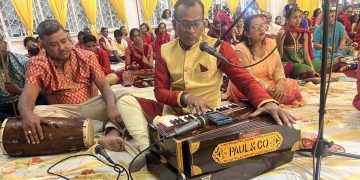
When he became President, we met in early 1993 in Guyana where he offered me a position that I politely declined. He also asked me if I could take up a position at UG and help his government: I also declined that offer as I was deeply entrenched into teaching in NY; my interest at the time was in diplomacy and international trade. Cheddi and I met again during my school breaks in 1993 and in September in Queens when he came to address the UN. We met several times thereafter in 1994, 1995, and 1996; we didn’t get to meet when he visited Delhi. When he was stricken with a massive heart attack, I was leaving for my study sabbatical to the Philippines. But when he passed away, I returned from Manila to NY, spoke tearfully at two ‘wake’ events in Queens in tribute to him and then flew to Guyana to arrive on the morning of the state tribute at the outside of Parliament Building where Desmond Hoyte, Rupert Roopnarine, Feroze Mohamed, etc. spoke glowingly of Cheddi; Feroze reminded listeners of Cheddi’s socialist ideology. Many New Yorkers, members of the ACG, also flew down for the funeral. I traveled in a bus slowly going behind the funeral cortege to Corentyne. Along the way, the truck carrying the casket stopped at Buxton and at Enmore; thousands came out on the streets to pay their final respects to the man who fought valiantly and honestly for their freedom from colonial rule and exploitation. I visited the house where Cheddi was born and raised and where many gathered for “a wake”, as is the custom in the country, that included card and domino playing and the singing of bhajans. Thousands gathered at the Albion Cricket ground daily to catch a glimpse of Cheddi in the casket; the funeral was delayed by a day because of the long lines waiting for a view of their hero. I also attended the cremation site at Babu Jahan; there Ralph Ramkarran gave one of the finest tributes on Cheddi before the pandits performed rituals. Joey and his sister Nadira lit the pyre with ‘a masall’. Everywhere in Georgetown and at Albion and Port Mourant, everyone spoke favorably of Cheddi. Political differences were set aside; he was a great leader. We had our differences over ideology and on strategy on how to win over USA to force the dictatorship to hold free and fair elections.