


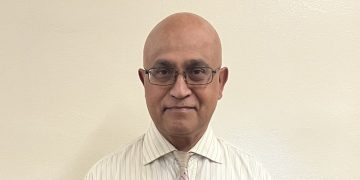
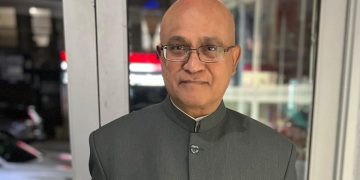
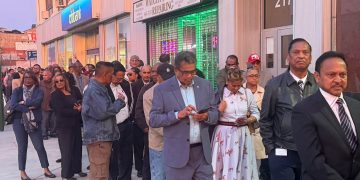
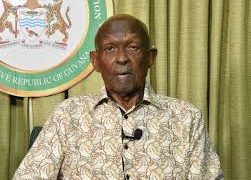




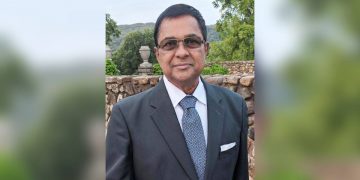


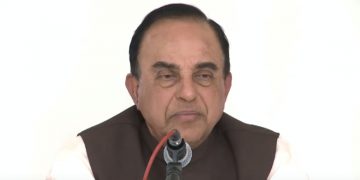


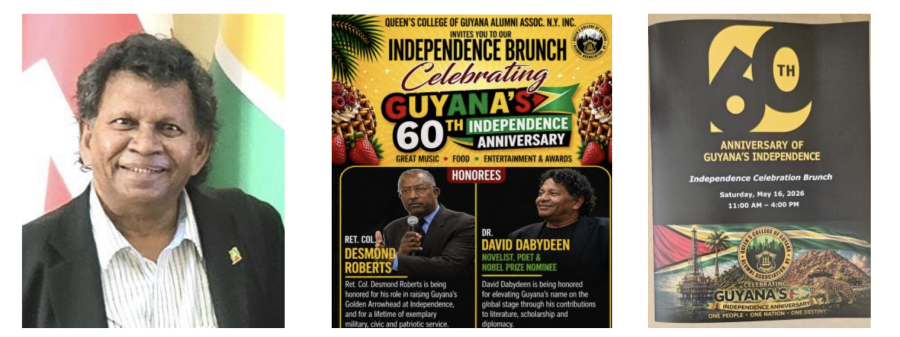
Dr. DAVID DABYDEEN, award winning author, Emeritus Professor David Dabydeen (Warwick University),
Guyana’s Ambassador-at-large, Honourable Fellow Selwyn College Cambridge University, and Director at the
Ameena Gafoor Institute for Indentured Studies, was honoured by the Queens College Alumni Association
(New York Chapter) Diamond Jubilee Independence Anniversary Brunch & Awards Presentation on Saturday,
May 16, 2026 in New York.
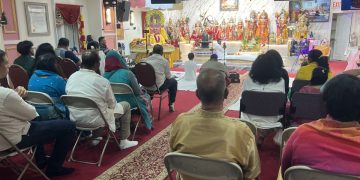
The event was organized by the Queens College Alumni Association under the presidency of John Campbell
supported by the event planning staff.
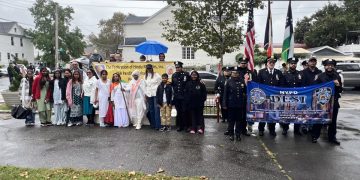
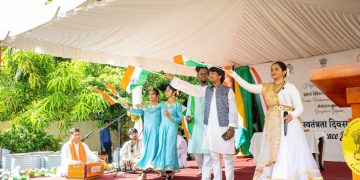
Roberts at the fun-filled event capped by a resounding cultural presentation commemorating the upcoming 60th
anniversary of Guyana’s independence.
Fellow indentureship scholar Ben Jacob highlighted Dr. Dabydeen’s early childhood in Guyana, attendance at
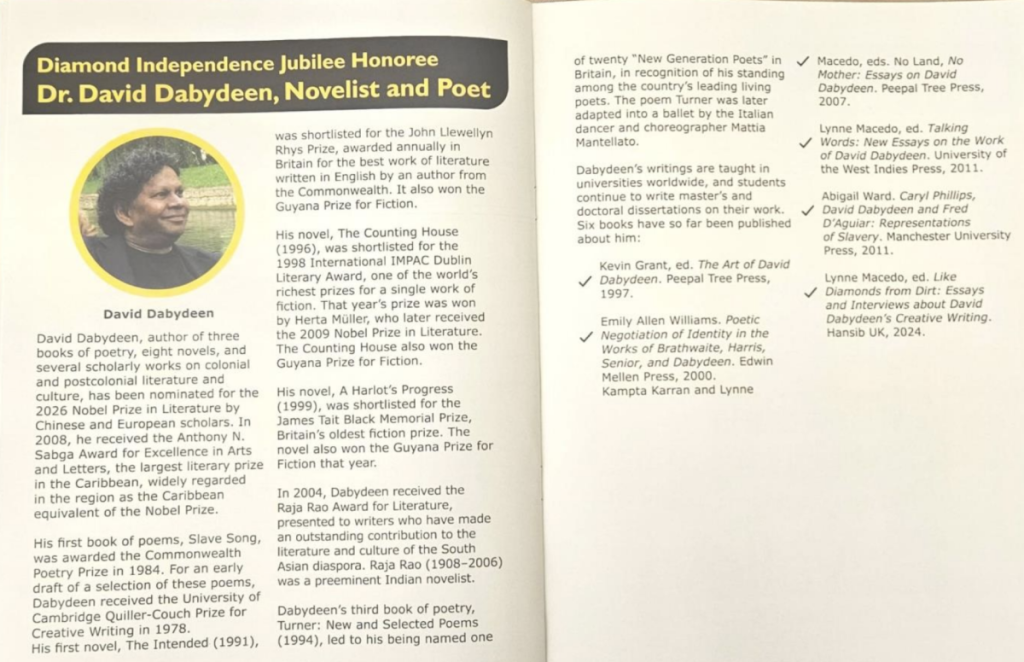
Queens College, migration to the UK, studies at Cambridge and other renowned institutions of higher education. Jacob stressed the many books authored by Dr. Dabydeen, the many international awards and his nomination for the 2026 Nobel Prize in Literature.
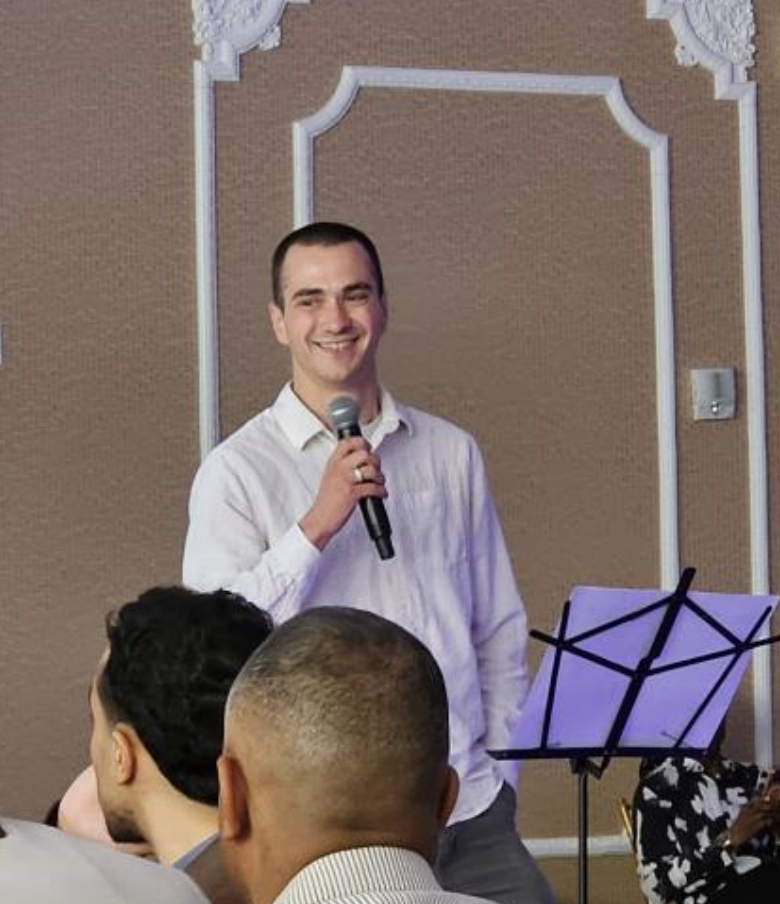
the extensive biography
of Dr. Dabydeen.
Excerpts included: Dr. Dabydeen as a Guyanese novelist, poet and academic, Guyana’s Ambassador to
UNESCO from 1997 to 2010 and Guyana’s Ambassador to China from 2010 to 2015. Dr. Dabydeen also served at the University of Warwick from 1984 to 2017 as Director of the Yesu Persaud Centre for Caribbean Studies and Professor of Postcolonial Literature. Among Dr. Dabydeen’s literary publications are Coolie Odyssey (Hansib, 1988), The Intended (Secker and Warburg, 1991) and The Counting House (Jonathan Cape, 1996). He co-edited with Brinsley Samaroo, India in the Caribbean (Hansib, 1988) and Across the Dark Waters: Ethnicity and Indian Identity in the Caribbean (Macmillan, 1996). Dr. Dabydeen has also produced an edition for Macmillan of John Edward Jenkins’ Lutchmee and Dilloo (1877), the first novel on Indo-Guianese life.
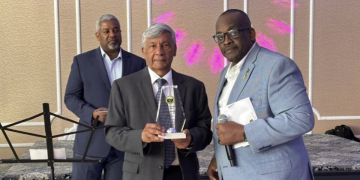
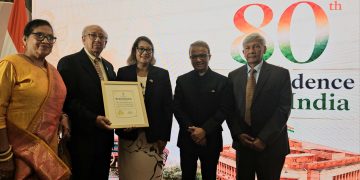
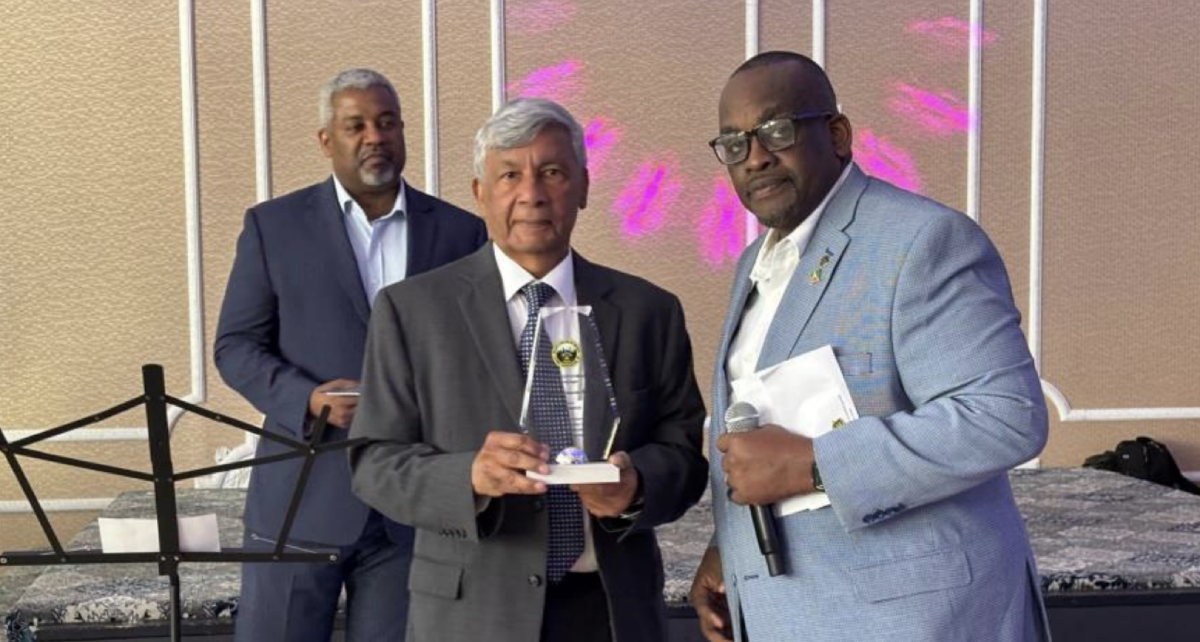
Dr. Dabydeen could not attend in person and requested Ashook Ramsaran, president of the Indian Diaspora
Council, to accept the award on his behalf.
Remarks by Ashook Ramsaran:
“Dr. David Dabydeen has asked me to accept this award on his behalf. – but also on behalf of the Ameena
Gafoor Institute where he is engaged as director. He is immensely and forever grateful to Queens College
Alumni Association for their kindness for this prestigious award. He will continue working with the Ameena
Gafoor Institute to promote scholarship on Guyana’s history and culture.”
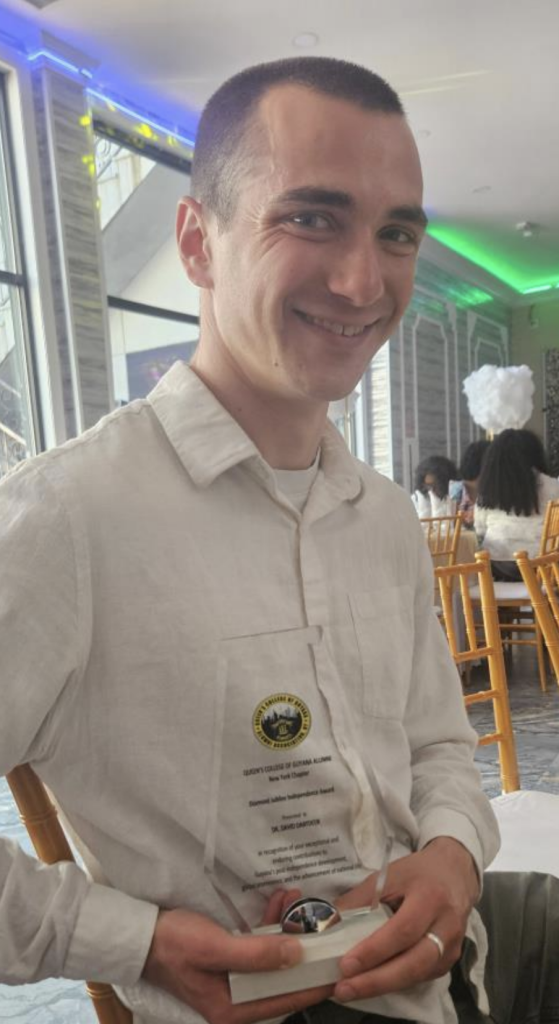
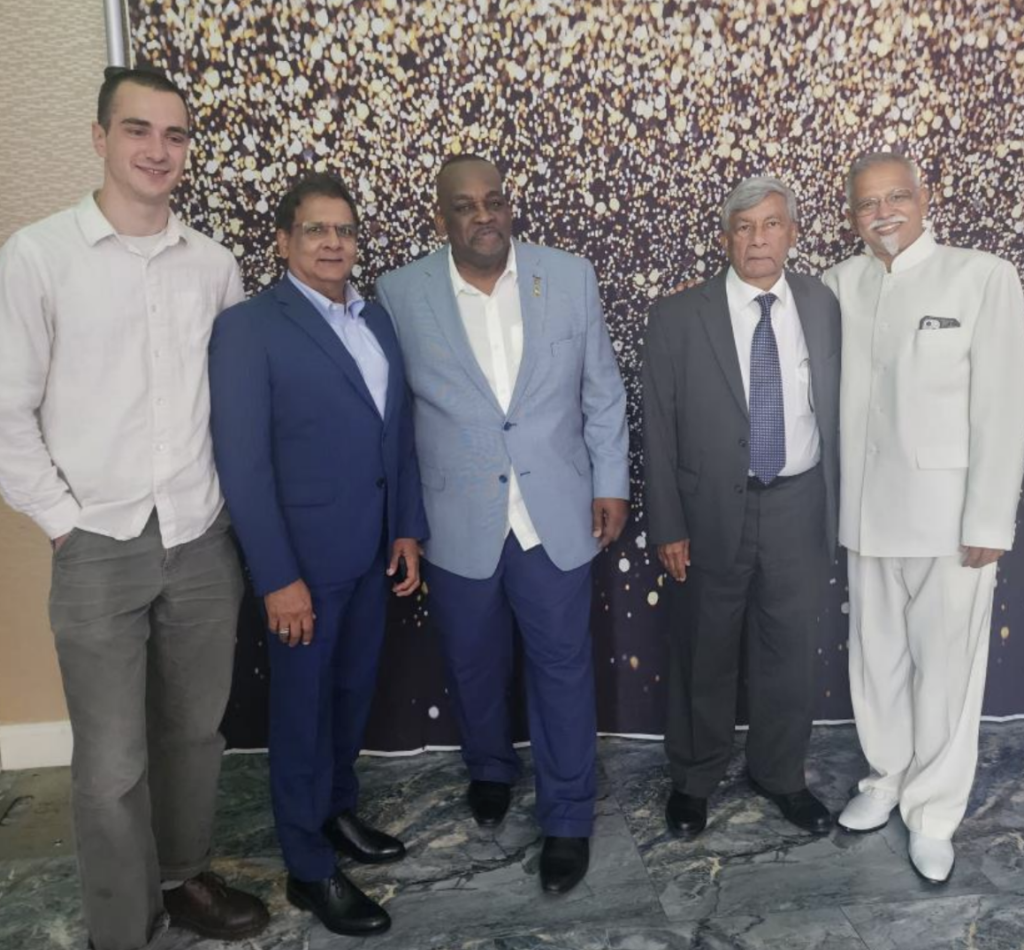
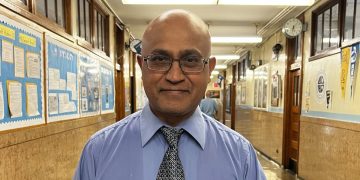
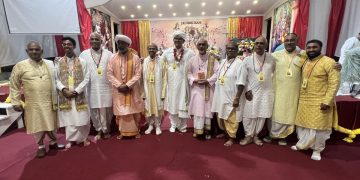
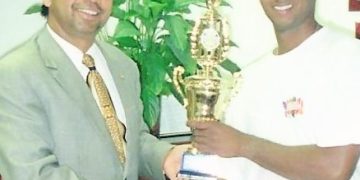
John Campbell, Ashook Ramsaran and
Guyanese film Maker Kishore Seunarine (“Echos from the Plantation”)
I am a writer and an academic QUITE SIMPLY because of my childhood education in Guyana.
I was born in December 1955 or soon thereafter (registration of exact births was an unfamiliar process for village people). I grew up in a village in Berbice, Brighton village, and then the small town of New Amsterdam. My grandparents could barely read or write, and there was no paper in the house. Maybe there was a pencil somewhere. But their son, my uncle Stephen, called Uncle Rajah, , went to Pembroke College, Oxford, which is Dr. Johnson’s college. Doctor Johnson wrote the English Dictionary in 1755. (My great-great-grandfather was shipped as an indentured labourer from India to British Guiana, a century later, in 1855, and I was born two centuries later, in 1955.) So that was a fantastic experience for my Uncle Stephen, but he was not unusual in his poverty and achievement. His friend Walter Rodney went to school with slippers. Many of our scholars and writers came from lowly, poor backgrounds, and then, through education, catapulted into academia and other high places. It was in honour of such pioneers like Walter Rodney and my uncle Stephen, that in 2013 I published a novel called Johnson’s Dictionary, and by a stroke of luck it was awarded the Guyana Prize for Fiction. I had a memorable upbringing, surrounded at times with folk drinking rum and the swearing—I recall, especially, the swearing, which was so vivid. When a man is drunk and curses you in creole, you are truly cursed. One of the regrettable or deficient things about England is that in the 1970s, racist people would grunt at me—a guttural noise or a growl or shriek, “F–k you Paki, go back to the Congo.” You used to wish they would curse you with grammar, never mind a sense of geography. You used to wish they would curse you with a Shakespearean flourish, with the full felicity of the English language. Anyway, I do remember in Guyana, people cursing colourfully, and it’s almost an art form.
Now, when I went to primary and secondary school in Guyana, the quality of education was very high. Teachers were seen as deities. You obeyed your teachers, and they taught you diligently. So I was always aware of an intellectual tradition in Guyana as a young boy, because all the teachers were graduates—some held doctorates from the University of the West Indies, and from Oxford, Cambridge, and other British universities. There was a model of academic excellence and achievement that as a boy I aspired to. You aspired to it, partly to get out of the mud and poverty, the cane fields as it were: education was key; education could give you a chance of escaping the predicament of poverty and dispossession. So, apart from the pleasure of learning, we all strove to be educated as a way of rising above our condition The most revered of my teachers at Vryman’s Erven primary school was the headmaster, Mr. Spencer, famous all over the town and beyond for the excellence of his teaching. He gathered about eight of us boys and girls, all of us aged 9 or so, and gave us special tuition aimed at getting us to pass the Common Entrance Exam Mr. Spencer took a liking to me and, when I passed, he recommended me for the New Amsterdam Town Council Scholarship and arranged for a national newspaper to take my photograph and for the national radio station to announce my success in getting the scholarship. Imagine a boy, now 10, being treated like a famous cricketer, a Lance Gibbs or Rohan Kanhai! To Mr. Spencer I owe a special debt, and many years later, I visited him in New Amsterdam, and he asked for my help in obtaining a book on the creolization of language published in the UK. I was able to purchase and get the Cambridge bookshop to airmail the book within two weeks, and I presented it proudly to Mr. Spencer as a very small thank you for his kindness and supervision of me. Our small town of New Amsterdam, of a few thousand inhabitants, produced some of our finest writers , artists and international figures : Edgar Mittelholzer, whose house in Coburg Street had a plaque, “Edgar Mittelholzer lived here”, which I passed frequently going to school or visiting friends; Sir Wilson Harris, our metaphysical novelist ; Sir Lionel Luckhoo of the famous family of lawyers; our great painter, recently knighted in Britain, Sir Frank Bowling, whose mother was a humble seamstress; our international statesman, Sir Shridath Ramphal, who became Secretary General of the Commonwealth.
As to my teachers at Queen’s College (I attended from 1966 to 1969) they were also exemplary, men (mostly male teachers) of high achievement. Headmaster Hetram had studied Classics at some distinguished university and, on Speech Day, would address the whole school in elegant English sprinkled with Latin quotations from Horace or Virgil or whoever. We only understood a little Latin (it was taught at Queen’s College in the first three years, then later discontinued), but we always erupted into applause whenever he spoke in Latin.
My favourite teacher at the Queen’s College was Head Boy, John Rickford, who had a scholarship to study abroad but spent a ‘gap year’ as a teacher in the school. John Rickford ended up a Professor of Linguistics at Stanford University. He encouraged us to read stories and novels for young people and he set up a small library in the classroom cupboard. He set up a cyclostyle ‘newspaper’ called ‘2D Times’ (our class number was 2D), for which the class wrote news items, real or imagined, and he sent us around the school to sell the newspaper. The tiny money raised was then given to us to buy pens and pencils (and a few secret purchases of cake). I tell you all this because when I arrived in England, aged 14, I was already ‘prepared’ by teachers and by the intellectual milieu of Guyana. I was no inferior colonized creature. And I was not special; ALL my school classmates in Guyana went on to universities in the West Indies or elsewhere. We were all ‘prepared’ by being students from Guyana.
In England, I had an excellent English teacher, Mr. Mulhern, who really encouraged me by giving me extra lessons, even during his lunch break, because he thought that I had an aptitude for literature. He spent a lot of time preparing me for the necessary interviews at Cambridge University, as my school had put me forward for a place at Selwyn College, Cambridge.
Colour didn’t matter to Mr Mulhern. He was, above all, a teacher. I owe him an immense amount and I would not have been admitted to Cambridge without his constant tuition.
Anyway, when I graduated I was really fortunate in winning the English prize for creative writing; it was the inaugural award of the Sir Arthur Quiller-Couch Prize, set up that year by the English department. Sir Arthur Quiller-Couch was the King Edward VII Professor of English Literature, pioneer of English literary studies at Cambridge, and famous for The Oxford Book of English Verse 1250–1900. I was honored and gratified to have been awarded that Arthur Quiller-Couch Prize, especially since I was a Guyanese and therefore an outsider. So it was pleasing that a person of my colour and background won the English prize. I was a bit tearful when the prize was announced, since I remembered Mr. Spencer who got me the New Amsterdam Town Council Scholarship Prize some twelve years earlier.
LET ME END BY SAYING A FEW WORDS ABOUT THE FUTURE OF GUYANA.
THE FUTURE LIES, IRONICALLY, IN THE VISION OF OUR EARLY SCHOLARS AND WRITERS LIKE WILSON HARRIS AND JOSEPH RUHOMAN. WAY BACK IN 1938, RUHOMAN WROTE ON THE NEED FOR WHAT HE CALLED a “ NEGRO– INDIAN COMBINE”. THIS ALSO INVOLVED ACKNOWLEDGEMENT AND RESPECT AND GRATITUDE FOR OUR AMERINDIAN, PORTUGUESE AND CHINESE POPULATIONS.THIS WAS ALSO WALTER RODNEY’S VISION, AND MANY OTHER GUYANESE CULTURAL, EDUCATIONAL AND POLITICAL LEADERS. I AM PERSONALLY DELIGHTED THAT TODAY, 20% of Guyanese are of dual or multiple heritage. We are getting there, in spite of naysayers, we are steadily overcoming our inherited Colonial policy and practice of Divide and Rule. And we are having such gladness and pleasure connecting with, and learning about, each other.
SECONDLY, WE DON’T HAVE TO REINVENT THE WHEEL, WE JUST HAVE TO BUILD ON THE PAST, THE LITERARY, EDUCATIONAL, CULTURAL AND SCIENTIFIC FOUNDATIONS LAID BY OUR PAST SCHOLARS. ONCE WE ACKNOWLEDGE WHAT A TALENTED PEOPLE OUR FOREBEARS WERE, WE ARE THEN INSPIRED TO EMULATE AND ACHIEVE AND EVEN BETTER.
I END WITH THE GREAT BRITISH SOCIAL HISTORIAN, E. P. THOMPSON, A FRIEND OF GUYANA WHEN WE WERE FIGHTING FOR INDEPENDENCE IN THE 1950s ONWARDS: E.P THOMPSON SAID PEOPLE BY AN LARGE ARE GOOD AND DECENT TO EACH OTHER. HE CALLED UPON US TO “SENSE YOUR STRENGTH”, A SIMPLE PHRASE BUT POWERFUL IN ITS SIMPLICITY.