




























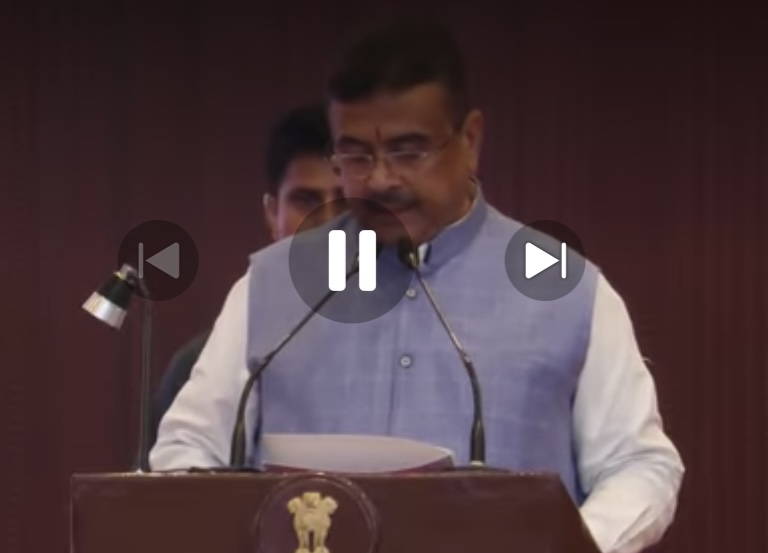
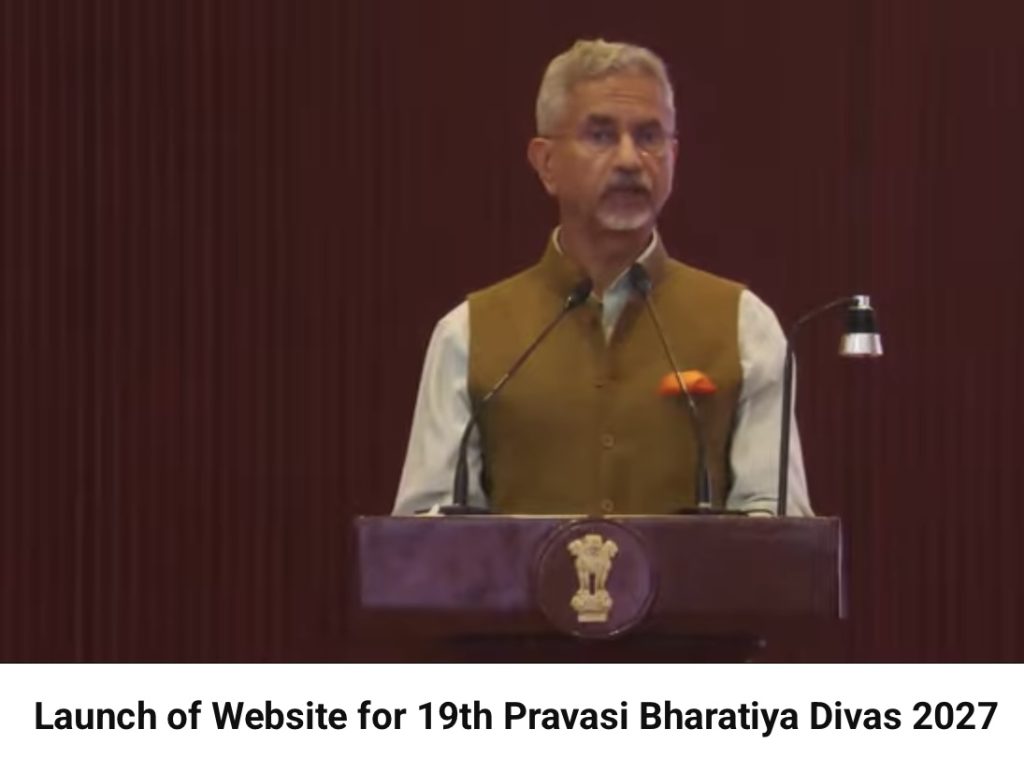
The unveiling on November 11 by MEA of the PBD 2027 website gives invaluable information about the upcoming convention on overseas Indians (diaspora) in Kolkata (on January 7-9). The 19th PBD represents another opportunity to renew India’s engagement with its global diaspora (overseas Indians) and give greater institutional meaning to the relationship between India and Indians living abroad, particularly descendants of indentured laborers (girmitiyas). External Affairs Minister Dr. S Jaishankar was joined by the Chief Minister Shri Suvendu Adhikari of West Bengal in launching the portal. The CM as host affirmed commitment of support for PBD.
Minister Jaishankar delivered powerful remarks about the diaspora focusing on relations between India and the diaspora. His remarks went far beyond programmatic details and plaudits about the diaspora. He offered a profound analytical framework regarding India’s evolving relationship with its global diaspora, casting overseas Indians not just as cultural custodians of the past, but as dynamic co-architects of the nation’s contemporary rise, development, and future trajectory.
At the core of Dr. Jaishankar’s remarks was a forceful articulation of the diaspora’s modern identity. Characterizing overseas Indians as a “living bridge between India and the world,” he underscored their multifaceted contributions to their home countries and to the global exchange of ideas, knowledge, technology, innovation, culture, and enterprise and to India herself. This phrasing captures a vital shift in India’s diplomatic calculus from yesteryear. In previous decades, diaspora engagement policy was largely sentiment-driven, anchored primarily in shared heritage, emotions, and nostalgia. Under the new strategic paradigm of PM Modi ji and Jaishankar ji, however, the diaspora is viewed as an active instrument of soft power (promoting India) and economic synergy. The Indian diaspora represents an intellectual and economic force multiplier for New Delhi. Diaspora can also be a lobbying arm of India in the countries where they live.
From Kolkata & History to Modern Stakeholdership
Significantly, Dr. Jaishankar contextualized the choice of Kolkata as the host city for PBD 2027 by invoking deep historical memory. He recalled how generations of Indians departed from the shores of Bengal for distant lands — such as Mauritius, Fiji, South Africa, and the Caribbean —enduring immense hardship and sacrifice to establish enduring global communities while preserving their languages, faiths, customs and linkage with India, giving rise to the diaspora.
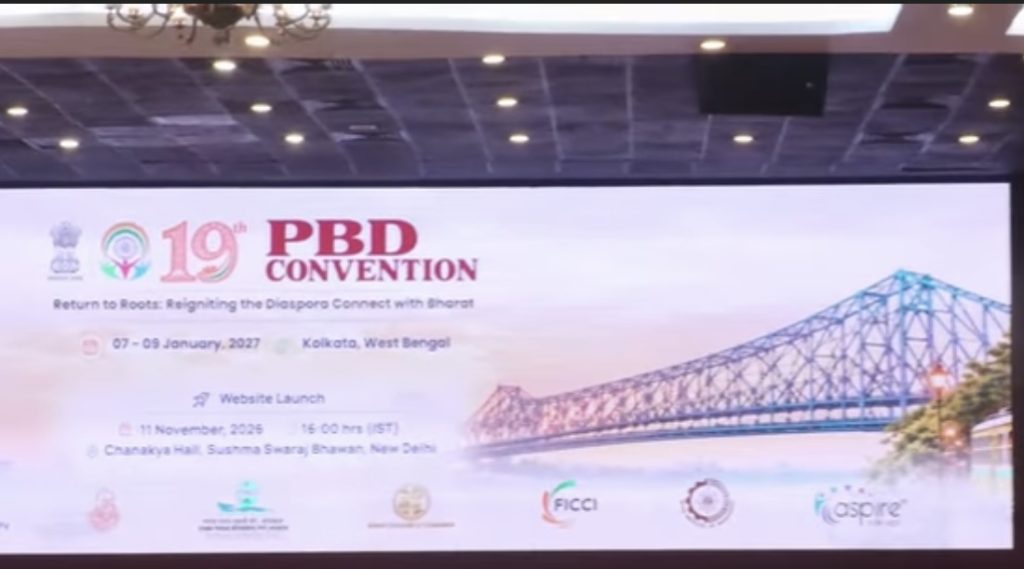
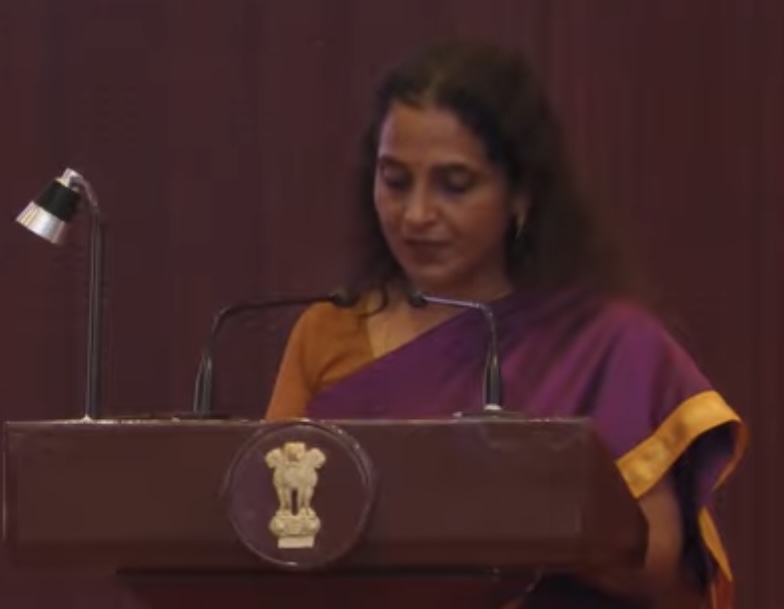 By anchoring the 2027 theme, “From Roots to Return: Reigniting Diaspora Connect with Bharat”, in Kolkata’s historical legacy, the External Affairs Minister bridged the gap between historical empathy and contemporary relevance. He stressed that the diaspora is no longer connected to India merely through historical memory; rather, overseas Indians have evolved into an integral part of India’s present and essential stakeholders in its future. It is a notable change in relationship between India and its overseas community, a change really started by then Prime Minister Atal Behari Vajpayee and expanded under the tenure of PM Modi. This represents a significant evolution in India’s approach to diaspora diplomacy unlike under the previous Congress led administrations. Traditionally, engagement with overseas Indians often focused on preserving cultural identity and maintaining emotional connections with the homeland. Today, the relationship increasingly encompasses investment, education, research, technology, entrepreneurship, innovation and international partnerships.
The overseas based Indians or diaspora are part and parcel of India. This perspective reframes the diaspora engagement strategy from looking backward at ancestry to looking forward at mutual growth for India and for the communities where Indians are settled and for Indians personally. The theme also reinforces this broader vision so well-articulated by Dr Jaishankar. The Foreign Minister explained that the theme seeks to deepen the civilisational, cultural and ancestral connections of overseas Indians with India, particularly among younger generations. The PBD is stressing youth and women empowerment. This is especially relevant because many young people of Indian origin were born and raised outside India. And more and more women are becoming CEOs and engaged in business. Although youths may retain a sense of belonging through family traditions, festivals and cultural practices, their understanding of contemporary India may be limited. Thus, the government wants a deeper connect with the youths.
The challenge is to transform inherited cultural connections of youths into meaningful personal and professional relationships with other youths and with India. Encouraging younger diaspora members to rediscover their heritage, understand India’s development trajectory and participate in its opportunities can help build a lasting relationship across generations. The emphasis on connecting with Bharat is consequently not just about looking backwards towards ancestral origins; it is also about passing on heritage and creating a shared vision for the future.
Another crucial dimension of Dr. Jaishankar’s address at the launch of the PBD website was his emphasis on domestic transformation. He noted that India’s rapid national progress, expanding economic horizons, and newly unlocked avenues create an irresistible gravity for overseas citizens. The message to the global Indian community is clear: India’s growth story is expanding at a pace that offers unprecedented avenues for collaboration, investment, and national contribution. India wants investment from the diaspora.
Millions of people of Indian origin, some 13 millions among the descendants of indentured laborers, have established themselves in different parts of the world as entrepreneurs, academics, scientists, professionals, political representatives and community leaders. Their achievements strengthen India’s international visibility while also creating opportunities for cooperation, investment, knowledge-sharing, and business. It is a fact that the diaspora has a lot of capital and are skilled in a variety of areas. They contribute significantly to the economies of developed countries and to the exchange of knowledge, innovation, technology, culture, enterprise and ideas between India and their countries of residence.
Jaishankar’s remarks also recognised the extraordinary historical journey of the original Indian (girmitiya) diaspora (1828 onwards) although he didn’t use that term or made reference to indentured laborers. He did note that early generations travelled across continents in search of employment and better opportunities as well as to today’s globally connected professionals who left India post-independence. He remarked: “The overseas Indian community has demonstrated courage, resilience, enterprise and adaptability”, a direct reference to the girmitiyas although the same can be said about Indians (NRIs) who have settled overseas post-independence. He noted that that the girmitiyas endured difficult circumstances while establishing new lives abroad, yet retained their languages, traditions, religious practices and emotional connections with their ancestral homeland. By acknowledging these experiences, the External Affairs Minister emphasised that the diaspora’s contribution deserves recognition not only from India but also from the countries in which its members have made their homes.
Jaishankar also made reference to Mahatma Gandhi, adding historical significance to the occasion. Pravasi Bharatiya Divas is observed on January 9 to commemorate Gandhi’s return to India from South Africa in 1915. Gandhi himself represents the powerful relationship between overseas experience and national transformation. His sixteen years abroad shaped his political understanding and ultimately influenced India’s freedom movement. The annual commemoration therefore provides an opportunity to reflect on how experiences, ideas and contributions originating beyond India’s borders can influence its national journey.
The selection of Kolkata as the host city for the 2027 convention is equally significant. Jaishankar highlighted the city’s historical connection with the Indian diaspora, recalling how generations of Indians departed from Bengal for destinations such as Mauritius, Fiji, the Caribbean and elsewhere. He reminded the public that Indians carried their languages, customs, beliefs and traditions across oceans, helping establish Indian communities (diaspora) in distant lands. These historical migrations form an important part of India’s global identity. Hosting the convention in Kolkata offers an opportunity to recognise this legacy while showcasing West Bengal’s cultural heritage, historical importance and hospitality.
Another major dimension of Jaishankar’s address was the connection between diaspora engagement and the national ambition of achieving Viksit Bharat by 2047. He argued that the diaspora’s knowledge, expertise, entrepreneurial spirit, technological capabilities and global networks would become increasingly important in India’s development journey and for mutual benefit. This is a practical and strategic argument. Overseas Indians can contribute through investments, research collaborations, technology transfers, educational partnerships, business networks and professional exchanges. India’s expanding economy, meanwhile, offers new opportunities for diaspora members to reconnect with the country and participate in its growth.
The launch of the PBD website and the AI-enabled Bharat Ko Janiye quiz also demonstrates the growing importance of digital diplomacy. The website is intended to function as a single information platform, offering registration facilities, convention programmes, logistical arrangements, advisories and information about attractions in and around Kolkata. The special quiz introduces an interactive approach to public diplomacy, encouraging participation through digital games, quizzes, crosswords and puzzles. Winners will receive an opportunity to undertake a ten-day tour of India. Such initiatives can make engagement with India more accessible, particularly for younger generations who are comfortable with digital platforms.
Nevertheless, the success of this vision will ultimately depend on how effectively the ideas expressed in the address are translated into sustained engagement. Previous PBDs lacked sustained engagement except through the KIP programs. The MEA should consider establishing a council of experts to offer advice on strengthening ties with the (girmitiya) diaspora. Cultural programmes and annual conventions are important, but diaspora relationships must also produce tangible opportunities for collaboration between representatives of the diaspora and the Ministry. India must continue to strengthen institutional mechanisms that facilitate investment, exchange of technology with girmitiya countries, encourage research partnerships, support young diaspora and women entrepreneurs and address the practical concerns of overseas Indians. Equally, engagement must recognise the diversity of the diaspora, whose members have different nationalities, experiences, aspirations and degrees of connection with India.
Domestic Transformation as a Magnet
The launch of the digital platform (pbdindia.gov.in) is designed precisely to streamline this interaction. By integrating registration, logistical advisories, and cultural showcases the government aims to turn participation into a seamless, high-value experience. The government should also pay heed to specialized events like the World Girmitiya Games, Indentureship or Girmitiya Academic Conference, Diaspora Business Forum, etc.
Conclusion: A Partnership for the Future
Dr. Jaishankar’s remarks at the launch of PBD 2027 underscore a maturing foreign policy vision where statecraft and people-to-people connections merge seamlessly. As preparations move into mission mode in Kolkata, it is clear that MEA wants the upcoming convention to be more than another gathering. PBD 2027 stands to serve as a vital strategic platform where the heritage of the past meets the economic and technological ambitions of a rising India, cementing a global partnership built for the decades ahead.