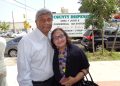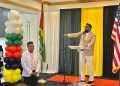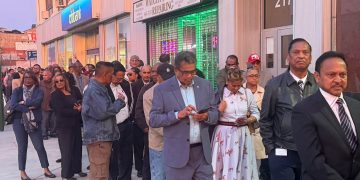



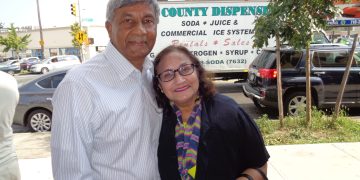
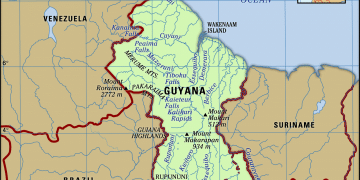
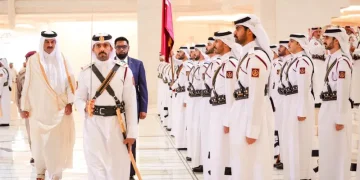


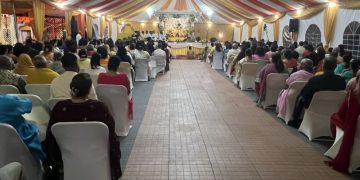







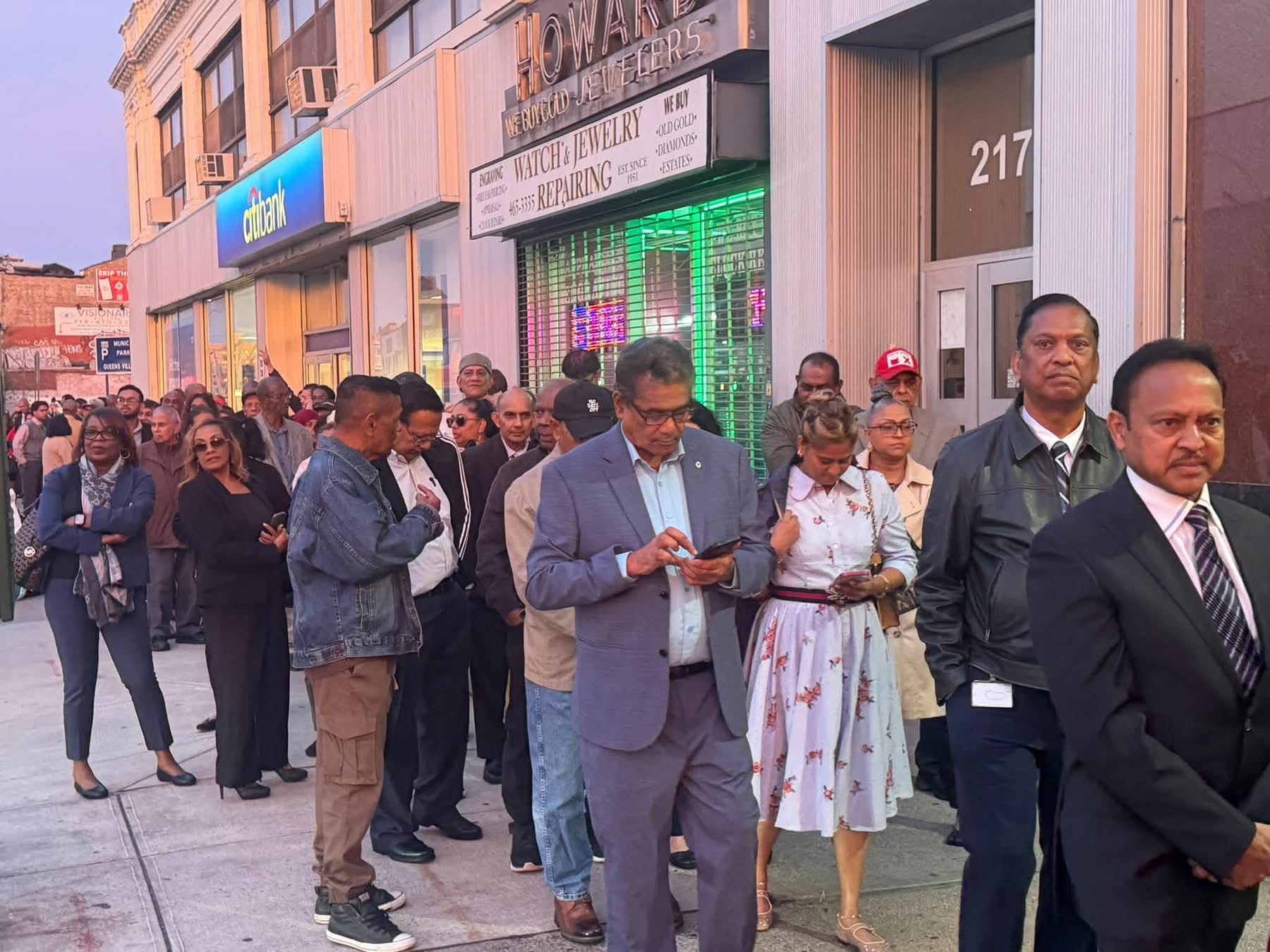
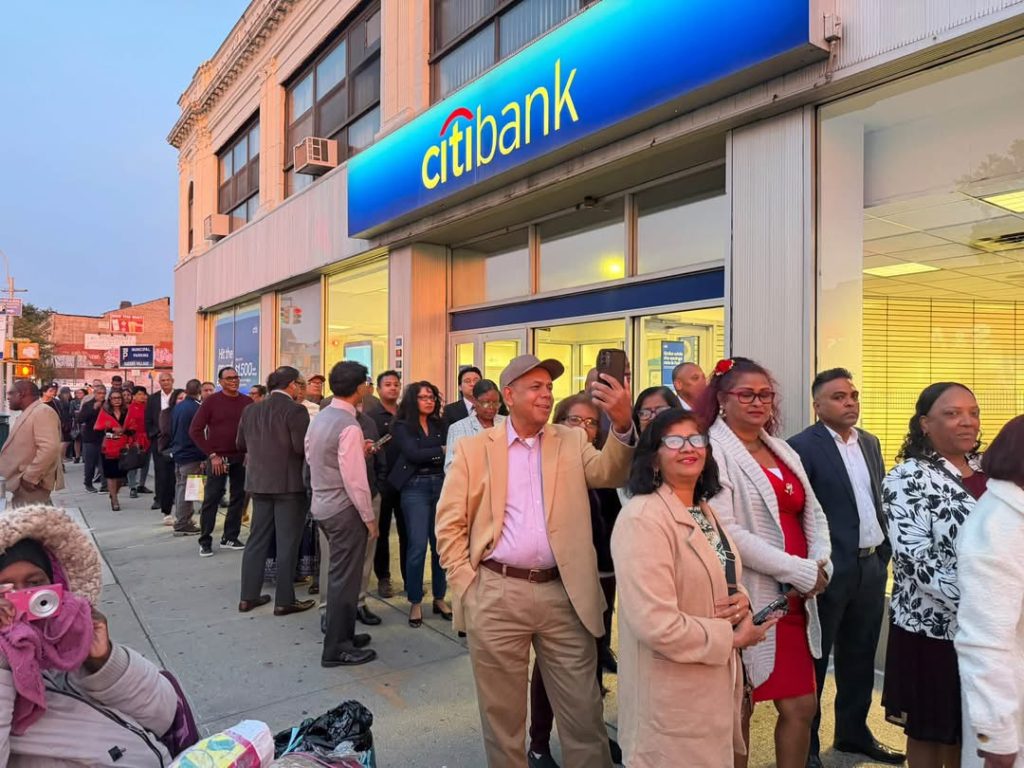
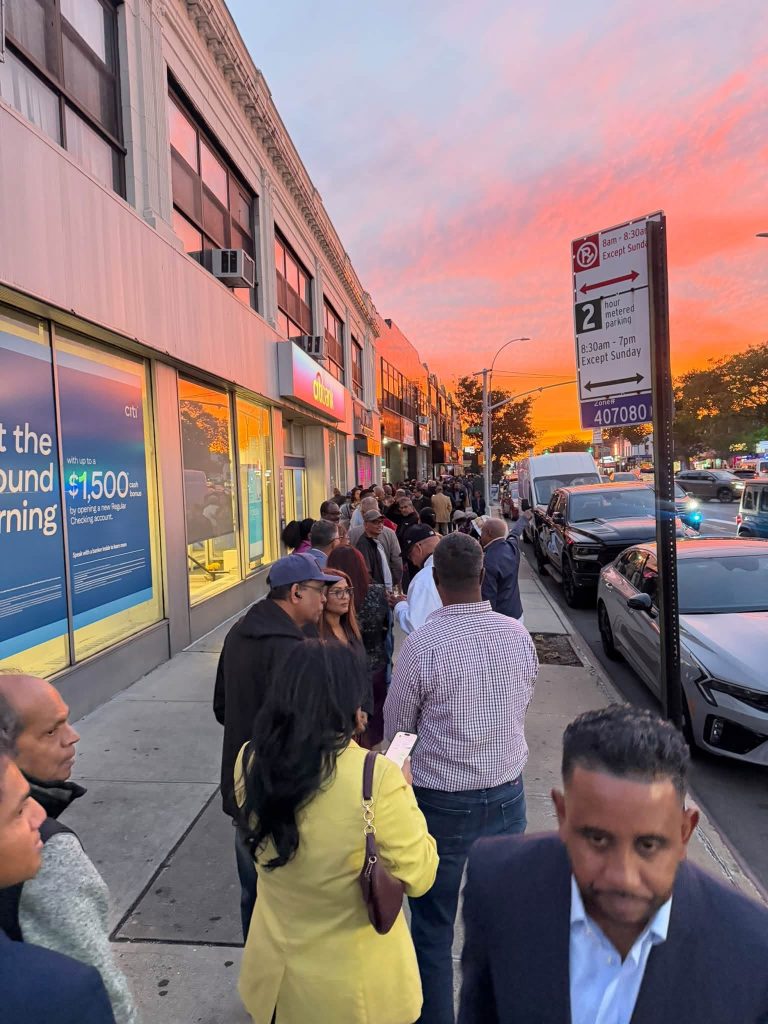
A visceral manifestation of geopolitical gravity unfolded on a sidewalk in Queens Village amongst the diaspora. The relentless autumn wind did nothing to deter the hundreds who stood tightly queued for over two hours, waiting for a fleeting chance to squeeze inside a packed community ballroom. They were not there for a standard diaspora campaign rally; they were waiting to hear their visiting President. The image on that cool, windy Thursday night of some 2,000 people waiting for over two hours on a long winding virtually stagnant line to get into a small ballroom in one of the heartland areas of the Guyanese diaspora, to “meet and greet” visiting President Irfaan Ali, says something about the message they wish to send to the President and about their renewed interest in and strong ties with their former homeland and about their President, his likability and popularity and also the issues they have and would like to be addressed. The most revealing aspect of the engagement was not the president inside speaking to the gathering. It was the line outside! I covered as a writer rulers from Guyana, Trinidad and other Caribbean states. I was at multiple events in which Irfaan Jagdeo, Ramotar, Jagan, Janet, Michael Manley, Basdeo Panday, Maurice Bishop, Kamla Persad Bissessar, ANR Robinson, Patrick Manning, Keith Rowley, Edward Seaga, Bruce Golding, PJ Patterson, Portia Simpson engaged their diasporas. Manley and Jagan pulled huge crowds. I never saw such a crowd and such long lines to meet and greet a ruler as that for Irfaan Ali. It was by far the largest I observed in my near fifty years of reporting on such events for local community and international publications and in studying, researching and writing about overseas Guyanese.
Many spoke of disappointment of not being able to get inside the hall. Planning was not the best. The huge crowd should have been anticipated. Some who are employed at the NY Consulate and who asked not be identified said the Consulate was not involved in the planning.
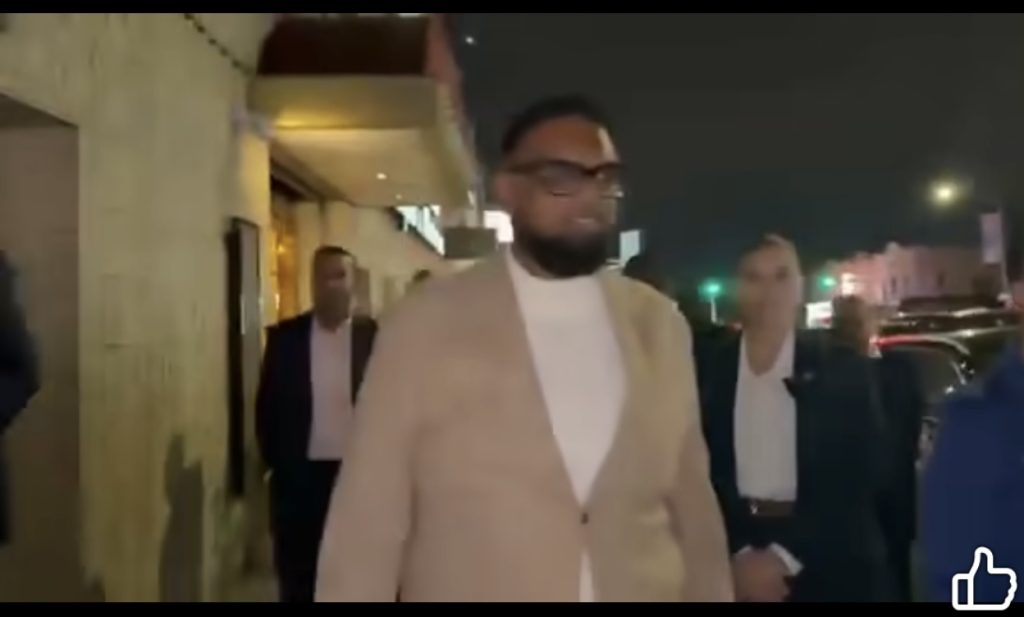
There has been a growing emotional relationship between Guyana and its diaspora ever since the country discovered and started producing oil by Exxon resulting in the fastest growing economy. It is not merely a story about the crowded small room and the long line of so many and the inconvenient, patiently waiting outside or of the logistical challenge of accommodating such a large audience in a room that could accommodate only 200, stretched to 250. It is a picture of a community demonstrating, in very physical terms, that a distance of 2500 miles has not diminished their interest in the country they left behind. They wanted to meet their President as they did in many engagements over the decades. And this writer was at virtually every diaspora engagement going (as a writer or reporter or a protester or an organizer of a protest) going back to 1977.
Recent visits by President Ali (and Jagdeo as well as Jagan and Janet) to New York (Queens) area have repeatedly drawn enthusiastic Guyanese audiences. In 2021, 2022, 2023, and 2024, Irfaan met members of the diaspora in Queens and Brooklyn, where discussions touched on Guyana’s politics, development, energy resources, education, healthcare, agriculture, and appealing to Guyanese abroad contributing to the country’s future. In 2025, at another Queens meet-and-greet at Russo on the Bay in Howard Beach drew hundreds in a packed banquet hall and enthusiastic applause. Irfaan knew how to work the crowd from experience and he did so magnificently and cheerfully. This reporter did not get inside the Queens Village Hall to observe the engagement but was told about the warm reception inside and observed the enthusiasm of the crowd outside.
Against the background of a large crowd waiting hours to meet Irfaan presented a striking picture against his earlier engagements. People do not stand in a line for that length of time simply because a politician happens to be in town. For many in the Guyanese diaspora, meeting the president represented an opportunity to connect personally with him and the homeland. They wanted to hear directly about what is happening in Guyana, as previous Presidents or Prime Ministers related during their visits. They always spoke the language that their bases wanted to hear. Some in the audience came to challenge the President on issues that they feel matter to them and their families and to other Guyanese and a couple did, I was told. Some came at the open public event to meet the leader of their country who they never met or to offer support or to experience the rare moment when the highest office in their country comes within reach. And there were a few who came to protest (as they did outside the venue across the street under the protection of the New York police) and some protesters or opponents came inside the hall and voiced concerns.
There is also something deeply Guyanese or Caribbean about such gatherings of leaders engaging diasporas. Politics often extends beyond ballot boxes and campaign platforms in Guyana. Diaspora engagements have become social, cultural and personal platforms as well as opportunities to update the diaspora about what is happening at home. It must be noted that the president is not simply a constitutional figure in Guyana; he is more than that, an informant to the diaspora as are other officials, of policies of the government, its progress, development, and more. For members of any diaspora, the ruler (and other officials) are a living connection to their country, their former community, their parents, grandparents, villages, towns, childhood memories and relatives still living in Guyana.
The extraordinary size of the crowd, the largest I observed at any engagement of a Caribbean ruler, reflects the diaspora’s interest in their homeland as well as Guyana’s changing place in the world, all because of oil and Exxon’s role in it. The country has undergone a dramatic economic transformation over the last seven years since the production of major offshore oil reserves by Exxon. Thousands of jobs have been created over the last seven years. President Ali has made infrastructure, healthcare, education and economic development central themes of his administration, arguing that oil revenues should be translated into tangible improvements in people’s lives. He has given out three national cash grants in addition to various grants to targeted recipients (children, retirees, workers, and seniors).
I was there from 1977 observing attendance as the diaspora engaged political leaders (rulers and opposition). They were very small in the 1970s of dozens, increased to a few hundreds in the 1980s, and rapidly increasing in size during the 1990s and thereafter as more Guyanese settled in NY. No doubt, last Thursday’s was the largest crowd, albeit of less than a seventh being able to get inside the hall. The President owes the diaspora another visit in a bigger hall.
For Guyanese observing from abroad or at home, the transformation of their country carries a particular fascination. Many left a country that was economically very different, poor, backward, unpaved streets, little food, tensions, during the 1960s to 2020 from the Guyana being discussed today. They now see new roads, bridges, the longest (Dr Jagdeo) bridge over a river in the Caribbean, highways, hospitals, housing projects, unlimited food, and other developments being promoted as evidence of a more prosperous future. Whether every government promise or the country’s real potential is ultimately fulfilled is a legitimate question, but the sheer interest in hearing about Guyana’s development direction is unmistakable.
Yet the long wait to meet the President also raises another point: the demand to see a president is vastly greater than the capacity of the venue. When the crowd becomes several times larger than the room, the event has outgrown its physical setting. The lesson for organizers is straightforward: plan for a large crowd. A community that turns out in such numbers deserves a comfortable arrangement.
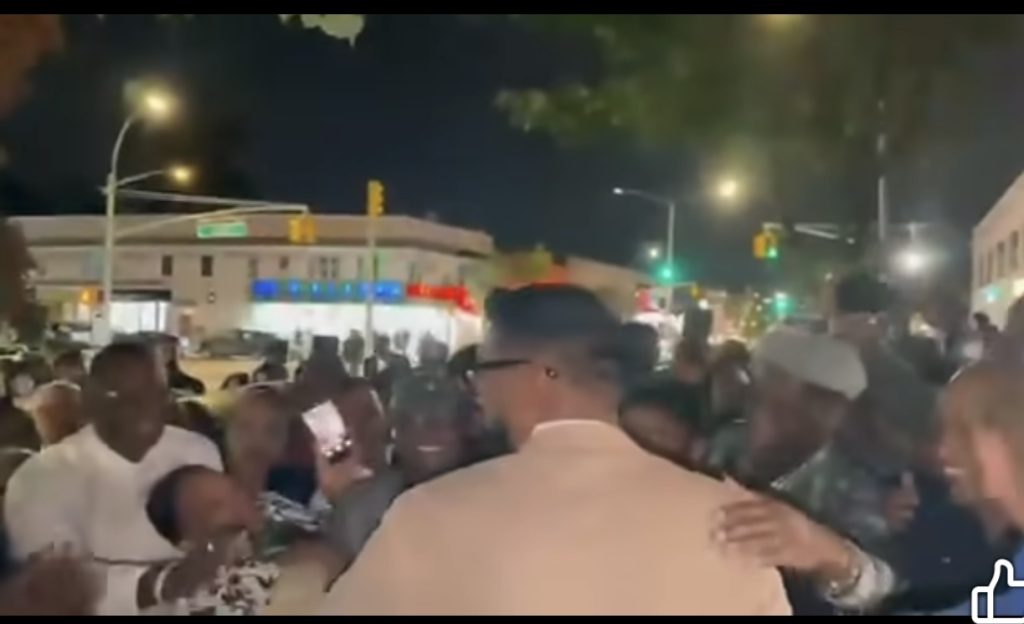
But there is a more symbolic lesson as well. A crowd of this size should not be understood automatically as a political endorsement. People attend political gatherings for many different reasons. Some may be enthusiastic supporters. Some may be curious. Some may want to raise concerns. Others may simply want to see the president of their ancestral homeland. And a few came to protest on the other side of the hall. What it unquestionably demonstrates is that Guyanese diaspora is paying attention to their former country or the homeland of their fore-parents; there were many born Americans there. That matters because the diaspora has occupied a unique position in the country’s development. Guyanese abroad have contributed since the 1960s through remittances, investments, rehabilitation of homes, family support as well as funding of community projects including schools, professional expertise and cultural connections. They live outside the country, but their economic and emotional relationships with Guyana remain significant. President Ali himself has repeatedly emphasized the importance of maintaining those connections. At his 2025 Queens gathering, he thanked compatriots for continuing to support and keep Guyana in their hearts while building lives in New York and appealed to them to invest in their former homeland.
What else do people waiting with hours passing and them standing shoulder to shoulder, talking, checking their phones, waiting for security and for a door to open to let them in? That line represents something larger than one political meeting. It is a snapshot of a diaspora that remains emotionally invested in the fortunes of Guyana and eager to engage with the people who govern it.
The responsibility of the government now is to ensure that such enthusiasm is met with meaningful engagement — questions, answers, accountability and continued conversation after the ballroom empties. The organizers should have selected a hall that could at a minimum accommodate over 1,000.
With such a large crowd willing to wait two hours just for the opportunity to see their president, the message from Queens is unmistakable: Guyana may be thousands of miles away, but for many Guyanese New Yorkers, it is never far from their minds.
Planners should have anticipated that a populist President would have a large turnout. Long undulating line outside the venue to get in. Disappointed people left. The President accommodated those who waited on line to engage him, taking a pix with them which was posted on his Facebook page. There was a protest and the participants have every right to tell their story.
 Yours truly,
Vishnu Bisram