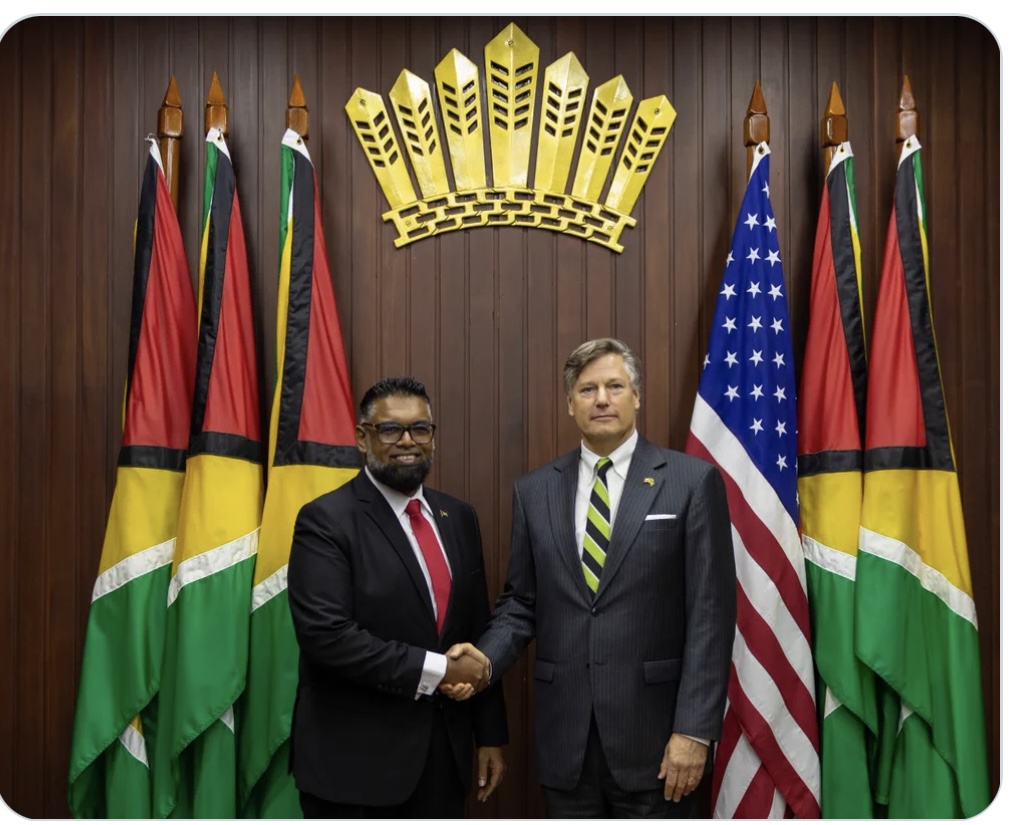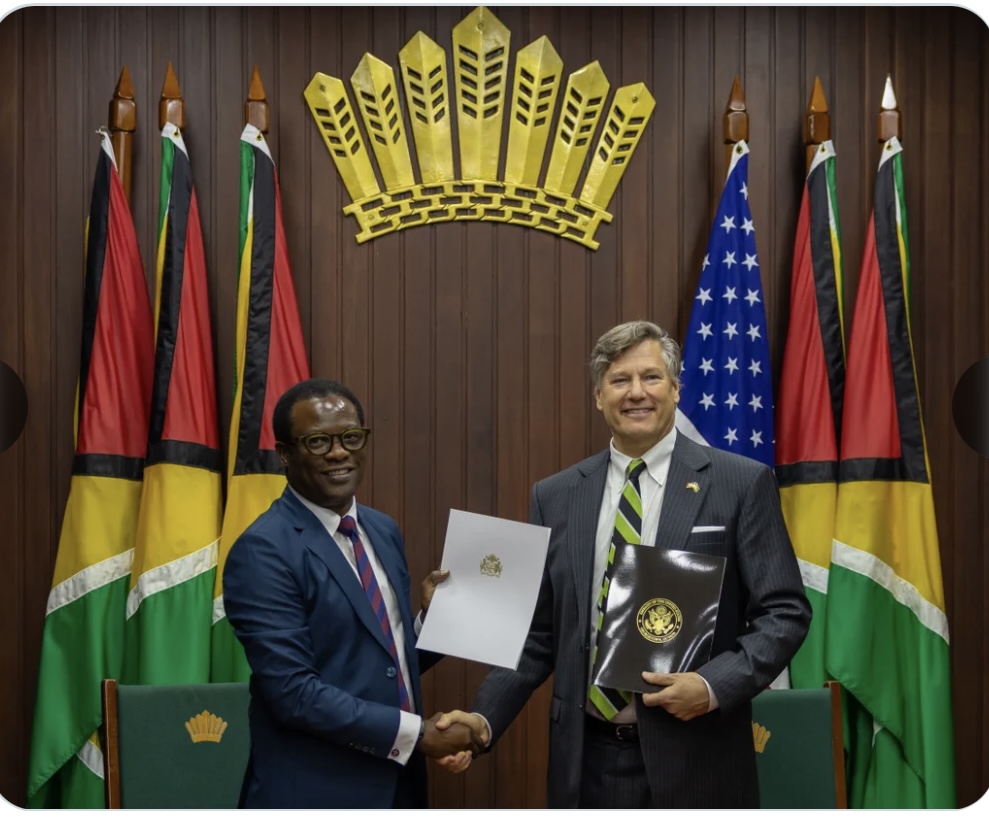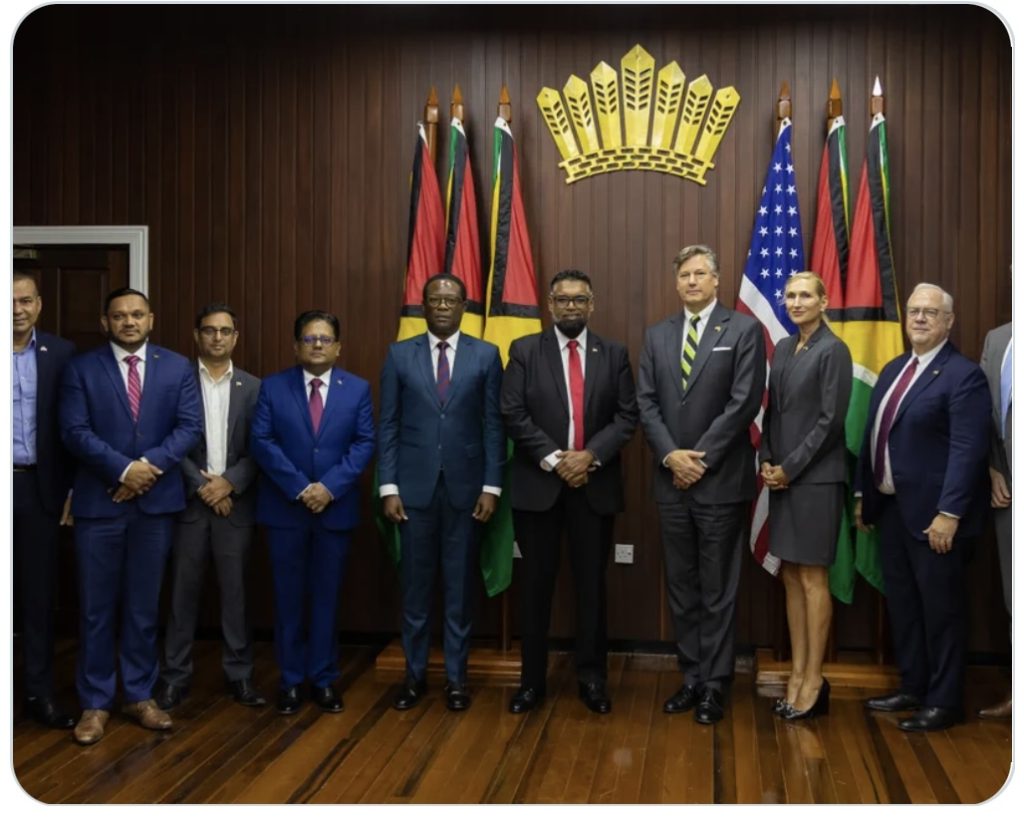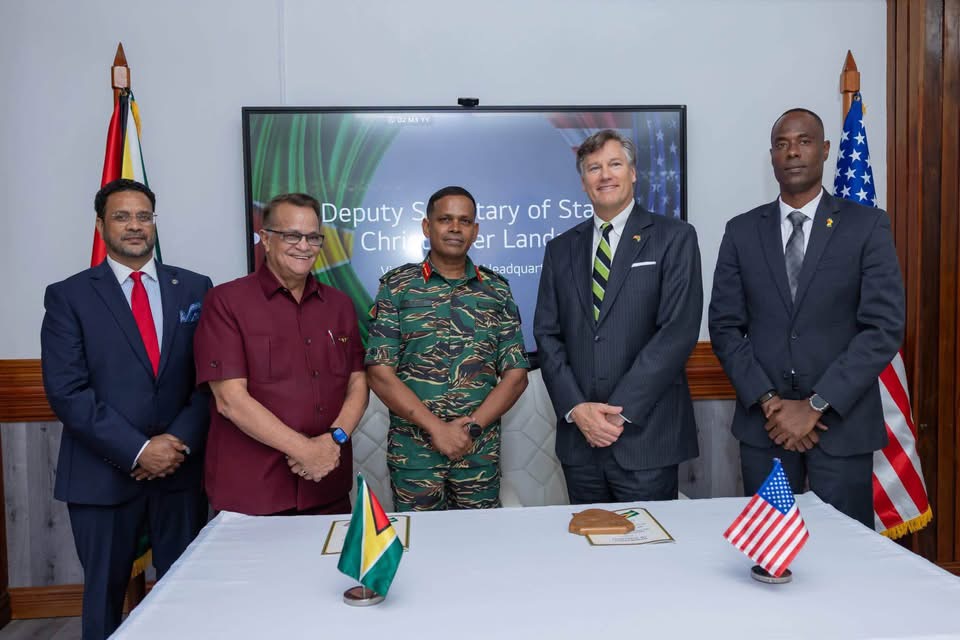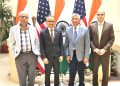









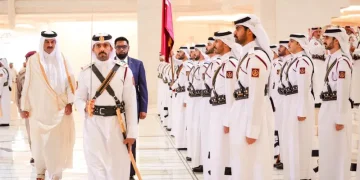





























The high-level diplomatic visit by Dep. Sec of State Chris Landau, preceded by visits by several officials of the Trump Administration, including Secretary of State Marco Rubio, other diplomatic missions by Department of Homeland Security leadership, military officials, Members of Congress, etc. mark a profound transformation in U.S–Guyana relations, swapping traditional criticism of Washington by preceding rulers for transactional cooperation on border security, energy and minerals, private-sector alignment and investment.
President Ali led a team comprising Ministers and advisors in engaging the Dep Sec of State.
The Landau delegation visit, like that of several other diplomats or officials, is to strengthen ties to what Washington considers as an active, willing partner in terms of energy, security, geo-politics, minerals and natural resources.
In recent decades, following the collapse of the Soviet Union and the end of the cold war, Georgetown-Washington’s engagement was uneasy — Guyana’s criticism or silence of USA policy towards certain countries (deemed as threats to US) and on major global events; demands by US for sweeping democratic governance, judicial independence, and anti-corruption measures. It was a diplomatic posture heavy on what Guyana must do though not always executed by successive administrations. That began to change under the President Ali administration, largely because of the attempt to rig the 2020 elections and threat posed by Nicolas Maduro and Venezuela. The US backed Guyana on democracy and against Maduro who was deposed last January and is in an American jail. Under a recalibrated U.S transactional foreign policy framework under Donald Trump, the policy of being critical of America or deliberate silence on Washington’s ventures has been decisively discarded by President Irfaan Ali. It is a smart, practical foreign policy of the Ali (and Jagdeo) Administration. Irfaan remains unswayed by ideological critiques. Being critical of Washington can invoke President Trump’s wrath as it did for other Guyanese rulers.
The engagement with President Trump last March and the many high-level visits to Guyana (by three Secretaries of State and now the Deputy) from late 2020 till now as well as visits by so many officials of the Trump administration illustrate the importance attached to Guyana by bureaucrats in Washington. Secretary Rbuio’s visit last year alongside active coordination from Pam Bondi and the Department of Homeland Security as well as visits by officials from Treasury, members of major corporations reflect a hard-nosed, transactional realism, mutual utility, regional security synchronization, supply chain resilience, energy and minerals security.
Some left wingers and nationalists are critical of Irfaan’s policy of a cooperating partnership with Washington, and with Trump specifically. But they don’t understand and probably never studied Washington’s foreign policy especially towards the Americas and the Caribbean – which is to remove threats to American interests regardless of the consequences, democracy, independent judiciary, social issues, etc. They still don’t understand how and why Jagan was ousted and why Ramotar and Granger were one term rulers. From the perspective of visiting U.S. diplomats, military heads, security chiefs, executives of major corporations, American interests are paramount. All other concerns are subordinate to the immediate geopolitical imperative of protecting the American homeland and securing resources for its people. This includes neutralizing transnational criminal syndicates.
Modern bilateral engagement actively seeks to integrate Guyana into broader U.S. strategic initiatives beyond oil and minerals to include technology transfer in industrialization, food productions, supply chain, digital infrastructure, etc.
The U.S. statecraft agenda has pivoted toward encouraging private-sector investment particularly in mining, technical infrastructure, food production, and energy collaboration. Engaging Guyana constructively on energy, security, investment, commercial and technological fronts allow the U.S. to cement its position as Guyana’ s primary economic anchor and balancing trade that will lead to the removal of the Trump tariffs. Ultimately, it will lead to more businesses for Guyanese companies and local development.
Ultimately, the high-level focus on Guyana (and Trinidad and Tobago also) must be understood through a wider geopolitical lens. Washington is actively competing for influence across the Americas and the Caribbean against the Chinese whose footprints loom large with huge investments in Guyana and around the region.
This is a pragmatic alignment with US and is without risks. US has delivered for Guyana on border security and democracy not to mention American investments. By depending on America for security and embracing Washington, Guyana has made it known that US is an indispensable anchor of our security and political stability. Without American intervention, there would not have been democratic change in 2020. In the process, America achieves its objective of a willing partner to help protect its national security interests and Guyana secures its interests on the border and democracy.
President Ali has delivered on core U.S. national security deliverables; he is liked in Washington. In this new era of transactional diplomacy, Irfaan has proven that he can speak Washington’s language on geo political, energy and mineral security. It bodes well even after Irfaan’s presidency.