














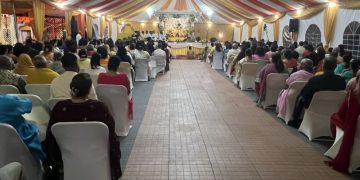
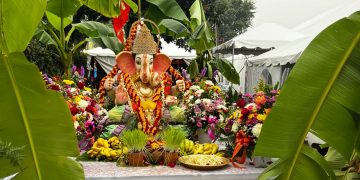






















Every year, Indian Arrival Day arrives wrapped in colour, tassa, traditional wear, nostalgia, and speeches. Communities across Trinidad and Tobago host cultural performances while social media fills with sepia-toned photographs of indentured labourers alongside familiar words: sacrifice, resilience, heritage.
But after 181 years, Trinidad and Tobago must ask a more difficult question: are we truly honouring the legacy of Indian Arrival Day?
Indian Arrival Day was never meant to exist solely as a ceremony. It was born from hardship, displacement, exploitation and survival. It represents one of the most transformative human journeys in history.
Our ancestors did not arrive as conquerors or elites. They came aboard crowded ships after leaving villages across Uttar Pradesh, Bihar, and other parts of India, crossing the “Kaala Paani” into uncertainty. Many would never see their homeland again. They entered a colonial system that viewed them primarily as labour for the cane fields.
These were people who laboured under punishing conditions, often isolated, impoverished, and socially excluded. Many arrived deceived, vulnerable and stripped of familiarity. Even after indentureship formally ended, Indo-Trinidadians remained on the margins of national life, facing economic, political, and institutional exclusion for generations.
Indian Arrival Day was once, for me, simply a celebration. I remember primary school skits during Baal Vikaas competitions and later the 150th anniversary commemoration at Skinner Park in San Fernando, standing among thousands forming the human “150” in what felt like a defining national moment. At the time, it felt like pure pride and festivity.
But with age came deeper understanding. Behind the celebration was another story, one of struggle, exclusion, sacrifice, endurance and eventual political awakening.
Too often, Indian Arrival Day is presented through a softened lens. The public sees cultural display but far less of the economic hardship, political exclusion and systemic inequality Indo-Trinidadians faced for generations after arrival.
In Trinidad and Tobago’s first general elections in 1925, voting rights were restricted through property ownership, income qualifications and English-language requirements. These conditions effectively excluded large sections of the Indo-Trinidadian population, many of whom were still emerging from plantation poverty.
Yet despite these barriers, Indo-Trinidadians persisted. The first Indo-Trinidadian entered the Legislative Council in 1925, followed by two others in 1928. What followed was not charity or accidental advancement but the result of relentless effort by ordinary people who understood that education, discipline, entrepreneurship and community were among the only pathways upward.
From the cane fields came teachers, shopkeepers, farmers, lawyers, doctors, business leaders and national figures who helped shape Trinidad and Tobago.
But none of this progress was automatic. It came because one generation endured hardship so the next could stand taller.
One of the greatest struggles Indo-Trinidadians faced was preserving Hindu and Muslim identity within a Colonial system that often treated Indian culture as inferior. Indian children were ridiculed in schools for their practices, names, clothing and speaking Hindi dialects or broken English. Some missionary schools pressured them toward conversion.
The national acceptance of Divali, Eid, Indian music, and Indo-Trinidadian cultural traditions was achieved after generations of resilience, cultural preservation, and persistent advocacy.
Indo-Trinidadians also fought for fair representation in radio and television, eventually achieving milestones such as the launch of the first 24-hour Indian radio station, 103FM, in 1993 and Indo-focused television stations in the years that followed, IETV in 2005 and then WIN TV in 2007.
Our ancestors preserved these traditions under conditions designed to erase them. The real question is whether we are preserving them today or merely consuming the aesthetics of heritage while losing its substance.
As a seventh-generation descendant of Indian immigrants, I reflect on this often. Many descendants who return to ancestral villages in India find something both profound and sobering: some of those communities remain remarkably unchanged since the mid-1800s.
That reality should humble us.
It reminds us that the opportunities many Indo-Trinidadians enjoy today were never guaranteed. They were built through generations who endured hardship so their children could inherit possibility instead of limitation.
Indian Arrival Day should therefore do more than celebrate heritage. It should remind the nation that Indo-Trinidadian history is not a side story in the national narrative, it is part of the foundation.
It should also remind younger generations that legacy is not inherited automatically. It can just as easily be weakened through complacency, division, and neglect.
The true measure of honouring Indian Arrival Day is whether we still carry the discipline, humility, resilience, faith, and sense of purpose that allowed our fore parents to survive in the first place.
If those values disappear, then all that remains is ceremony.
Indian Arrival Day is not only about where our ancestors came from. It is about what they survived, what they preserved, and what we now choose to carry forward.
By:
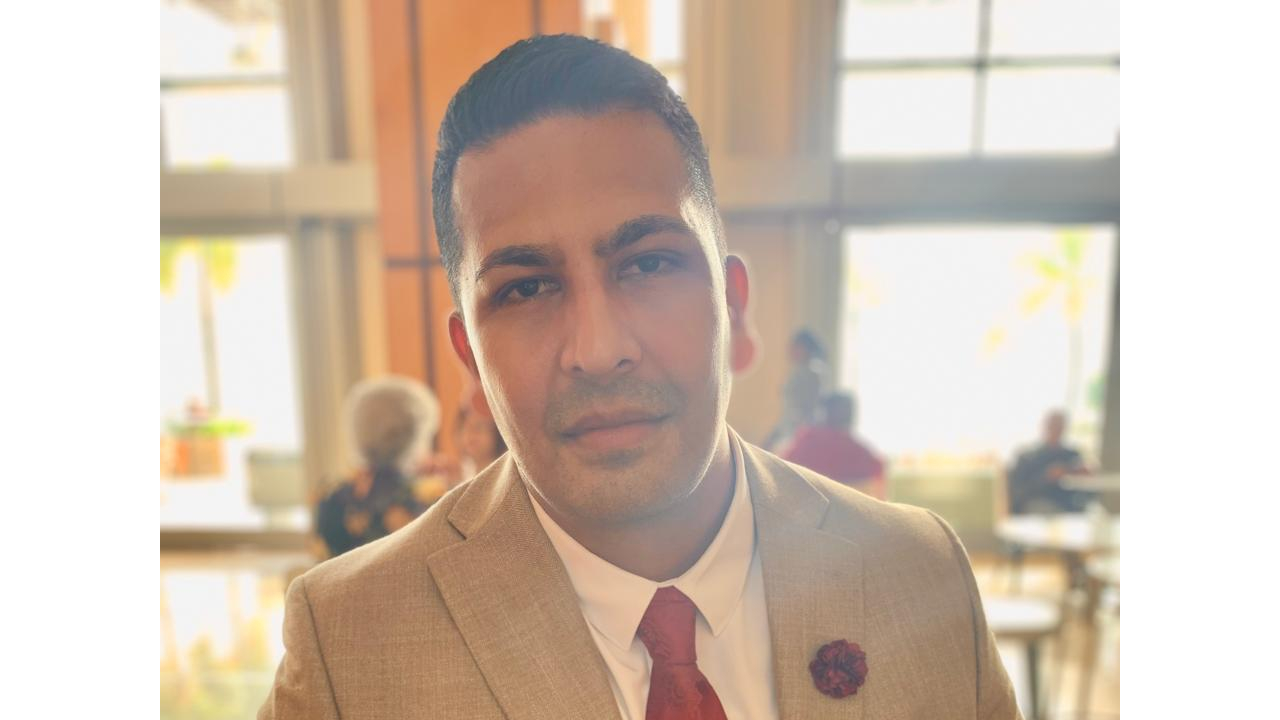
Deochand Ramjit Singh MBA, BA, AMABE
Email: deochandramjitsingh@gmail.com
Contact # 1 868 383 8388 or 1 347 593 6049