



fbpx
  • Latest
  • Trending
  • All
  • Opinions
  • Features
  • Letters
  • Videos
  • Editorials
  • Columns
Guyanese Americans Relive the Magic of Diwali in Guyana during Difficult Times (1960s, 70s and 80s

Guyanese Americans Relive the Magic of Diwali in Guyana during Difficult Times (1960s, 70s and 80s

November 8, 2026
Diwali in Siparia: Trinidad & Tobago Prime Minister Kamla Persad-Bissessar Celebrates 29 Years of Light, Faith and Community Unity

Diwali in Siparia: Trinidad & Tobago Prime Minister Kamla Persad-Bissessar Celebrates 29 Years of Light, Faith and Community Unity

November 8, 2026
Deochand Ramjit Singh

𝐃𝐢𝐯𝐚𝐥𝐢: 𝐀 𝐔𝐧𝐢𝐯𝐞𝐫𝐬𝐚𝐥 𝐌𝐞𝐬𝐬𝐚𝐠𝐞 𝐨𝐟 𝐋𝐢𝐠𝐡𝐭 𝐚𝐧𝐝 𝐇𝐮𝐦𝐚𝐧𝐢𝐭𝐲

November 8, 2026
Diwali Nagar, Trinidad 2026: NCIC Celebrates 40 Years of Preserving Indian Heritage and Promoting Cultural Unity

Diwali Nagar, Trinidad 2026: NCIC Celebrates 40 Years of Preserving Indian Heritage and Promoting Cultural Unity

November 8, 2026
ADVERTISEMENT
Dr. Vishnu Bisram

Grenada Poll: Turnout and Undecided Voters to Determine Government Formation

November 4, 2026
Dr. Vishnu Bisram

Why Guyanese, Trini and Indian Americans Must Vote in Tuesday’s Midterm Elections

November 2, 2026
Paras Ramoutar

Divali, the Eternal Light of Truth takes precedence over AI

November 2, 2026
Jai Lall

The Naughty Nuance of Noise Nuisance and its Naked Nemesis!

November 2, 2026
Dr. Vishnu Bisram

Brief Bio of Dr Bisram of Guyana

October 28, 2026
Dr. Vishnu Bisram

Case for an Updated Kolkota Monument Dedicated to Pioneering Indentured Laborers

October 28, 2026
Rohan Kanhai – A True West Indies Cricket Legend

Rohan Kanhai – A True West Indies Cricket Legend

October 28, 2026
Queens Diwali Motorcade Lights Up Richmond Hill, Celebrating Faith and Indo-Caribbean Heritage

Queens Diwali Motorcade Lights Up Richmond Hill, Celebrating Faith and Indo-Caribbean Heritage

October 28, 2026
CRICKET LEGENDS LIGHT UP GUYANA in OVER-40s WORLD CUP

CRICKET LEGENDS LIGHT UP GUYANA in OVER-40s WORLD CUP

October 28, 2026
  • About
  • Advertise
  • Privacy Policy
  • Contact Us
  • Terms and Condition
Sunday, November 8, 2026
  • Login
Indo Caribbean Diaspora News
  • Home
  • Columns
    Guyanese Americans Relive the Magic of Diwali in Guyana during Difficult Times (1960s, 70s and 80s

    Guyanese Americans Relive the Magic of Diwali in Guyana during Difficult Times (1960s, 70s and 80s

    Deochand Ramjit Singh

    𝐃𝐢𝐯𝐚𝐥𝐢: 𝐀 𝐔𝐧𝐢𝐯𝐞𝐫𝐬𝐚𝐥 𝐌𝐞𝐬𝐬𝐚𝐠𝐞 𝐨𝐟 𝐋𝐢𝐠𝐡𝐭 𝐚𝐧𝐝 𝐇𝐮𝐦𝐚𝐧𝐢𝐭𝐲

    Dr. Vishnu Bisram

    Grenada Poll: Turnout and Undecided Voters to Determine Government Formation

    Dr. Vishnu Bisram

    Why Guyanese, Trini and Indian Americans Must Vote in Tuesday’s Midterm Elections

    Paras Ramoutar

    Divali, the Eternal Light of Truth takes precedence over AI

    Dr. Vishnu Bisram

    Case for an Updated Kolkota Monument Dedicated to Pioneering Indentured Laborers

    Dr. Vishnu Bisram

    Modi Applauded for Mann Ki Baat & Remarks on Indentureship Diaspora

    Threat of Communism shaped Washington’s Position on Guyana kicking out Jagan and being silent on Rigging

    PM Modi’s Policy Towards Diaspora Descendants of Indentured Laborers

    David Weprin Campaign Fundraiser Draws NY Indo-Caribbean Support in Richmond Hill

    David Weprin Campaign Fundraiser Draws NY Indo-Caribbean Support in Richmond Hill

    Threat of Communism shaped Washington’s Position on Guyana kicking out Jagan and being silent on Rigging

    Threat of Communism shaped Washington’s Position on Guyana kicking out Jagan and being silent on Rigging

  • Letters
    Hamilton Green

    GREEN MUST CONCEDE THAT BURNHAM WRECKED GUYANA DESPITE ‘LOYAL AND COMPETENT’ INDIVIDUALS

    Dr. Vishnu Bisram

    US plan to Denaturalize and Deport Citizens — concern to Guyanese and others

    Dr. Vishnu Bisram

    Brilliant speech by Trinidad and To ago PM on Diwali theme at Constituency Celebrations 2025

    Guyana Rohee’s mocking of Illegal Guyanese & Green Card Holders in America

    Guyana Rohee’s mocking of Illegal Guyanese & Green Card Holders in America

    Charles Sugrim

    Authenticating Dr Bisram’s Poll in Guyana

    Gary Griffith

    United We Stand, Divided We Fall

    Ravi Balgobin Maharaj

    Democrats More Dangerous to Dragon Gas than Republicans

    Ravi Balgobin Maharaj

    Who Really Lost in the Junior Sammy Matter in Trinidad?

    Jai Lall

    A challenge to become the rainbow in Leonora’s cloud

    Rabindra-Moonan

    The opposition UNC led by Kamla Persad Bissessar has gone into meltdown mode.

  • Community News
    Diwali in Siparia: Trinidad & Tobago Prime Minister Kamla Persad-Bissessar Celebrates 29 Years of Light, Faith and Community Unity

    Diwali in Siparia: Trinidad & Tobago Prime Minister Kamla Persad-Bissessar Celebrates 29 Years of Light, Faith and Community Unity

    Queens Diwali Motorcade Lights Up Richmond Hill, Celebrating Faith and Indo-Caribbean Heritage

    Queens Diwali Motorcade Lights Up Richmond Hill, Celebrating Faith and Indo-Caribbean Heritage

    Final Night Navratri Celebrations at Indo Carib Shree Sundar Gopal Mandir in Queens, NY, USA

    Final Night Navratri Celebrations at Indo Carib Shree Sundar Gopal Mandir in Queens, NY, USA

    Navratri Being Observed by Caribbean American Hindus

    Navratri Being Observed by Caribbean American Hindus

    Trini Pandit Munelall Leads Navratri Discourse at Sundar Gopal Mandir in NY

    Trini Pandit Munelall Leads Navratri Discourse at Sundar Gopal Mandir in NY

    2026 Fall Navratri Celebrations Bring Devotion, Music and Community Spirit to Sudama Mandir in Richmond Hill

    2026 Fall Navratri Celebrations Bring Devotion, Music and Community Spirit to Sudama Mandir in Richmond Hill

    Pitri Paksh Discourse at the American Sudama Mandir in NY

    Pitri Paksh Discourse at the American Sudama Mandir in NY

    Caribbean Hindus in Queens Honoring Ancestors by Performing Pitri Puja

    Caribbean Hindus in Queens Honoring Ancestors by Performing Pitri Puja

    Hari Katha Yagya in Richmond Hill with Shri  Sudarsan Acharya ji

    Hari Katha Yagya in Richmond Hill with Shri Sudarsan Acharya ji

    Pitri Paksha in Little Guyana, Little Trinidad in USA: Teachings of Garuda Purana

    Pitri Paksha in Little Guyana, Little Trinidad in USA: Teachings of Garuda Purana

  • Editorials
    At SVN Graduation Exercises – Making a difference in the field of education.

    At SVN Graduation Exercises – Making a difference in the field of education.

    cliff-rajkumar

    VANISHING FOOTPRINTS

    Kamla Persad Bissessar

    Trinidad and Tobago OPPOSITION LEADER addresses TOWN HALL MEETING ON EDUCATION IN SAN FERNANDO WEST

    Jai Lall

    Guyana Leonora’s villagers are inseparable

    Dr. Vishnu Bisram

    Indo-Caribbean to speak on India’s Soft Power in Delhi

    Jai Lall

    Empty vessels make the most noise – politics in Guyana

    Ashook-Ramsaran

    In Commemoration of the 23rd Anniversary

    Kamla Persad Bissessar

    Hope for UNC of Trinidad?

    Ravi Balgobin Maharaj

    Is there No Other Musical Instrument Indigenous to T&T?

    Guyana-map

    October 2024 Hindu Conference bring back memories of Humiliation of Indians in Guyana

  • Opinions
    Dool Hanomansingh

    Are Hindu organizations redundant?

    Dool Hanomansingh

    Self Interest Trumps Dharma

    Dool Hanomansingh

    Why today’s youths are curious about their history

    Dool Hanomansingh

    Laaboo-style leadership is destructive

    Dool Hanomansingh

    Why today’s youths are curious about their history

    Dool Hanomansingh

    Think like a unit; not like an individual

    Vassan Ramracha

    WHY SANATAN DHARMA (HINDU SCHOOLS) ARE IMPORTANT in Trinidad

    Dool Hanomansingh

    Gary is still trying hard to make himself relevant

    Paras Ramoutar

    Need for a new spirit of nationalism

    Dool Hanomansingh

    Indian Arrival Day commemoration is much more than Curry Duck

  • Videos
    Dool-Hanomansingh-003

    US Congress woman Tulsi Gabbard condemns the ongoing genocide of Hindus and other minorities

    Geeta-Vaahini

    Geeta Vaahini, President of the  Hindu Prachaar Kendra speaks on the social significance of Ganga Dhara Festival.

    Geeta-Vaahini

    Geeta Vaahini, President of the Hindu Prachaar Kendra speaks on the Hindu view of the environment.

    swami-brahmadeo

    Swami Brahmadeo – Hindus are top CEOs and Medics in North America and Europe

    Gowtam-Maharaj

    Gowtam Maharaj, a farmer of Barrackpore, South Trinidad, shares his challenges being a farmer.

    BAMBOO #1 Flooding – Frustrated Residents

    BAMBOO #1 Flooding – Frustrated Residents

    NATIONAL-LOTUS-THEATRE

    NATIONAL LOTUS THEATRE – Performance of Niyantran

    radica-jairam

    Story of RADICA JAIRAM from Orange Valley

    fisherman-trinidad

    Families of Orange Valley felt neglected by PNM Government

    Dr Subramanian Swamy

    Dr Subramanian Swamy – Dharma Rising London April 2015

  • Features
    Dr Vishnu Bisram

    Encounters & Anecdotes with Guyana SN’s de Caires and editors

    Dool Hanomansingh

    The victory of Zohran Mamdani reflects poorly on the US and its politics

    ravi-ratiram

    Trinidad MP Ravi Ratiram Condemns Government’s Failures Amidst Rising Crime in Central Trinidad and Calls for Immediate Action to Protect Citizens

    Pandit Ramdular Singh

    Pandit Ramdular Singh on Guyana’s Dharmic Sabha

    Vassan Ramracha

    PNM bent on Africanizing Trinidad

    Baldeo_Chanderpaul-3

    West Indian cricketers must strive to emulate Shiv Chanderpaul of Guyana

    Jai Lall

    Who in Guyana will ever buy the PNC/AFC/APNU “honesty, integrity and decency” pitch again?

    cliff-rajkumar

    Non Indians Embracing Sanathan Dharma

    Mr. Rudranath Indarsingh

    INDARSINGH ON RELOCATION OF PRINCES TOWN FIRE OFFICERS

    Vassan Ramracha

    TRIBAL AFRICANS DO NOT CONDONE INTERRACIAL MARRIAGES

No Result
View All Result
Indo Caribbean Diaspora News
No Result
View All Result

Guyanese Americans Relive the Magic of Diwali in Guyana during Difficult Times (1960s, 70s and 80s

by Dr. Vishnu Bisram
November 8, 2026
in Columns
0
Guyanese Americans Relive the Magic of Diwali in Guyana during Difficult Times (1960s, 70s and 80s
2k
SHARES
1.5k
VIEWS
Share on FacebookShare on Twitter

For many Guyanese Americans, Diwali is much more than an annual religious celebration, festival of lights during the darkest moon of the year, falling in late October or early November. Diwali isa also a cherished connection to childhood, family, village life, worshipping by Hindus, and a homeland that remains close to their hearts, even after decades (from 1960s) of living abroad.

As Diwali approaches each year, Guyanese immigrants in USA, particularly those who grew up in Guyana during the 1960s, 1970s and 1980s, find themselves reminiscing about the extraordinary atmosphere surrounding the Festival of Lights in their homeland. Their memories are filled with glowing clay deyas, simple but beautifully decorated homes without all the fancy lights and glossy trimmings and fireworks, the aroma of traditional Indian delicacies, temple prayers, cultural concerts, and the excitement of the season of travelling from village to village to admire the illuminated deyas around the yard and on the steps, windows, in front of doors, etc.

For many, those were unforgettable years when Diwali was not simply a Hindu religious observance but a national cultural celebration that brought together people of different ethnicities and religious backgrounds. Non-Hindus also partook in the celebration as guests at homes of Hindus for feats.

Preparing for the Festival

The excitement of Diwali began weeks before the actual festival. Hindu families embarked on extensive preparations to welcome Mother Lakshmi, the goddess of wealth, prosperity and good fortune.

Homes were thoroughly cleaned, painted and decorated. Lawns were trimmed, gardens beautified, and new curtains, bed sheets, furniture coverings and household decorations were purchased. Families shopped for new clothes, groceries, coconut oil, ghee, wicks and clay deyas.
The preparations were undertaken with great care because Diwali was regarded as an occasion for welcoming prosperity and beginning anew.
In villages such as Port Mourant, Rose Hall, Albion, Skeldon, Whim, Fyrish, Enmore, Annandale, Enterprise Anna Regina, and other communities along the Coast throughout the country, the anticipation was unmistakable. Children were particularly excited. They knew that Diwali meant a school holiday, delicious sweets, family gatherings, visits to relatives and, above all, the spectacular lighting of deyas.
For many families, preparations also involved fasting, prayer and abstaining from certain foods and activities before the festival.

The Magic of the Deyas

Perhaps the most enduring memory of Diwali in those decades was the lighting of clay deyas. On Diwali night, families placed rows of illuminated lamps along windowsills, doorways, staircases, verandas, rooftops and garden pathways. Coconut oil or ghee was poured into the little earthen containers, cotton wicks were carefully positioned, and the lamps were lit as darkness descended. The sight was breathtaking.

Entire neighbourhoods appeared transformed into oceans of flickering lights. Some families created elaborate arrangements and geometric patterns with their deyas, while others decorated their front yards with colourful designs and religious symbols.

There was an informal competition among households to see who could produce the most attractive display. Children and adults alike would drive or walk through neighbouring villages to admire the decorations. Only a few families could afford the electronic lights and they came late 1970s when the country was swept with blackouts for weeks at a time.

Unlike today’s elaborate electronic lighting systems, the beauty of those earlier celebrations came largely from simple earthen lamps, handmade decorations and the enthusiasm of families working together.

For many Guyanese Americans, the memory of a grandmother or mother carefully lighting the first diya remains one of the most emotional recollections of their childhood.

Food, Sweets and Sharing

Diwali was also a feast for the senses. The preparation of traditional Indian delicacies was an important family activity. Kitchens became busy places as mothers, grandmothers and other relatives prepared mithai, parsad, mohanbhoog, pera, gulab jamoon, ladoo and other sweets.
Savoury dishes included bara, phulourie, bhaiganee, aloo, channa, black eye, dhal puri, rice, curry and a variety of vegetarian preparations. Channa, flour, dhall, potatoes, onions, garlic, canned milk, raisins, currants, cherries, and other imported fruits, several spices, were banned or prohibited from importation and consumption, carrying heavy fines if found by the food police. Ghee was also very scarce as Government didn’t import it. Thus, many food items were not available during the late 1970s and 1980s. Agarbatie, samaghri, camphor, etc., were not imported, making it difficult to conduct puja. The ban ended around 1988.

During the Burnham era (1965–1985), Guyana imposed extensive restrictions on imported goods. These affected the availability of ingredients used in traditional Hindu cooking and religious offerings. Flour, dhal, channa, potatoes, onions, garlic, spices, ghee and other imported products were difficult to obtain legally at various times.

How this affected Diwali celebrations? For Hindu families, these restrictions created considerable difficulties in preparing traditional foods such as: – Bara and phulourie, Dhal puri and roti, Channa and aloo, Mohanbhog and parsad, Pandri, sirni and other traditional sweets, as well as various curries and vegetarian dishes. Some ingredients were smuggled from neighbouring Suriname, while others were purchased at very high prices through informal markets. Families with limited financial resources often had to manage with locally available substitutes. The restrictions were particularly difficult because food was not merely a matter of personal preference. Certain ingredients were necessary for religious offerings, pujas and the preparation of traditional meals. The government restrictions were not specifically a ban on Diwali or Holi or Hindu or Muslim foods or a prohibition on Hindu and Muslim religious observances. But it amounted to that. They were broader import and trade controls that had serious consequences for Hindu and Muslim cultural and religious practices.
The import restrictions were subsequently relaxed under President Desmond Hoyte in the late 1980s. Many older Guyanese Americans remember those years not only for the beautiful deyas, family gatherings and religious celebrations, but also for the hardships of obtaining flour, dhal, channa, ghee and other ingredients. For some families, celebrating Diwali meant overcoming economic and food shortages simply to preserve their ancestral traditions.

Before and during the food restrictions, neighbours exchanged food, relatives visited one another, and sweets were distributed to friends regardless of their religious or ethnic backgrounds.

For many children, the highlight was receiving little packages of mithai and other goodies from neighbours and relatives. These simple acts of generosity reinforced the spirit of friendship and goodwill associated with Diwali. Hindus also visited mandirs for special prayers, havan, bhajans and religious discourses. Families offered prayers to Lord Ganesha and Goddess Lakshmi, seeking blessings for prosperity, health and happiness.

A National Celebration Beyond Religious Boundaries

One remarkable feature of Diwali in Guyana during the 1960s through the 1980s was the participation of people from different ethnic and religious communities.

Afro-Guyanese, Indo-Guyanese, Amerindians and people of mixed ancestry joined in the festivities. Non-Hindu neighbours eagerly anticipated invitations to Diwali dinners and the distribution of traditional sweets. Children from all backgrounds enjoyed the holiday, visited decorated homes and admired the displays of deyas.

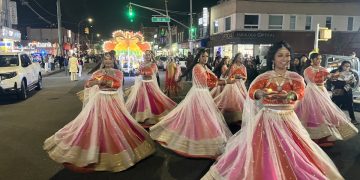
The Diwali motorcade became another major attraction. Introduced in 1974 by the Guyana Hindu Dharmic Sabha, it has developed into a spectacular annual procession featuring elaborately decorated and illuminated floats depicting Hindu religious themes, accompanied by music, dance and cultural performances.

Tens of thousands of spectators lined the streets to witness the procession, demonstrating how a religious festival had become a major national cultural attraction. The motorcade also helped introduce Hindu traditions to people who might otherwise have had limited exposure to them. New York also has a motorcade that started some two decades ago in Little Guyana, Richlond Hill, Queens.

School Concerts and Cultural Performances

For the younger generation, Diwali celebrations in schools were particularly memorable. This writer organized the first Diwali celebrations at Corentyne High School in 1976.

Hindu students’ societies and cultural organisations organised concerts featuring Indian classical and folk dances, songs, devotional music, skits and dramatic presentations based on episodes from the Ramayana.

Students rehearsed often performing in colourful traditional Indian attire. Teachers, parents and community leaders supported these programmes, which provided opportunities for young people to develop confidence and appreciate their ancestral heritage.

The establishment of Hindu youth organisations in schools during the late 1960s and subsequent decades helped strengthen cultural education and participation. These concerts were especially important in an era when access to Indian cultural programming was more limited than it is today.

Memories That Travelled to America

When Guyanese began migrating in substantial numbers to the United States during the 1960s, 1970s and 1980s, they carried these traditions and memories with them.

However, celebrating Diwali in America was initially very different.

Many early immigrants lived in rented rooms, small apartments or inexpensive hotels. There were few Hindu temples, limited availability of Indian groceries and relatively little public understanding of Indian religious festivals.

Consequently, Diwali celebrations were often confined to apartments and private gatherings. Families prepared whatever traditional foods they could obtain, offered prayers and shared meals with friends and neighbours.

As Guyanese immigrants established themselves, acquired homes and created community organisations, celebrations gradually expanded. By the 1980s, more public cultural programmes and temple observances were emerging in New York and other American cities.

The growth of Little Guyana in Richmond Hill, Queens, during the late 1980s and subsequent years made it increasingly possible to obtain traditional foods, religious supplies, clothing and other cultural necessities.

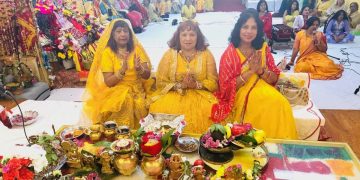
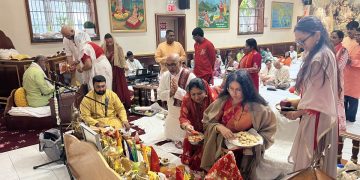
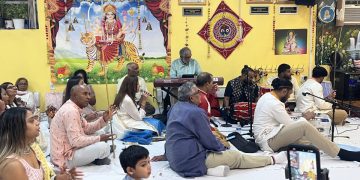
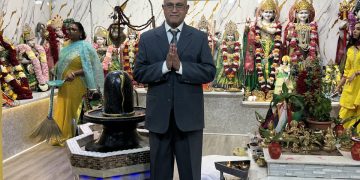
Today, Guyanese Americans celebrate Diwali with public programmes, temple services, cultural concerts, family gatherings and elaborate decorations. Politicians also host Diwali celebrations – White House, Governor House, Mahor House, Legislatures, etc. Yet many continue to believe that the atmosphere of Diwali in Guyana during their childhood was unique.

A Heritage Worth Preserving

For the older generation of Guyanese Americans, reminiscing about Diwali in the 1960s, 1970s and 1980s is an opportunity to reconnect with their roots and share their experiences with children and grandchildren born in North America.

They remember a time when neighbours knew one another, doors were open, food was freely shared and religious differences rarely prevented people from participating in each other’s celebrations.

Those memories are an important part of Guyana’s cultural history and the Indo-Guyanese immigrant experience.

As Guyanese Americans continue to celebrate Diwali in New York, New Jersey, Florida, Boston, Georgia, Minneapolis, Schenectady, Toronto and elsewhere, they are doing more than observing a religious festival. They are preserving a heritage, transmitting traditions and maintaining an emotional connection with the country of their birth.

The deyas may now be replaced in some homes by modern electronic lights, and celebrations may take place thousands of miles from the villages where many grew up. But the essential message remains unchanged.

Diwali is about light, hope, family, generosity, faith and togetherness. For those who experienced the magic of Diwali in Guyana during the 1960s, 1970s and 1980s, those memories will continue to shine as brightly as the little clay lamps that once illuminated their childhood homes.

Shubh Diwali to all Guyanese, at home and the diaspora!
Yours truly,
Vishnu Bisram

Facebook Comments Box
Tags: carribeanDr. Vishnu BisramGuyanaGuyaneseindian cultureIndian diasporaIndian GuyaneseIndiansIndo Caribbean diasporaindo-caribbeanIndo-Caribbean communityIndo-GuyaneseTrinidadTrinidad and Tobago
Share56Tweet35Share14
ADVERTISEMENT
Dr. Vishnu Bisram

Dr. Vishnu Bisram

Dr. Vishnu Bisram is Guyanese born who received his primary and secondary education in Guyana and tertiary education in the US and India. He is a holder of multiple degrees in the natural sciences, social sciences, and education. He taught for over forty years in the US. He is a specialist on the Indian diaspora traveling globally to research and write about Indian communities. He was among a small group of freedom fighters in America that combated the dictatorship in Guyana. Dr. Bisram organized many conferences on the Indian diaspora and lectured at several universities. He has published extensively on the diaspora and on various other topics.

  • Trending
  • Comments
  • Latest
Dr. Vishnu Bisram

Grenada Poll: Turnout and Undecided Voters to Determine Government Formation

November 4, 2026
Dr. Vishnu Bisram

Why Guyanese, Trini and Indian Americans Must Vote in Tuesday’s Midterm Elections

November 2, 2026
Paras Ramoutar

Divali, the Eternal Light of Truth takes precedence over AI

November 2, 2026
Jai Lall

The Naughty Nuance of Noise Nuisance and its Naked Nemesis!

November 2, 2026
Diwali in Siparia: Trinidad & Tobago Prime Minister Kamla Persad-Bissessar Celebrates 29 Years of Light, Faith and Community Unity

Diwali in Siparia: Trinidad & Tobago Prime Minister Kamla Persad-Bissessar Celebrates 29 Years of Light, Faith and Community Unity

November 8, 2026
Guyanese Americans Relive the Magic of Diwali in Guyana during Difficult Times (1960s, 70s and 80s

Guyanese Americans Relive the Magic of Diwali in Guyana during Difficult Times (1960s, 70s and 80s

November 8, 2026
Deochand Ramjit Singh

𝐃𝐢𝐯𝐚𝐥𝐢: 𝐀 𝐔𝐧𝐢𝐯𝐞𝐫𝐬𝐚𝐥 𝐌𝐞𝐬𝐬𝐚𝐠𝐞 𝐨𝐟 𝐋𝐢𝐠𝐡𝐭 𝐚𝐧𝐝 𝐇𝐮𝐦𝐚𝐧𝐢𝐭𝐲

November 8, 2026
Diwali Nagar, Trinidad 2026: NCIC Celebrates 40 Years of Preserving Indian Heritage and Promoting Cultural Unity

Diwali Nagar, Trinidad 2026: NCIC Celebrates 40 Years of Preserving Indian Heritage and Promoting Cultural Unity

November 8, 2026

The most important world news and events of the day.

Get ICDN daily newsletter on your inbox.

ADVERTISEMENT
Indo Caribbean Diaspora News

© 2024 Indo-Caribbean Diaspora News. All rights Reserved

Navigate Site

  • About
  • Advertise
  • Privacy Policy
  • Contact Us
  • Terms and Condition

Follow Us

No Result
View All Result
  • Home
  • Columns
  • Letters
  • Community News
  • Opinions
  • Videos
  • Features
  • Editorials

© 2024 Indo-Caribbean Diaspora News. All rights Reserved

Welcome Back!

Login to your account below

Forgotten Password?

Retrieve your password

Please enter your username or email address to reset your password.

Log In