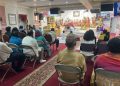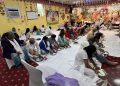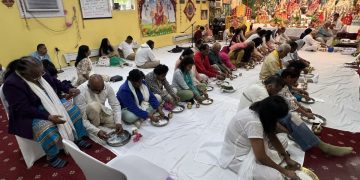



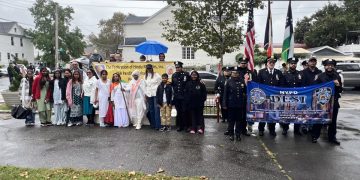














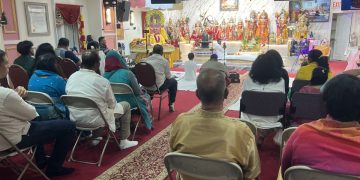
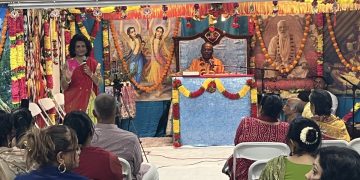
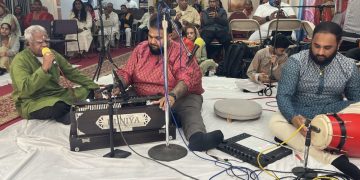
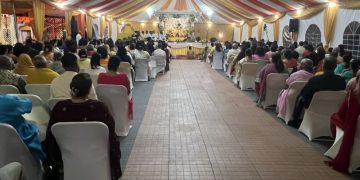
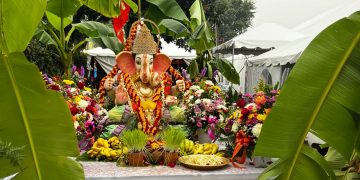

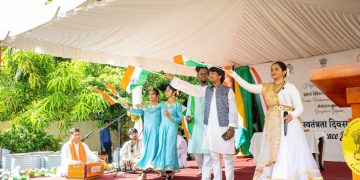
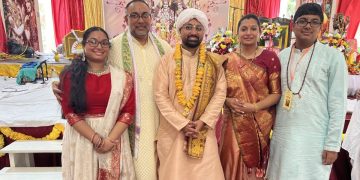
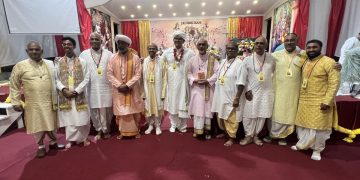


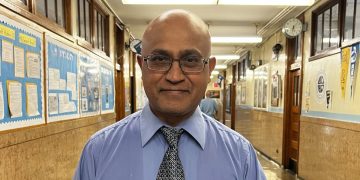





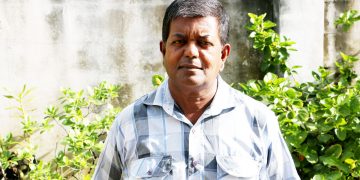
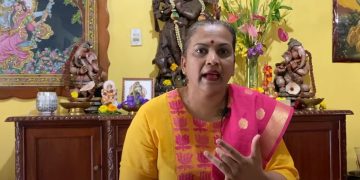
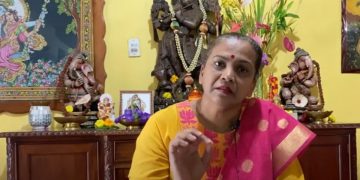
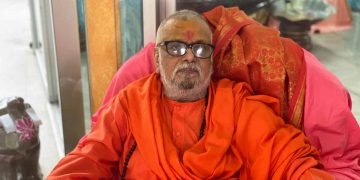







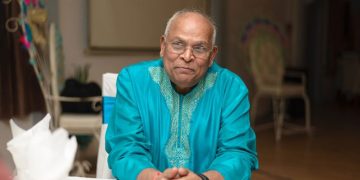




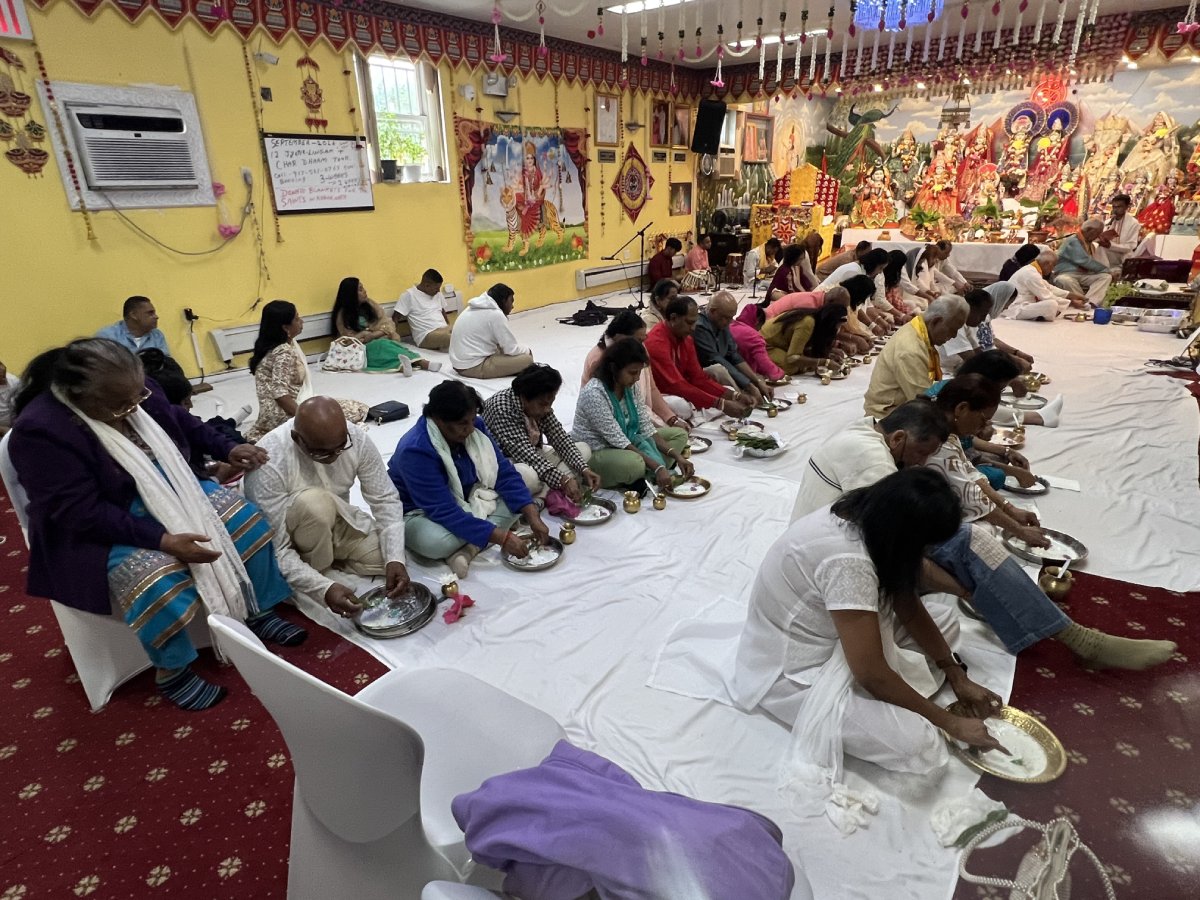
Last Sunday, Caribbean mandirs in USA hosted pitri puja, homage to the deceased ancestors. Hindus took advantage to pray for the souls of the departed. Across the vibrant enclaves of Richmond Hill, Ozone Park, Jamaica, collectively known as Little Guyana and Little Trinidad, and in neighboring Queens Village, Hollis, Brooklyn, and the Bronx, Sanatanist Hindus gathered to perform pitri puja – shraada and tarpan for departed ancestors. Many sat on the floor of the mandir to do tarpan. The sounds of chants, ringing brass bells, fragrance of burning agarbati and samagri (camphor and other incense) in havan kund mark some of the rituals performed in mandirs during Pitri Paksh. Tha presiding pandit gave a discourse and instructions on performing the tarpan – symbolically offering milk mixed with black til (sesame seeds) to the souls of deceased in the lineage of the person performing the shraada.
For the vast Indo-Caribbean Hindu diaspora in Queens, whose roots trace back through Guyana, Trinidad and Tobago, Suriname, and Jamaica to India, Pitri Paksh (also known as Pitru Paksha or Peter Pak) is one of the most solemn and culturally significant periods (September/October) on the religious calendar. During this 16-day lunar cycle, devotas (devotees) pay homage to their ancestors (pitris), seeking blessings and offering prayers to express gratitude for the lineages that shaped their lives.
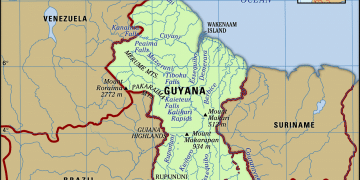
Historically, performing Tarpan—the ritual offering of water, milk, sesame seeds (til), and kush grass—involved gathering along riverbanks, such as the Demerara or Corentyne or Berbice or Essequibo or a trench or canal in Guyana, or other rivers in Suriname, or the Caroni River in Trinidad. That tradition was brought from India where devotees performed shraada on the banks of holy rivers or where not possible in their homes. In New York City’s urban environment, Caribbean Hindus have creatively adapted these age-old customs, performing shraada at home or in the yard, keeping their spiritual practices intact.
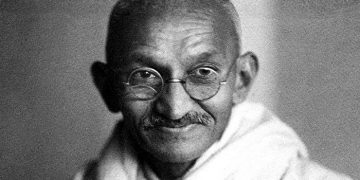
While some devotees travel to nearby coastal points like Jamaica Bay or Rockaway Beach, many gather for mass Sunday morning puja services at local mandirs, including Shri Tulsi Mandir on 111th Street, Shaanti Bhavan Mandir in Ozone Park, Gandhi Satsang, Gopal Sundar, Dayaram, Trimurthi, Sudama, Radha Krishna, Shree Surya, Prem Bhakti, Maha Sabha Shiva, and so many more. Inside these temple hollowed halls, families set up modest brass thalis (trays) and water vessels to perform the symbolic offerings indoors or in temple yards.
The Indian ancestors made incredible sacrifices — first crossing the dark waters (Kala Pani) from India to the Caribbean, and then crossing the Atlantic Ocean and Caribbean Sea to New York. Observing Pitri Paksh is their way of saying thank you and that they haven’t forgotten where we came from or the upbringing they received.
Many Hindus, including this writer, maintain strict observance of fasting during this period. Fasting from meat and alcohol is widely practiced, and auspicious celebrations such as weddings, housewarmings, or purchasing new assets are postponed to keep the focus purely on ancestral reflection and solemnity. The quiet dignity of Pitri Paksh remains a testament to the resilience of Queens’ Caribbean Hindu community, ensuring that no matter how far from home they wander, their ancestors are never forgotten. Some Hindus observe the entire period performing puja (offering water with til to the ancestors and praying to Jamraj to be merciful on them) while others like me only make offerings only for a few odd numbered days.
Pitri Paksh serves as an essential bridge connecting younger, American-born Indo-Caribbean generations with their complex heritage. Pandits guide youth through the step-by-step meaning of the Sanskrit mantras, translating the spiritual obligations into concepts of family legacy, lineage, and respect for elders. At the conclusion of Pitri paksh, it is traditional to cook at least seven curries and a variety of grains and offer to the souls as well as to animals to appease Jamraj. Guests are also invited for the feast.
As Pitri Paksh draws to a close on the new moon (Mahalaya Amavasya), mandirs in Queens prepare for the transition into Fall Navratri — the nine nights dedicated to the Divine Mother — bringing a sense of spiritual renewal and joy after two weeks of quiet devotion.
For more picture click here,
https://www.facebook.com/share/v/1K17STwpdJ/