









fbpx
  • Latest
  • Trending
  • All
  • Opinions
  • Features
  • Letters
  • Videos
  • Editorials
  • Columns
Dr. Vishnu Bisram

Mahatma Gandhi and the Struggle to End Indentureship in Diaspora

October 10, 2026
Threat of Communism shaped Washington’s Position on Guyana kicking out Jagan and being silent on Rigging

Threat of Communism shaped Washington’s Position on Guyana kicking out Jagan and being silent on Rigging

October 10, 2026
At SVN Graduation Exercises – Making a difference in the field of education.

At SVN Graduation Exercises – Making a difference in the field of education.

October 10, 2026
NY Arya Samaj Gurukula Celebrates Founding and Dr. Satish Prakash’s Birthday

NY Arya Samaj Gurukula Celebrates Founding and Dr. Satish Prakash’s Birthday

October 10, 2026
ADVERTISEMENT
Speech of Dr Ramkisson on Memorial for Gandhi ji & Covid 19

Speech of Dr Ramkisson on Memorial for Gandhi ji & Covid 19

October 10, 2026
Mahatma-gandhi

NOBEL PEACE PRIZE FOR MAHATMA GANDHI 78 YEARS AFTER HIS DEATH POSTHUMOUSLY?

October 6, 2026
Pitri Paksh Discourse at the American Sudama Mandir in NY

Pitri Paksh Discourse at the American Sudama Mandir in NY

October 6, 2026
Caribbean Hindus in Queens Honoring Ancestors by Performing Pitri Puja

Caribbean Hindus in Queens Honoring Ancestors by Performing Pitri Puja

October 6, 2026
31st Annual Mahatma Gandhi Peace March & COVID-19 Remembrance Memorial

31st Annual Mahatma Gandhi Peace March & COVID-19 Remembrance Memorial

October 6, 2026
Hari Katha Yagya in Richmond Hill with Shri  Sudarsan Acharya ji

Hari Katha Yagya in Richmond Hill with Shri Sudarsan Acharya ji

October 6, 2026
Pitri Paksha in Little Guyana, Little Trinidad in USA: Teachings of Garuda Purana

Pitri Paksha in Little Guyana, Little Trinidad in USA: Teachings of Garuda Purana

October 6, 2026
Gandhi’s Birthday Observed with Peace March in New York

Gandhi’s Birthday Observed with Peace March in New York

October 6, 2026
Arya Samaj Gurukula Celebrates Founding and Dr. Satish Prakash’s Birthday

Arya Samaj Gurukula Celebrates Founding and Dr. Satish Prakash’s Birthday

October 6, 2026
  • About
  • Advertise
  • Privacy Policy
  • Contact Us
  • Terms and Condition
Saturday, October 10, 2026
  • Login
Indo Caribbean Diaspora News
  • Home
  • Columns
    Threat of Communism shaped Washington’s Position on Guyana kicking out Jagan and being silent on Rigging

    Threat of Communism shaped Washington’s Position on Guyana kicking out Jagan and being silent on Rigging

    Dr. Vishnu Bisram

    Mahatma Gandhi and the Struggle to End Indentureship in Diaspora

    Mahatma-gandhi

    NOBEL PEACE PRIZE FOR MAHATMA GANDHI 78 YEARS AFTER HIS DEATH POSTHUMOUSLY?

    Gandhi’s Birthday Observed with Peace March in New York

    Gandhi’s Birthday Observed with Peace March in New York

    Dr. Vishnu Bisram

    PM Kamla and President Irfaan enhance regional security as founding members of Shield of Americas

    Largest Guyana Diaspora Crowd and its Meaning for President Ali & Nation

    Largest Guyana Diaspora Crowd and its Meaning for President Ali & Nation

    Vassan Ramracha

    VOUCHER FOR TRINIDAD SCHOOLS

    Tribute to Dolly Hassan

    Tribute to Dolly Hassan

    Guyana-map

    A Timely Warning from Guyana’s Oil Moment: A Review of Guyana’s Human Capital Paradox

    President Ali in Qatar

    President Ali in Qatar

  • Letters
    Hamilton Green

    GREEN MUST CONCEDE THAT BURNHAM WRECKED GUYANA DESPITE ‘LOYAL AND COMPETENT’ INDIVIDUALS

    Dr. Vishnu Bisram

    US plan to Denaturalize and Deport Citizens — concern to Guyanese and others

    Dr. Vishnu Bisram

    Brilliant speech by Trinidad and To ago PM on Diwali theme at Constituency Celebrations 2025

    Guyana Rohee’s mocking of Illegal Guyanese & Green Card Holders in America

    Guyana Rohee’s mocking of Illegal Guyanese & Green Card Holders in America

    Charles Sugrim

    Authenticating Dr Bisram’s Poll in Guyana

    Gary Griffith

    United We Stand, Divided We Fall

    Ravi Balgobin Maharaj

    Democrats More Dangerous to Dragon Gas than Republicans

    Ravi Balgobin Maharaj

    Who Really Lost in the Junior Sammy Matter in Trinidad?

    Jai Lall

    A challenge to become the rainbow in Leonora’s cloud

    Rabindra-Moonan

    The opposition UNC led by Kamla Persad Bissessar has gone into meltdown mode.

  • Community News
    Pitri Paksh Discourse at the American Sudama Mandir in NY

    Pitri Paksh Discourse at the American Sudama Mandir in NY

    Caribbean Hindus in Queens Honoring Ancestors by Performing Pitri Puja

    Caribbean Hindus in Queens Honoring Ancestors by Performing Pitri Puja

    Hari Katha Yagya in Richmond Hill with Shri  Sudarsan Acharya ji

    Hari Katha Yagya in Richmond Hill with Shri Sudarsan Acharya ji

    Pitri Paksha in Little Guyana, Little Trinidad in USA: Teachings of Garuda Purana

    Pitri Paksha in Little Guyana, Little Trinidad in USA: Teachings of Garuda Purana

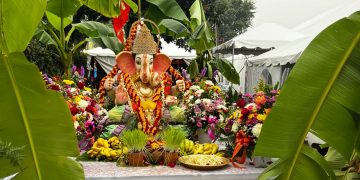
    Indo-Caribbean Hindus Observing Ganesh Chaturthi in Queens, NY

    Indo-Caribbean Hindus Observing Ganesh Chaturthi in Queens, NY

    Gaesh Utsav in Trinidad

    𝙂𝙖𝙣𝙚𝙨𝙝 𝙐𝙩𝙨𝙖𝙫 — 𝘼 𝘾𝙚𝙡𝙚𝙗𝙧𝙖𝙩𝙞𝙤𝙣 𝙤𝙛 𝙁𝙖𝙞𝙩𝙝, 𝙒𝙞𝙨𝙙𝙤𝙢 𝙖𝙣𝙙 𝙍𝙚𝙣𝙚𝙬𝙖𝙡

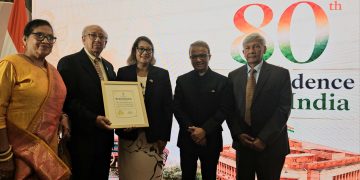
    Indo Trinidadian Community Leader Deo Gosine Honored by India NY Consulate in 2026 Independence Celebrations

    Indo Trinidadian Community Leader Deo Gosine Honored by India NY Consulate in 2026 Independence Celebrations

    High Commission of India  Georgetown

    High Commission of India Georgetown

    2026 Ramayana in Park Concludes Aug 2 in New York

    2026 Ramayana in Park Concludes Aug 2 in New York

    Ramayana in Park Public Discourse 2026 in Jamaica, Queens

    Ramayana in Park Public Discourse 2026 in Jamaica, Queens

  • Editorials
    At SVN Graduation Exercises – Making a difference in the field of education.

    At SVN Graduation Exercises – Making a difference in the field of education.

    cliff-rajkumar

    VANISHING FOOTPRINTS

    Kamla Persad Bissessar

    Trinidad and Tobago OPPOSITION LEADER addresses TOWN HALL MEETING ON EDUCATION IN SAN FERNANDO WEST

    Jai Lall

    Guyana Leonora’s villagers are inseparable

    Dr. Vishnu Bisram

    Indo-Caribbean to speak on India’s Soft Power in Delhi

    Jai Lall

    Empty vessels make the most noise – politics in Guyana

    Ashook-Ramsaran

    In Commemoration of the 23rd Anniversary

    Kamla Persad Bissessar

    Hope for UNC of Trinidad?

    Ravi Balgobin Maharaj

    Is there No Other Musical Instrument Indigenous to T&T?

    Guyana-map

    October 2024 Hindu Conference bring back memories of Humiliation of Indians in Guyana

  • Opinions
    Dool Hanomansingh

    Self Interest Trumps Dharma

    Dool Hanomansingh

    Why today’s youths are curious about their history

    Dool Hanomansingh

    Laaboo-style leadership is destructive

    Dool Hanomansingh

    Why today’s youths are curious about their history

    Dool Hanomansingh

    Think like a unit; not like an individual

    Vassan Ramracha

    WHY SANATAN DHARMA (HINDU SCHOOLS) ARE IMPORTANT in Trinidad

    Dool Hanomansingh

    Gary is still trying hard to make himself relevant

    Paras Ramoutar

    Need for a new spirit of nationalism

    Dool Hanomansingh

    Indian Arrival Day commemoration is much more than Curry Duck

    Dool Hanomansingh

    Only Unity and Consensus Building Can Save the Hindu Community

  • Videos
    Dool-Hanomansingh-003

    US Congress woman Tulsi Gabbard condemns the ongoing genocide of Hindus and other minorities

    Geeta-Vaahini

    Geeta Vaahini, President of the  Hindu Prachaar Kendra speaks on the social significance of Ganga Dhara Festival.

    Geeta-Vaahini

    Geeta Vaahini, President of the Hindu Prachaar Kendra speaks on the Hindu view of the environment.

    swami-brahmadeo

    Swami Brahmadeo – Hindus are top CEOs and Medics in North America and Europe

    Gowtam-Maharaj

    Gowtam Maharaj, a farmer of Barrackpore, South Trinidad, shares his challenges being a farmer.

    BAMBOO #1 Flooding – Frustrated Residents

    BAMBOO #1 Flooding – Frustrated Residents

    NATIONAL-LOTUS-THEATRE

    NATIONAL LOTUS THEATRE – Performance of Niyantran

    radica-jairam

    Story of RADICA JAIRAM from Orange Valley

    fisherman-trinidad

    Families of Orange Valley felt neglected by PNM Government

    Dr Subramanian Swamy

    Dr Subramanian Swamy – Dharma Rising London April 2015

  • Features
    Dr Vishnu Bisram

    Encounters & Anecdotes with Guyana SN’s de Caires and editors

    Dool Hanomansingh

    The victory of Zohran Mamdani reflects poorly on the US and its politics

    ravi-ratiram

    Trinidad MP Ravi Ratiram Condemns Government’s Failures Amidst Rising Crime in Central Trinidad and Calls for Immediate Action to Protect Citizens

    Pandit Ramdular Singh

    Pandit Ramdular Singh on Guyana’s Dharmic Sabha

    Vassan Ramracha

    PNM bent on Africanizing Trinidad

    Baldeo_Chanderpaul-3

    West Indian cricketers must strive to emulate Shiv Chanderpaul of Guyana

    Jai Lall

    Who in Guyana will ever buy the PNC/AFC/APNU “honesty, integrity and decency” pitch again?

    cliff-rajkumar

    Non Indians Embracing Sanathan Dharma

    Mr. Rudranath Indarsingh

    INDARSINGH ON RELOCATION OF PRINCES TOWN FIRE OFFICERS

    Vassan Ramracha

    TRIBAL AFRICANS DO NOT CONDONE INTERRACIAL MARRIAGES

No Result
View All Result
Indo Caribbean Diaspora News
No Result
View All Result

Mahatma Gandhi and the Struggle to End Indentureship in Diaspora

by Dr. Vishnu Bisram
October 10, 2026
in Columns
0
Dr. Vishnu Bisram

Dr. Vishnu Bisram

2.2k
SHARES
1.8k
VIEWS
Share on FacebookShare on Twitter

Nearly a hundred and ten years (March/May 1917) after the end of recruitment of indentured laborers from India and nearly 106 years after the abolition of indentureship in British colonies, the contribution of Mahatma Gandhi to the campaign against that dehumanizing, slave-like labor system remains an important chapter in the history of India, the making of the Indian diaspora that is spread across the globe, and the life of the diaspora. The abolition of indentureship stands as a significant milestone in the history of the Indian diaspora with far reaching implications for India and the diaspora itself. Indentureship led to the creation of the Indian diaspora not dissimilar to how slavery led to the rise of the African diaspora. The subject of indentureship continues to be of interest to descendants of Indians whose ancestors labored during indentureship and to scholars (in disciplines of various universities) of the subject in India and the diaspora. The struggle of Gandhi and other Indian freedom fighters was critical in ending that exploitative labor system. Gandhi’s opposition to global indentureship developed from his experiences in observing that oppressive, predatory labor system in South Africa where he spent considerable years (May 1893- Jan 2015) opposing it and the ill-treatment of Indians, Blacks, and other non-Whites. He led a campaign against the abuse of Indians and racism in South Africa and later became involved in the national campaign in India to end indentureship of Indian laborers overseas.

Indentureship was a system under which Indian workers (girmitiyas) entered contracts to perform physical labour (on farming plantation) for fixed periods (5 years with ‘manipulative’ renewal option) in British colonies and other imperial territories (of France, Holland, Denmark that sent indentured laborers to St. Croix, that was later sold to the US). The Indian indentureship period began in 1828 first to (French) Reunion Island where indentureship and slavery existed side by side and where Indians, according to reports, also served as slaves alongside Africans. Indentured laborers were sent to Mauritius in 1834, British Guiana in 1838, and other territories thereafter. Some 1.5 million Indians were transported to places including South Africa, Fiji, Mauritius, British Guiana, Trinidad, Jamaica, French Guiana, Grenada, Martinique, Guadeloupe, Suriname, St. Lucia, St. Vincent, Belize, St. Croix, Seychelles, Kenya, Uganda, Tanzania, Malawi, and other colonies. Workers were promised (low) wages and other benefits (that were hardly delivered especially in British colonies in the Caribbean). They faced difficult, unscrupulous, predatory laboring conditions, including restrictions on movements and cultural practices, poor nutrition, diseases that killed many (an average of 20%), inadequate pay and at times no payment, fines if they ‘violate’ the contract, and other very harsh, unethical treatment. The indentured system drew the attention of human rights organizations and Indian politicians. It became increasingly controversial and was condemned all around by Indian nationalists (championing India’s independence) and religious figures as an affront to human dignity – not dissimilar from slavery, as scholars commented. It was criticised for its coercive character as laborers could not venture more than two miles from the estate, could not celebrate cultural festivals, and the dead (Hindus) could not be cremated, among other restrictions. Workers faced penalties for breaches of ‘labour regulations’ with no judicial recourse. Reports of abuse and exploitation gradually attracted attention in India and among social reformers in the colonies. Gandhi spoke out publicly against the abuses.

Gandhi’s personal experience in South Africa gave him an intimate understanding of the problems faced by indentured laborers and confronting indentured Indians and their descendants overseas. He arrived in South Africa in 1893 and soon encountered racial discrimination against Indians including himself. He was thrown off a train coach that was reserved only for Whites. During his years there, he actively fought against racism holding meetings, protests, rallies, marches to expose human indignity of the racist practices of Whites. His initial legal work and later his activism brought him into contact with both indentured and formerly indentured Indians. He witnessed the social and economic difficulties faced by Indian and Black workers and became convinced that the system was incompatible with human dignity. He committed to fight against it. He worked hard to unite Indians across social and religious divisions and established political organisations to defend their rights; Indians were of Hindu and Muslim background and of multiple castes. Gandhi’s anti-racist and anti-exploitative campaign brought him into contact with indentured and former indentured workers and business people, exposing him to the hardships experienced by the labouring population.

One of the major issues in South Africa was a burdensome £3 tax imposed on former indentured workers who remained in Natal after completing their contracts. Gandhi opposed the tax because it placed a heavy, unfair burden on workers who had completed their period of indenture and wanted to engage in ‘free’ labor. His campaign eventually contributed to the abolition of the tax and other oppressive measures affecting the Indian community. The 1914 settlement between Gandhi and the White South African authorities not only abolished the £3 tax but also recognized Indian (Hindu and Islamic) marriages. Recognition of Indian marriages in Guyana and other British territories came much later. Feeling that his mission in South Africa was accomplished, Gandhi decided to return to India at the request of India independence movement leaders.

After returning to India on January 9, 1915, he turned his attention to the continuing recruitment of Indian labourers for overseas colonies. Gandhi’s South African experience strengthened his conviction that indentureship globally had to end altogether. He joined the growing campaign against indentured emigration. He was not alone as political leaders, reformers, journalists and community organisations had already been raising concerns about the system, urging reforms. His campaign also coincided with growing criticism of indentureship throughout the Caribbean and by Indian politicians. Reports about the conditions of workers overseas created increasing pressure on the colonial authorities to end the system. The Indian nationalist Pandit Madan Mohan Malaviya, among the earliest freedom fighters, pressed for abolition of the system in parliament. Gandhi brought additional public energy and moral force to the campaign to end indentureship. In 1916, Pandit Madan Mohan Malaviya moved a resolution in the Imperial Legislative Council calling for abolition of indentureship. The British Government indicated that the system would eventually end, but Gandhi felt an indefinite promise was insufficient. He argued that India should demand a definite date for abolition.

In early 1917, Gandhi began a determined campaign to build public opinion against indentured emigration. He travelled around the country, addressing public meetings, urging Indians to reject the indenture system that he considered degrading to the country and overseas Indian’s dignity. CF Andrews, a lay preacher and sympathizer of Indians and a supporter of Gandhi, was sent abroad by the Indian leadership to report on conditions of the indentured laborers. CF Andrew’s visited Guyana, Trinidad, and other colonies. He reported that the indentured laborers and their descendants were severely mistreated. Pressure was on the British authorities to end the practice.
A significant moment came during Gandhi’s visit to Calcutta in March 1917. At a large public meeting that he addressed at the Town Hall, he called for and the crowd demanded the immediate abolition of indentured emigration. He insisted that India could not continue to tolerate the system while discussions and official procedures were repeatedly used to postpone action. The campaign helped create strong public pressure on the Government.

The British Government subsequently moved towards ending recruitment. The suspension of indentured recruitment was announced in March 11/12 1917, although Prof Ashutosh Kumar sated that evidence revealed it was May 25, and the indentureship system was abolished on January 1, 1920 in all British territories. The abolition came later in French and Dutch colonies. Only a small number of Indian laborers were taken to the island of St. Croix by Denmark. After the laborers served their five year term, almost all returned to India.

Gandhi acknowledged that public agitation and the work of campaigners were important factors in securing the end of indentureship. The abolition of indentureship was also the result of the courage and persistence of some of the workers themselves, as well as the efforts of many activists, politicians, journalists and reformers overseas as well as in India. Indian labourers had resisted exploitation in different ways, while campaigners documented their conditions and brought their grievances to public attention. Some were for continuation of the system as they felt Indians were better off in the colonies than in rural India. Several Indian leaders in Guyana advocated for continuation of importation of laborers from India even after abolition of the system. The Indian government stopped it altogether.

The end of indentured recruitment and its abolition in 1920 had far-reaching consequences leaving over two million Indians behind. And although the system itself was abolished, almost all the Indians at that time decided to settle down rather than return to India. Those who returned to India spoke of their alienation and difficulties in returning to their villages. Those who chose to remain in the colonies purchased or leased land, established businesses, formed religious and cultural institutions and raised families. The descendants of these immigrants became an integral part of national life. Their contributions can be seen in agriculture, commerce, education, politics, religion, music, cuisine and community development. They have made significant contributions to the cultural, economic and political life of countries such as Trinidad and Tobago, Guyana, Suriname, Fiji, Mauritius, South Africa, Kenya, Seychelles, among others. It is not forgotten that outstanding Indians co-led the struggle against apartheid in South Africa. Hindu and Muslim traditions brought from India also became enduring features of life wherever they are. And many have re-migrated to the developed countries in the north where they have institutionalized their culture and are making significant contributions at the local and national level.

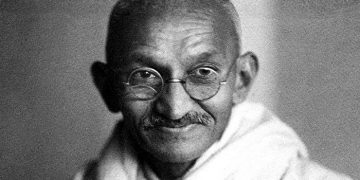
As the diaspora celebrated Gandhi’s birth anniversary on October 2, his role in fighting exploitation and ending indentureship is remembered as part of his broader commitment to human dignity and justice and rights.
Facebook Comments Box
Tags: carribeanDr. Vishnu BisramGuyanaGuyaneseindian cultureIndian diasporaIndian GuyaneseIndiansIndo Caribbean diasporaindo-caribbeanIndo-Caribbean communityIndo-GuyaneseTrinidadTrinidad and Tobago
Share66Tweet42Share17
ADVERTISEMENT
Dr. Vishnu Bisram

Dr. Vishnu Bisram

Dr. Vishnu Bisram is Guyanese born who received his primary and secondary education in Guyana and tertiary education in the US and India. He is a holder of multiple degrees in the natural sciences, social sciences, and education. He taught for over forty years in the US. He is a specialist on the Indian diaspora traveling globally to research and write about Indian communities. He was among a small group of freedom fighters in America that combated the dictatorship in Guyana. Dr. Bisram organized many conferences on the Indian diaspora and lectured at several universities. He has published extensively on the diaspora and on various other topics.

  • Trending
  • Comments
  • Latest
Mridul Pathak, Amb. Binaya Pradhan, Ashook Ramsaran & Dep Consul Dr Varun Jeph

IDC TO HOLD INDO-CARIBBEAN EVENTS AT THE INDIAN CONSULATE IN NY

June 8, 2024
Caribbean Hindus in Queens Honoring Ancestors by Performing Pitri Puja

Caribbean Hindus in Queens Honoring Ancestors by Performing Pitri Puja

October 6, 2026
Pitri Paksh Discourse at the American Sudama Mandir in NY

Pitri Paksh Discourse at the American Sudama Mandir in NY

October 6, 2026
31st Annual Mahatma Gandhi Peace March & COVID-19 Remembrance Memorial

31st Annual Mahatma Gandhi Peace March & COVID-19 Remembrance Memorial

October 6, 2026
Threat of Communism shaped Washington’s Position on Guyana kicking out Jagan and being silent on Rigging

Threat of Communism shaped Washington’s Position on Guyana kicking out Jagan and being silent on Rigging

October 10, 2026
At SVN Graduation Exercises – Making a difference in the field of education.

At SVN Graduation Exercises – Making a difference in the field of education.

October 10, 2026
NY Arya Samaj Gurukula Celebrates Founding and Dr. Satish Prakash’s Birthday

NY Arya Samaj Gurukula Celebrates Founding and Dr. Satish Prakash’s Birthday

October 10, 2026
Speech of Dr Ramkisson on Memorial for Gandhi ji & Covid 19

Speech of Dr Ramkisson on Memorial for Gandhi ji & Covid 19

October 10, 2026

The most important world news and events of the day.

Get ICDN daily newsletter on your inbox.

ADVERTISEMENT
Indo Caribbean Diaspora News

© 2024 Indo-Caribbean Diaspora News. All rights Reserved

Navigate Site

  • About
  • Advertise
  • Privacy Policy
  • Contact Us
  • Terms and Condition

Follow Us

No Result
View All Result
  • Home
  • Columns
  • Letters
  • Community News
  • Opinions
  • Videos
  • Features
  • Editorials

© 2024 Indo-Caribbean Diaspora News. All rights Reserved

Welcome Back!

Login to your account below

Forgotten Password?

Retrieve your password

Please enter your username or email address to reset your password.

Log In