







fbpx
  • Latest
  • Trending
  • All
  • Opinions
  • Features
  • Letters
  • Videos
  • Editorials
  • Columns
Dr Pradeep Kumar Saxena

THE INDUS WATERS TREATY

May 14, 2026
Paras Ramoutar

TT needs a new psychological framework as it ushers into 65th anniversary of Independence

August 31, 2026
Dool Hanomansingh

Laaboo-style leadership is destructive

August 31, 2026
Dool Hanomansingh

Why today’s youths are curious about their history

August 31, 2026
ADVERTISEMENT
Albert Baldeo

GUYANA MUST NOW CLAIM ITS FULL OIL DIVIDENDS

August 27, 2026
Dr. Vishnu Bisram

Freddie uninformed on India’s Tech that Redounds to Guyana & Developing Countries

August 27, 2026
Dr. Vishnu Bisram

Vishnu Bisram in Indian Cultural Activism in Guyana and USA

August 19, 2026
Albert Baldeo

EXXON HAS RECOVERED ITS US$55 BILLION-TIME TO TALK GUYANESE, SIRS

August 19, 2026
Dr. Vishnu Bisram

India Today from Independence in 1947

August 19, 2026
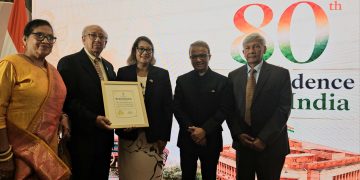
Indo Trinidadian Community Leader Deo Gosine Honored by India NY Consulate in 2026 Independence Celebrations

Indo Trinidadian Community Leader Deo Gosine Honored by India NY Consulate in 2026 Independence Celebrations

August 19, 2026
𝐒𝐭𝐫𝐚𝐭𝐞𝐠𝐢𝐜 𝐃𝐢𝐩𝐥𝐨𝐦𝐚𝐜𝐲: 𝐓𝐫𝐢𝐧𝐢𝐝𝐚𝐝 𝐚𝐧𝐝 𝐓𝐨𝐛𝐚𝐠𝐨 𝐚𝐧𝐝 𝐭𝐡𝐞 𝐔𝐧𝐢𝐭𝐞𝐝 𝐒𝐭𝐚𝐭𝐞𝐬 

𝐒𝐭𝐫𝐚𝐭𝐞𝐠𝐢𝐜 𝐃𝐢𝐩𝐥𝐨𝐦𝐚𝐜𝐲: 𝐓𝐫𝐢𝐧𝐢𝐝𝐚𝐝 𝐚𝐧𝐝 𝐓𝐨𝐛𝐚𝐠𝐨 𝐚𝐧𝐝 𝐭𝐡𝐞 𝐔𝐧𝐢𝐭𝐞𝐝 𝐒𝐭𝐚𝐭𝐞𝐬 

August 18, 2026
High Commission of India  Georgetown

High Commission of India Georgetown

August 18, 2026
Dr. Vishnu Bisram

India Today from Independence in 1947

August 15, 2026
  • About
  • Advertise
  • Privacy Policy
  • Contact Us
  • Terms and Condition
Monday, August 31, 2026
  • Login
Indo Caribbean Diaspora News
  • Home
  • Columns
    Dr. Vishnu Bisram

    Freddie uninformed on India’s Tech that Redounds to Guyana & Developing Countries

    Dr. Vishnu Bisram

    Vishnu Bisram in Indian Cultural Activism in Guyana and USA

    Dr. Vishnu Bisram

    India Today from Independence in 1947

    Dr. Vishnu Bisram

    India Today from Independence in 1947

    Dr. Vishnu Bisram

    Freddie Kissoon errs in stating CCJ delivers better Rulings than Privy Council & US Sup Court

    Dr Vishnu Bisram

    US Dep Sec Landau & President Ali Engagement bodes well for Guyana

    Dr. Vishnu Bisram

    US Dep Sec of State Visit Must Redound to Benefits for T&T

    Guyana NY Consulate Observes Emancipation Day 2026 at Medgar Evers College

    Guyana NY Consulate Observes Emancipation Day 2026 at Medgar Evers College

    Pawan K Upadhyay

    Early Life, Education, Activism, Employment of Dr Vishnu Bisram

    Prayer & Candlelight Vigil for Angel Rampersad  in Queens

    Prayer & Candlelight Vigil for Angel Rampersad in Queens

  • Letters
    Hamilton Green

    GREEN MUST CONCEDE THAT BURNHAM WRECKED GUYANA DESPITE ‘LOYAL AND COMPETENT’ INDIVIDUALS

    Dr. Vishnu Bisram

    US plan to Denaturalize and Deport Citizens — concern to Guyanese and others

    Dr. Vishnu Bisram

    Brilliant speech by Trinidad and To ago PM on Diwali theme at Constituency Celebrations 2025

    Guyana Rohee’s mocking of Illegal Guyanese & Green Card Holders in America

    Guyana Rohee’s mocking of Illegal Guyanese & Green Card Holders in America

    Charles Sugrim

    Authenticating Dr Bisram’s Poll in Guyana

    Gary Griffith

    United We Stand, Divided We Fall

    Ravi Balgobin Maharaj

    Democrats More Dangerous to Dragon Gas than Republicans

    Ravi Balgobin Maharaj

    Who Really Lost in the Junior Sammy Matter in Trinidad?

    Jai Lall

    A challenge to become the rainbow in Leonora’s cloud

    Rabindra-Moonan

    The opposition UNC led by Kamla Persad Bissessar has gone into meltdown mode.

  • Community News
    Indo Trinidadian Community Leader Deo Gosine Honored by India NY Consulate in 2026 Independence Celebrations

    Indo Trinidadian Community Leader Deo Gosine Honored by India NY Consulate in 2026 Independence Celebrations

    High Commission of India  Georgetown

    High Commission of India Georgetown

    2026 Ramayana in Park Concludes Aug 2 in New York

    2026 Ramayana in Park Concludes Aug 2 in New York

    Ramayana in Park Public Discourse 2026 in Jamaica, Queens

    Ramayana in Park Public Discourse 2026 in Jamaica, Queens

    US Embassy Message on Sinking of MV Barima

    US Embassy Message on Sinking of MV Barima

    Dr. Deepti Aggarwal

    Indian Rich Food Culture: Concept, Form and Journey to Indenture Labour/Girmit Countries

    Dool Hanomansingh

    The Sewdass Sadhu Monument at Waterloo symbolizes a struggle for social justice

    Hanuman Jayanti Observed by Indo Caribbean Diaspora

    Hanuman Jayanti Observed by Indo Caribbean Diaspora

    Ram Navami 2026 at Shiva Mandir in USA

    Ram Navami 2026 at Shiva Mandir in USA

    Caribbean American Hindus Observed Lord Rama’s Birth

    Caribbean American Hindus Observed Lord Rama’s Birth

  • Editorials
    cliff-rajkumar

    VANISHING FOOTPRINTS

    Kamla Persad Bissessar

    Trinidad and Tobago OPPOSITION LEADER addresses TOWN HALL MEETING ON EDUCATION IN SAN FERNANDO WEST

    Jai Lall

    Guyana Leonora’s villagers are inseparable

    Dr. Vishnu Bisram

    Indo-Caribbean to speak on India’s Soft Power in Delhi

    Jai Lall

    Empty vessels make the most noise – politics in Guyana

    Ashook-Ramsaran

    In Commemoration of the 23rd Anniversary

    Kamla Persad Bissessar

    Hope for UNC of Trinidad?

    Ravi Balgobin Maharaj

    Is there No Other Musical Instrument Indigenous to T&T?

    Guyana-map

    October 2024 Hindu Conference bring back memories of Humiliation of Indians in Guyana

    Jai Lall

    Is Kamala Harris the “Trump” card for the Democrats?

  • Opinions
    Dool Hanomansingh

    Laaboo-style leadership is destructive

    Dool Hanomansingh

    Why today’s youths are curious about their history

    Dool Hanomansingh

    Think like a unit; not like an individual

    Vassan Ramracha

    WHY SANATAN DHARMA (HINDU SCHOOLS) ARE IMPORTANT in Trinidad

    Dool Hanomansingh

    Gary is still trying hard to make himself relevant

    Paras Ramoutar

    Need for a new spirit of nationalism

    Dool Hanomansingh

    Indian Arrival Day commemoration is much more than Curry Duck

    Dool Hanomansingh

    Only Unity and Consensus Building Can Save the Hindu Community

    Ramdath Jagessar

    Pioneers of Indian Arrival Day in Trinidad

    Dool Hanomansingh

    Book Review – Chanka Maharaj by Dr Sat Balkaran Singh

  • Videos
    Dool-Hanomansingh-003

    US Congress woman Tulsi Gabbard condemns the ongoing genocide of Hindus and other minorities

    Geeta-Vaahini

    Geeta Vaahini, President of the  Hindu Prachaar Kendra speaks on the social significance of Ganga Dhara Festival.

    Geeta-Vaahini

    Geeta Vaahini, President of the Hindu Prachaar Kendra speaks on the Hindu view of the environment.

    swami-brahmadeo

    Swami Brahmadeo – Hindus are top CEOs and Medics in North America and Europe

    Gowtam-Maharaj

    Gowtam Maharaj, a farmer of Barrackpore, South Trinidad, shares his challenges being a farmer.

    BAMBOO #1 Flooding – Frustrated Residents

    BAMBOO #1 Flooding – Frustrated Residents

    NATIONAL-LOTUS-THEATRE

    NATIONAL LOTUS THEATRE – Performance of Niyantran

    radica-jairam

    Story of RADICA JAIRAM from Orange Valley

    fisherman-trinidad

    Families of Orange Valley felt neglected by PNM Government

    Dr Subramanian Swamy

    Dr Subramanian Swamy – Dharma Rising London April 2015

  • Features
    Dr Vishnu Bisram

    Encounters & Anecdotes with Guyana SN’s de Caires and editors

    Dool Hanomansingh

    The victory of Zohran Mamdani reflects poorly on the US and its politics

    ravi-ratiram

    Trinidad MP Ravi Ratiram Condemns Government’s Failures Amidst Rising Crime in Central Trinidad and Calls for Immediate Action to Protect Citizens

    Pandit Ramdular Singh

    Pandit Ramdular Singh on Guyana’s Dharmic Sabha

    Vassan Ramracha

    PNM bent on Africanizing Trinidad

    Baldeo_Chanderpaul-3

    West Indian cricketers must strive to emulate Shiv Chanderpaul of Guyana

    Jai Lall

    Who in Guyana will ever buy the PNC/AFC/APNU “honesty, integrity and decency” pitch again?

    cliff-rajkumar

    Non Indians Embracing Sanathan Dharma

    Mr. Rudranath Indarsingh

    INDARSINGH ON RELOCATION OF PRINCES TOWN FIRE OFFICERS

    Vassan Ramracha

    TRIBAL AFRICANS DO NOT CONDONE INTERRACIAL MARRIAGES

No Result
View All Result
Indo Caribbean Diaspora News
No Result
View All Result

THE INDUS WATERS TREATY

by Staff Reporter
May 14, 2026
in Columns
0
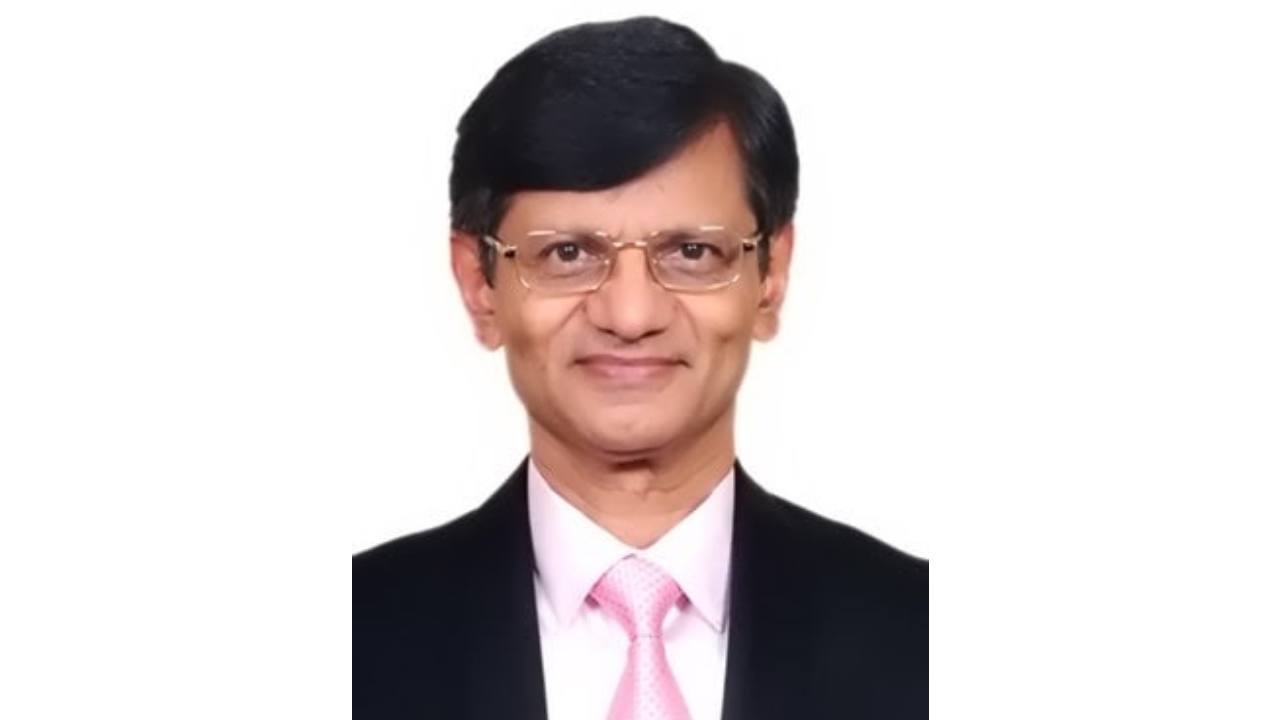
Dr Pradeep Kumar Saxena
2.7k
SHARES
1.9k
VIEWS
Share on FacebookShare on Twitter

Asymmetric Obligations, Unequal Concessions and Pakistan’s Weaponisation

Part I: The Architecture of Inequity — How India’s Goodwill Was Codified into Concession

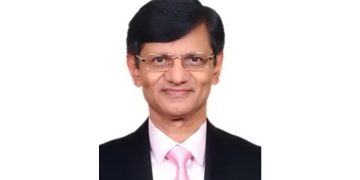
By Dr Pradeep Kumar Saxena

1. Background: The Partition of a River System

The Indus River System comprises six major rivers—the Indus, Chenab, Jhelum, Ravi, Beas, and Sutlej—flowing through the territories of both India and Pakistan. The system sustains drinking water, agriculture, and electricity generation across the Indus Basin, supporting hundreds of millions of people on both sides of the border.

When British India was partitioned in 1947, the Indus River System was also divided between the two successor states. The geographic reality was stark: India, as the upper riparian state, held the headwaters of most rivers, while Pakistan’s agricultural heartland—the heavily irrigated Punjab plains—depended critically on continued water flows from the east. India, for its part, required access to the system for its own development objectives in Punjab and Rajasthan, while seeking stability and normalised relations with its new western neighbour. Despite its own pressing domestic needs, India concluded this highly concessionary water-sharing pact with Pakistan on 19 September 1960, an agreement facilitated by the World Bank.

2.  Negotiations – India paid the price for rationality

2.1 Pakistan’s Strategy of Delay and the 1954 World Bank Proposal

The trajectory of the negotiations was shaped, from the outset, by the asymmetry between India’s reasonable and constructive approach and Pakistan’s maximalist, sometimes absurd, demands — an asymmetry that anchored outcomes far more favourably to Pakistan than equity would have warranted. The World Bank’s first substantive proposal of 5 February 1954 illustrates this plainly: even at this initial stage, it required significant one sided concessions from India:

• All planned Indian developments along the upper reaches of both the Indus and Chenab were to be abandoned, with those benefits accruing to Pakistan instead
• India was required to forgo diverting approximately 6 MAF from the Chenab River.
• No Chenab waters at Merala (now in Pakistan) would be available for Indian use.
• No water development would be permitted in Kutch from the river system.

Despite these considerable impositions, India accepted the proposal in good faith almost immediately, signalling its genuine desire for a speedy resolution. Pakistan, by contrast, delayed its formal acceptance for nearly five years until 22 December 1958. As a result of this goodwill gesture of India,  the restrictions were imposed on her while Pakistan continued developing new uses on the Western rivers without equivalent constraints. Pakistan absorbed the lesson that obstruction pays and cooperation costs—and has applied this lesson consistently ever since.


3. What India Lost: The Scale of Sacrifice

3.1 The Water Allocation

Under the Treaty’s allocation formula, India received exclusive rights to the three Eastern rivers—the Sutlej, Beas, and Ravi—while Pakistan received rights to the waters of the three Western rivers—the Indus, Chenab, and Jhelum. India was permitted certain limited, non-consumptive uses of the Western rivers within its own territory, primarily for run-of-river hydropower generation, subject to extensive design and operational restrictions.

In volumetric terms, the Eastern rivers allocated to India carry approximately 33 million acre-feet (MAF) of annual flow, while the Western rivers allocated to Pakistan carry approximately 135 MAF—giving Pakistan roughly 80 percent of the system’s water. India received 20 percent, in exchange for relinquishing all claim to the vastly larger Western system. The critical point is that India did not gain new water from the agreement. What India received was formal acknowledgment of flows it already accessed, in exchange for relinquishing all claim to the far larger Western system. India was permitted certain non-consumptive uses of the Western rivers within its territory—primarily run-of-river hydropower generation.

3.2 The Financial Concession: Paying to Give Away Water

Perhaps the most striking anomaly of the Treaty is the financial provision. India agreed to pay approximately £62 million (approximately $2.5 billion in present value) as compensation to Pakistan to build water resources infrastructure in Pakistan-occupied Kashmir. This payment represents a unique precedent in which the upstream country, which was already surrendering the majority of the system’s water, additionally paid the downstream country for the “privilege” of doing so. India essentially subsidised Pakistan’s acceptance of a deal that heavily favoured Pakistan on the fundamental question of water allocation.

4. The Treaty’s Structural Unfairness

4.1 Unilateral Asymmetric Restrictions on India

The Treaty imposes a series of specific design and operational restrictions on India’s use of the Western rivers that have no corresponding obligations on Pakistan’s side:

• India can develop only a limited Irrigated Cropped Area (ICA) in its territory.
• India faces strict limits on the volume of water that can be held in any storage facility on the Western rivers.
• India must comply with specific design criteria for any hydropower facilities on the Western rivers, including restrictions on pondage and storage capacity.

These restrictions are one-directional: they constrain India’s lawful development of resources within its own territory while imposing no equivalent transparency or restriction requirements on Pakistan. The result is a treaty that treats the upstream state—India—as the party requiring oversight and restraint, while the downstream state benefits from guaranteed flows.

Facebook Comments Box
Tags: carribeanDr Pradeep Kumar SaxenaDr. Vishnu BisramGuyanaGuyaneseindian cultureIndian diasporaIndian GuyaneseIndiansIndo Caribbean diasporaindo-caribbeanIndo-Caribbean communityIndo-GuyaneseTrinidadTrinidad and Tobago
Share68Tweet43Share17
ADVERTISEMENT
Staff Reporter

Staff Reporter

  • Trending
  • Comments
  • Latest
Albert Baldeo

GUYANA MUST NOW CLAIM ITS FULL OIL DIVIDENDS

August 27, 2026
Harry Hergash

Indentureship and the story of Indo-Guyanese names

May 21, 2026
Mridul Pathak, Amb. Binaya Pradhan, Ashook Ramsaran & Dep Consul Dr Varun Jeph

IDC TO HOLD INDO-CARIBBEAN EVENTS AT THE INDIAN CONSULATE IN NY

June 8, 2024
𝐒𝐭𝐫𝐚𝐭𝐞𝐠𝐢𝐜 𝐃𝐢𝐩𝐥𝐨𝐦𝐚𝐜𝐲: 𝐓𝐫𝐢𝐧𝐢𝐝𝐚𝐝 𝐚𝐧𝐝 𝐓𝐨𝐛𝐚𝐠𝐨 𝐚𝐧𝐝 𝐭𝐡𝐞 𝐔𝐧𝐢𝐭𝐞𝐝 𝐒𝐭𝐚𝐭𝐞𝐬 

𝐒𝐭𝐫𝐚𝐭𝐞𝐠𝐢𝐜 𝐃𝐢𝐩𝐥𝐨𝐦𝐚𝐜𝐲: 𝐓𝐫𝐢𝐧𝐢𝐝𝐚𝐝 𝐚𝐧𝐝 𝐓𝐨𝐛𝐚𝐠𝐨 𝐚𝐧𝐝 𝐭𝐡𝐞 𝐔𝐧𝐢𝐭𝐞𝐝 𝐒𝐭𝐚𝐭𝐞𝐬 

August 18, 2026
Paras Ramoutar

TT needs a new psychological framework as it ushers into 65th anniversary of Independence

August 31, 2026
Dool Hanomansingh

Laaboo-style leadership is destructive

August 31, 2026
Dool Hanomansingh

Why today’s youths are curious about their history

August 31, 2026
Albert Baldeo

GUYANA MUST NOW CLAIM ITS FULL OIL DIVIDENDS

August 27, 2026

The most important world news and events of the day.

Get ICDN daily newsletter on your inbox.

ADVERTISEMENT
Indo Caribbean Diaspora News

© 2024 Indo-Caribbean Diaspora News. All rights Reserved

Navigate Site

  • About
  • Advertise
  • Privacy Policy
  • Contact Us
  • Terms and Condition

Follow Us

No Result
View All Result
  • Home
  • Columns
  • Letters
  • Community News
  • Opinions
  • Videos
  • Features
  • Editorials

© 2024 Indo-Caribbean Diaspora News. All rights Reserved

Welcome Back!

Login to your account below

Forgotten Password?

Retrieve your password

Please enter your username or email address to reset your password.

Log In