








This writer is calling for a new expansive monument in Kolkata dedicated to the pioneering indentured Indian labourers. It is apt given that the 19th Pravasi Bharatiya Divas (PBD) is scheduled for the city in January 2027 and the year also marks the 110th anniversary since the end of recruitment of indentured laborers (girmitiyas). A new memorial installation will bring renewed focus on the girmitiyas, their story of emigration, resilience, adaptation, and survival. It will lead to greater interest by the diaspora in India.
Indentureship started in 1828 and terminated in January 1920; recruitment of indentured laborers ended in 1917. The indentured laborers rescued and transformed colonies where they were indentured; they and their descendants contributed significantly to national development and played leading roles in all facets of life. They endured hardship and injustice. The descendants helped shape societies across the Caribbean, Africa, Indian Ocean, Southeast Asia, and the Pacific. And from there, the descendants have migrated to the developed world in Europe, North America and Oceania. Their sacrifices should be remembered and their stories preserved via a memorial and a museum.
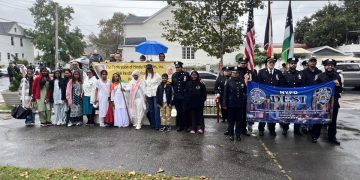
A small memorial monument exists in Kidderpore on the banks of the Hooghly River from where the girmitiyas departed India, the work of Ashook Ramsaran, Deo Gosine, and others in 2011 during the Congress administration. The small monument is obscured behind a newly constructed building. A larger more noticeable monument should be erected nearby and given prominence to remember the girmitiyas in addition to retaining the existing memorial.
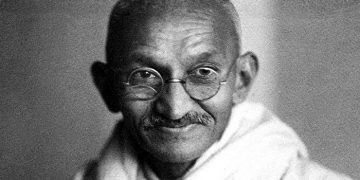
The government uses PBD to honor outstanding or prominent personalities in the diaspora from all aspects of society. Pravasi Bharatiya Samman Award is the highest honor conferred by the President of India on January 9th to select overseas Indians for their significant contributions in India or abroad. At every PBD, over a dozen individuals from the diaspora were honored, recognizing their contributions in India’s development and their personal historic achievements abroad as well as contributions to their countries of domicile. The PBD is usually held from January 7 to 9. The 9th has historical significance as it is the date that commemorates the return of Mahatma Gandhi from South Africa to Bombay on January 9, 1915. PBD is also known as Non Resident Indian Day and People of Indian Origin Day and was celebrated every year since 2003. Prime Minister Atal Bihari Vajpayee inaugurated the PBDs in 2003 and 2004. PM Manmohan Singh inaugurated the annual PBDs from 2005 till 2014. Since 2015, PM Modi presided over the PBD till now. After 2015, it has become biennial. January 2027 will be the 19th edition. Every PBD had a Chief Guest, usually a head of government or deputy or head of state or a deputy of Indian ancestry. This writer attended almost all of the PBDs and reported or commented on all previous 18 in community newspapers in USA or in papers in Guyana, Trinidad, Canada, and elsewhere.
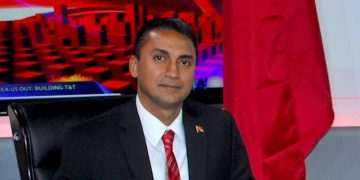
It will be the first time that PBD will be held in Kolkota. The first and second ones were held in New Delhi. The PM of Mauritius was the Chief Guest in 2003 and Guyana’s President Bharrat Jagdeo was Chief Guest in 2004. Suriname’s Vice President Shri Jules Rattankoemar Ajodhia was Chief Guest in 2005. Prime Minister Kamla Persad Bissessar was Chief Guest in 2011. Suriname Vice President Shri Ashwin Adhin was Chief Guest in 2017. Donald Ramotar was Chief Guest in 2015. Suriname Irfaan Ali and Suriname’s President Chan Santokhi were Chief Guests in 2023. Former PM Basdeo Panday was a Special Guest in 2008 and honored with the Samman Award. Several Guyanese and Trinidadians as well as other Caribbean nationals were recipients of the prestigious Samman Award.
A new large international commemorative monument would be a meaningful and historically important recognition of the girmitiya diaspora. It should have a map of countries where laborers were indentured (some 25 of them) with an inscription. Consideration should also be given for establishment of a girmitiya museum (even a virtual one if not a dedicated building) or interpretation centre, supported by digitised records of laborers, family histories, photographs, oral testimonies, and the like.
A new monument would add to the existing recognition at Kidderpore that honour the million and half Indians who left their homeland under the indenture system and whose descendants now form significant Indian-origin communities of some thirteen million around the world. The strongest case for such a monument is that it would connect India’s history of migration with the modern global Indian diaspora, recognising not only successful emigrants but also the hardship, exploitation, resilience and contributions of the people who helped establish Indian communities overseas.
Kolkota holds historical significance as it was a major departure point for Indian indentured labourers travelling to the colonies. A new larger monument will bring renewed focus on the descendants of the laborers, perhaps adding their migration in the history curriculum of schools and universities. A new monument and a museum would give PBD 2027 a lasting historical legacy rather than limiting the commemoration to a three-day event.