
































By Deochand Ramjit Singh
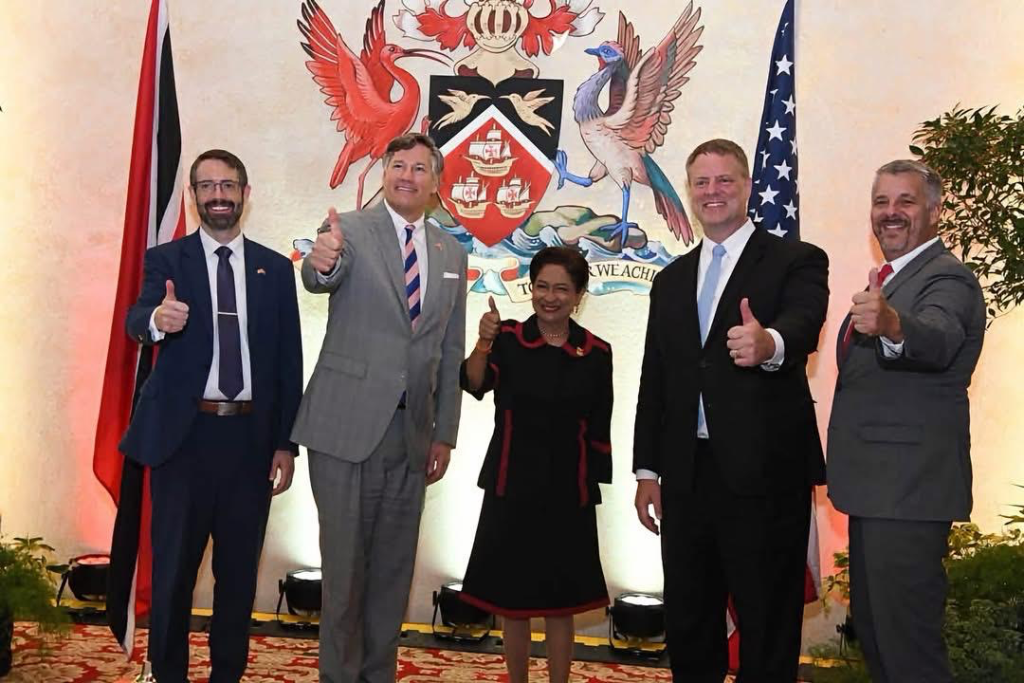
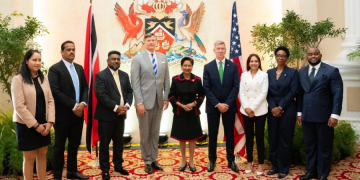
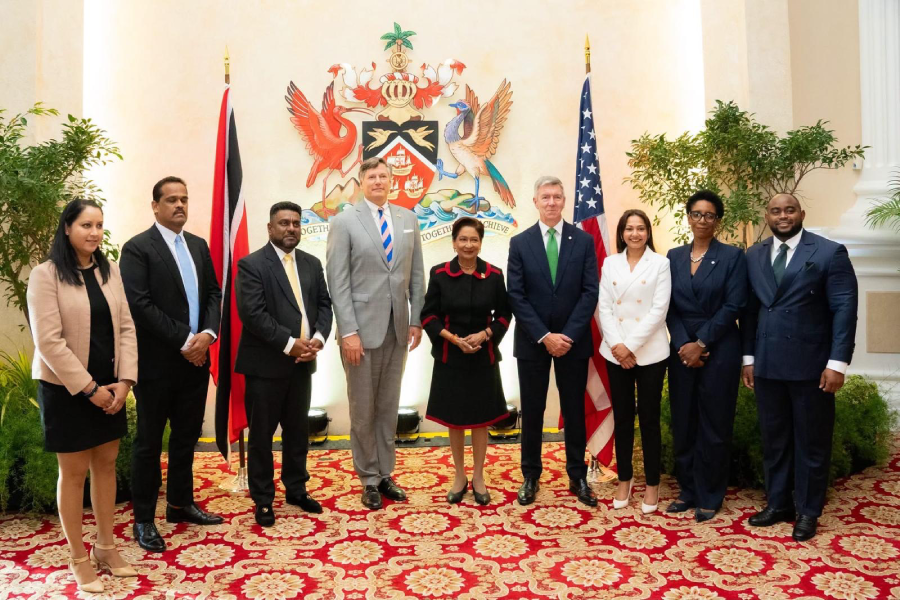
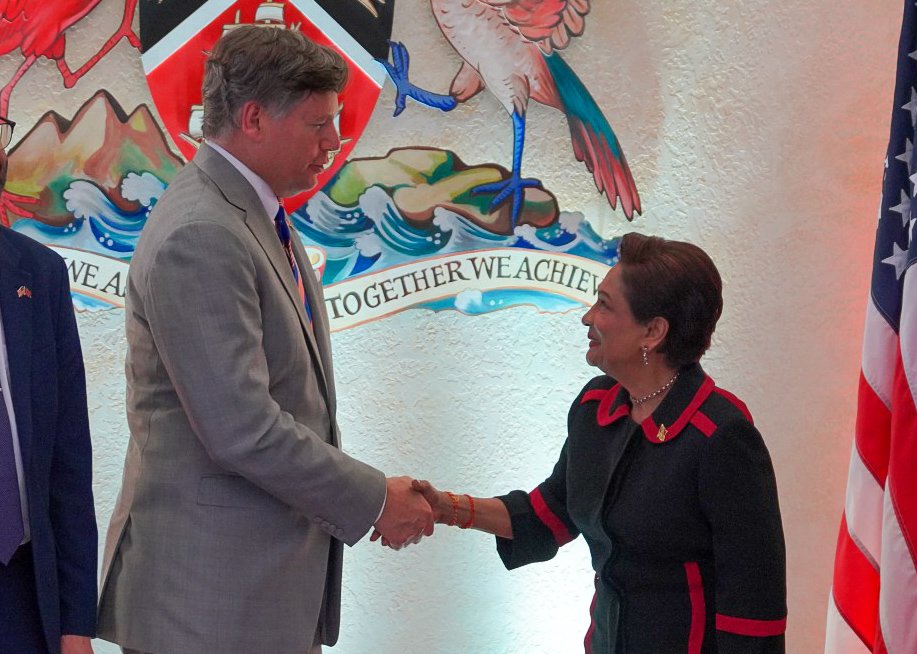
The visit of United States Deputy Secretary of State, Christopher Landau to Trinidad and Tobago on August 9th-10th marks another significant development in what is becoming a renewed and increasingly strategic relationship between Trinidad and Tobago and the United States.
This should not be viewed simply as another high-level diplomatic engagement. It is part of a broader pattern that has emerged over recent months, as Trinidad and Tobago positions itself for deeper engagement with the United States on energy, security, trade and regional affairs.
The US Department of State has identified shared energy, security priorities and economic cooperation, as central elements of Landau’s visit. This follows high-level discussions in Washington in May, when Foreign and CARICOM Affairs Minister Sean Sobers met Landau and other senior U.S. officials. At that time, Landau described the relationship between Trinidad and Tobago and the United States as being at its highest level in decades.
For much of our modern history, the relationship with the United States has been shaped by geography, trade, energy and security. Trinidad and Tobago occupies a strategic position at the intersection of the Caribbean, South America and the Atlantic.
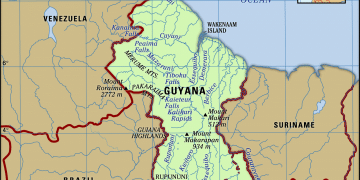
Landau’s decision to visit Trinidad and Tobago and Guyana during the same regional trip is therefore noteworthy. In Trinidad and Tobago, the emphasis is on energy, security and economic cooperation and in Guyana, his agenda includes economic cooperation, investment, energy and critical minerals.
Energy remains one of the strongest cards Trinidad and Tobago has in its international relations. Our natural gas industry has played an enormous role in the country’s development.
Trinidad and Tobago can use these international partnerships to attract investment, expand downstream industries, develop new energy technologies, modernise infrastructure, create higher-value employment and generate broader economic opportunity and long-term national resilience.
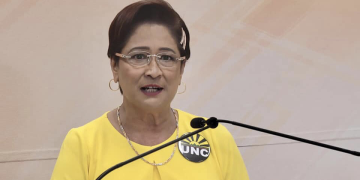
During the May meetings, Landau specifically acknowledged Prime Minister Kamla Persad-Bissessar’s leadership in combating transnational crime in the region. The United States has also been engaging Trinidad and Tobago on defence and security cooperation.
Trinidad and Tobago faces serious challenges from organised crime, firearms trafficking, drug trafficking and maritime security. Our security agencies need the technology, intelligence, training and resources necessary to confront increasingly sophisticated criminal networks.
There is considerable room for mutually beneficial cooperation with Washington, particularly in intelligence sharing, maritime security, law enforcement capacity and the fight against transnational organised crime.
That gives Trinidad and Tobago an opportunity to cooperate where our interests align, disagree where necessary and maintain the diplomatic space to pursue our own national objectives.
There is another dimension to this relationship that deserves greater attention. Trinidad and Tobago is not simply another Caribbean nation. We are a founding member of CARICOM and an important regional player. Energy security, climate resilience, food security, migration, crime, trade and economic development are issues that individual Caribbean countries cannot effectively address in isolation.
Trinidad and Tobago can use its growing diplomatic engagement with Washington to help build stronger channels between CARICOM and the United States. Trinidad and Tobago can also serve as a bridge between the United States, CARICOM and the wider southern Caribbean.
We should welcome that the United States has clearly identified Trinidad and Tobago as an increasingly important partner in the Caribbean.
Trinidad and Tobago is not approaching this relationship from a position of weakness. We have energy resources, strategic geography, industrial capacity, human capital and a unique position connecting the Caribbean with South America. These advantages can translate into greater negotiating strengths.
That means we can attract investment, strengthen national security, expand trade, improve infrastructure and rebuild industries that are capable of competing internationally.
Christopher Landau’s visit represents another step in what could become one of the most consequential foreign-policy developments for Trinidad and Tobago in years.
The United States is looking south. Guyana’s energy and mineral wealth as well as Trinidad and Tobago’s energy infrastructure and strategic location are making the southern Caribbean increasingly important in the broader geopolitical competition for energy, security and economic influence.
With our national interest at the centre, we should welcome security cooperation, energy collaboration and pursue greater economic engagement.
We can use this opportunity before us to transform renewed international interest in Trinidad and Tobago into sustainable national development.
Ultimately, this visit should not simply tell the world why Trinidad and Tobago is important to the United States.
It should demonstrate “ 𝐖𝐡𝐲 𝐓𝐫𝐢𝐧𝐢𝐝𝐚𝐝 𝐚𝐧𝐝 𝐓𝐨𝐛𝐚𝐠𝐨 𝐢𝐬 𝐢𝐦𝐩𝐨𝐫𝐭𝐚𝐧𝐭 𝐭𝐨 𝐭𝐡𝐞 𝐰𝐨𝐫𝐥𝐝.”